Common Medical Mistakes That Can Damage Personal Injury Claims
The journey toward a successful legal settlement is often as much about medical precision as it is about legal strategy. When an individual is injured due to negligence, the medical care they receive becomes the primary source of evidence for their claim.
However, the intersection of healthcare and law is complex, and errors in either can have devastating consequences. Recent studies suggest that preventable errors are the third leading cause of death in the United States. For a personal injury victim, common medical errors do not just threaten physical health; they can also jeopardize the legal right to fair compensation. We emphasize that understanding these risks is the first step toward protecting your recovery and your case.
Understanding Medical Errors in Personal Injury Cases
Understanding Medical Errors in Personal Injury Cases
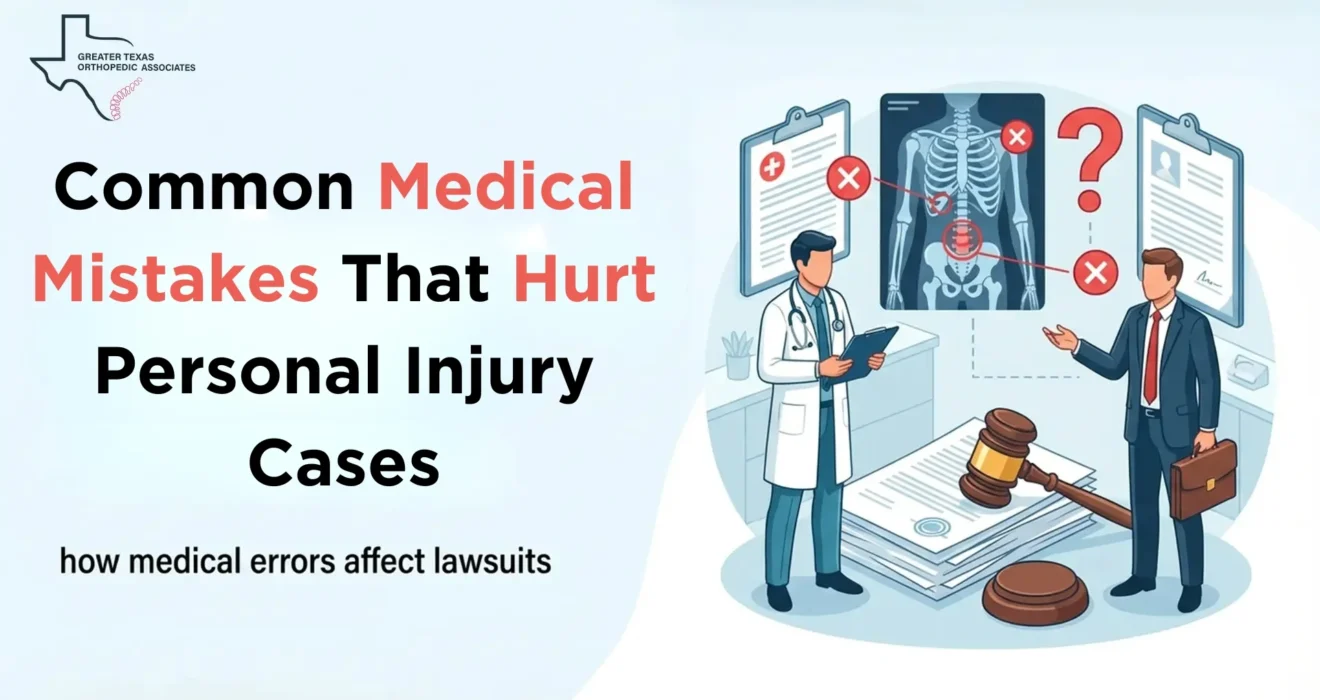
A medical error is defined as the failure of a planned action to be completed as intended or the use of the wrong plan to achieve an aim. These incidents can involve a failure in care that may or may not result in immediate patient harm. In the context of a legal claim, how medical errors affect lawsuits often comes down to the reliability of the medical record. If the documentation is faulty or inconsistent, the entire foundation of a personal injury case can be undermined.
medical mistakes are typically categorized as “active” or “latent”. An active error is a specific event that causes harm, such as a surgeon operating on the wrong eye or limb. A latent error is an intrinsic failure within the system, such as faulty equipment or poor organizational design, which creates an accident waiting to happen. Some errors are classified as “never events,” meaning they are catastrophic mistakes that should never occur under any circumstances. Examples include leaving surgical instruments inside a patient or performing a procedure on the wrong person.
For those navigating an injury claim, these common medical errors create significant evidentiary gaps. If a clinician fails to document a specific symptom or misdiagnoses a condition, insurance companies may argue that the injury was pre-existing or unrelated to the accident. This makes it difficult for attorneys to establish a direct link between the trauma and the resulting medical state.
Top Mistakes That Damage Injury Cases
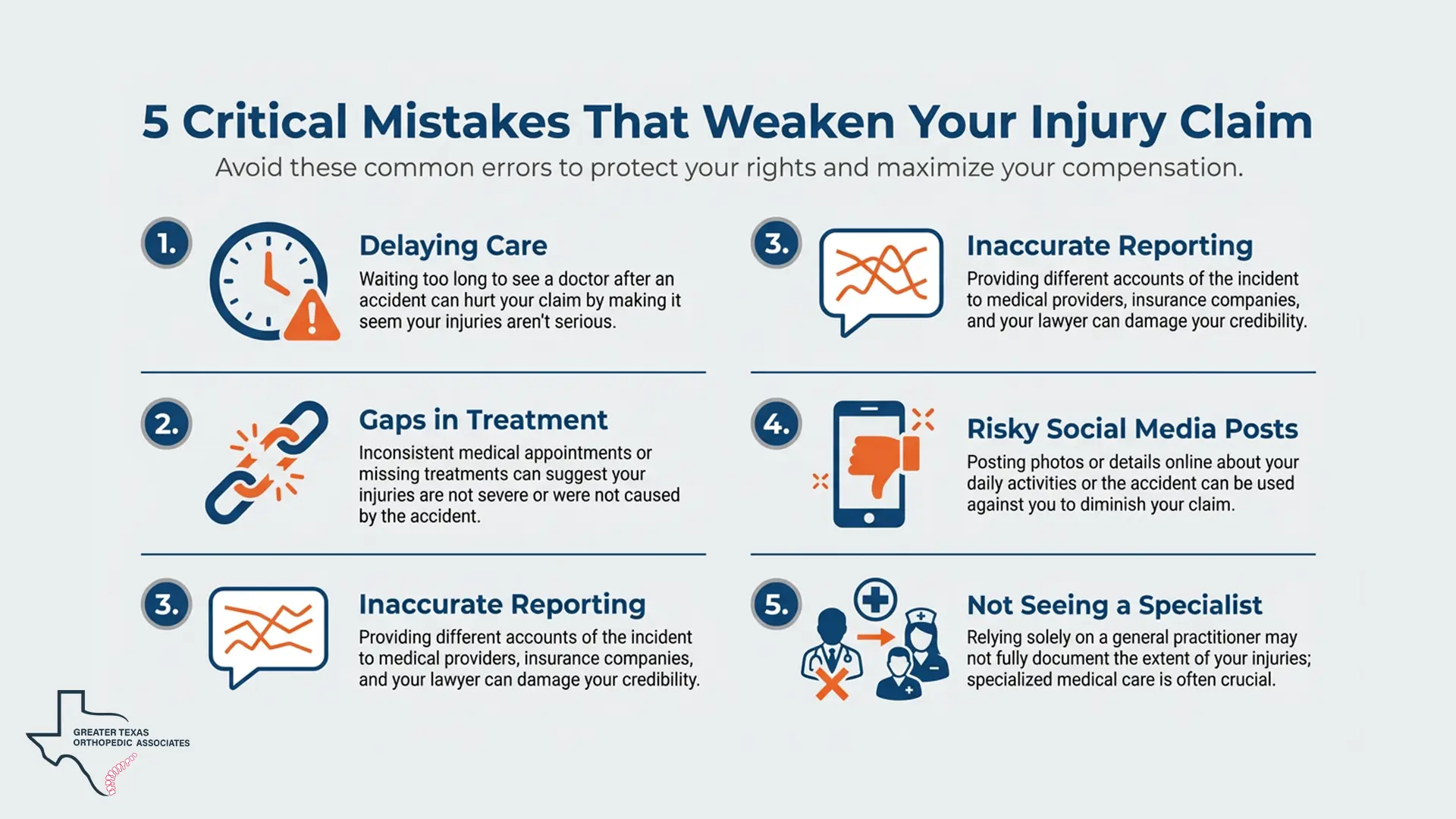
Success in a personal injury claim relies on established proof of the injury’s existence, severity, and long-term impact. We have observed that several recurring errors that impact personal injury cases often occur in the early stages of treatment.
1. Delaying Initial Medical Care
One of the most damaging actions a victim can take is waiting too long to seek a medical evaluation. It is recommended to seek attention within 24 to 72 hours of an incident. Adrenaline and shock often mask symptoms of serious trauma, such as concussions or internal bleeding, which may not appear for days. Delaying care allows insurance adjusters to argue that the injuries were not serious or were caused by a different, unrelated event.
2. Gaps in Treatment and Non-Compliance
Starting a treatment plan is only half the battle. If a patient stops attending physical therapy sessions, skips follow-up appointments, or ignores a doctor’s instructions, it casts doubt on the validity of the claim. Consistency in care supports the credibility of the claim and creates a clear record of how the injury affects daily life. Failing to follow through with recommended care is one of the primary missteps that hurt injury claims.
3. Inaccurate or Inconsistent Symptom Reporting
Medical records are the bedrock of any injury claim. If a patient downplays their pain by saying they are “fine” or, conversely, exaggerates their symptoms, it can hurt their credibility. Defense attorneys meticulously review records for inconsistencies between an initial emergency room report and subsequent follow-up evaluations. It is vital to report all symptoms accurately and honestly, no matter how minor they may seem at the time.
4. Relying Solely on a Primary Care Physician (PCP)
While a PCP is a good starting point for immediate care, they may lack the specialized experience required for complex forensic cases. General practitioners might not provide the detailed medical-legal documentation necessary to withstand intense scrutiny in court. Top-tier attorneys often seek specialized teams that align medical rigor with legal necessity to ensure that the valuation of the claim is accurate.
5. Social Media Activity
In the digital age, social media posts can become powerful weapons against a personal injury case. Even a seemingly harmless photo of a patient smiling at a family gathering can be misrepresented as proof that their injuries are not as severe as claimed. We advise patients to avoid posting anything related to their accident, recovery, or daily activities while a case is ongoing.

How Medical Errors Affect Lawsuits
The impact of medical mistakes extends far beyond the clinic and into the courtroom. Understanding how medical errors affect lawsuits requires looking at the three pillars of a case: proving negligence, establishing causation, and quantifying damages.
The Challenge of Proving Causation
Causation is the direct link between the accident and the sustained injuries. Common medical errors, such as incomplete documentation or a failure to note a patient’s history of pain, can break this link. If a medical record is vague, insurance companies will exploit that ambiguity to deny the claim. Clear, authoritative medical records are needed to counter arguments that a condition, such as a herniated disc, was pre-existing.
Valuation of Damages
The quality of medical records directly impacts the financial outcome of a claim. Well-documented records that include specific diagnoses, treatment plans, and progress notes often lead to higher compensation amounts. Conversely, bad documentation leads to confusion and weak evidence that can be easily disputed. For instance, if a doctor fails to document psychological anguish or concurrent minor injuries, those elements are unlikely to be compensated.
Credibility and Expert Testimony
A medical provider’s reputation and objectivity significantly influence the strength of a case. In complex litigation, medical experts are often brought in to interpret records and testify to the seriousness of a condition. If a provider has a history of poor documentation or lacks board certification, their testimony can be easily discredited during cross-examination. This loss of credibility is one of the most significant mistakes that hurt injury cases.
Preventing Mistakes That Damage Injury Cases
Prevention is always more effective than correction in both medicine and law. By understanding common medical errors, patients and attorneys can take proactive steps to safeguard both health and legal claims. A structured, consistent approach to post-accident care is essential to avoid common pitfalls that hurt injury cases.
Actionable Tips for Patients
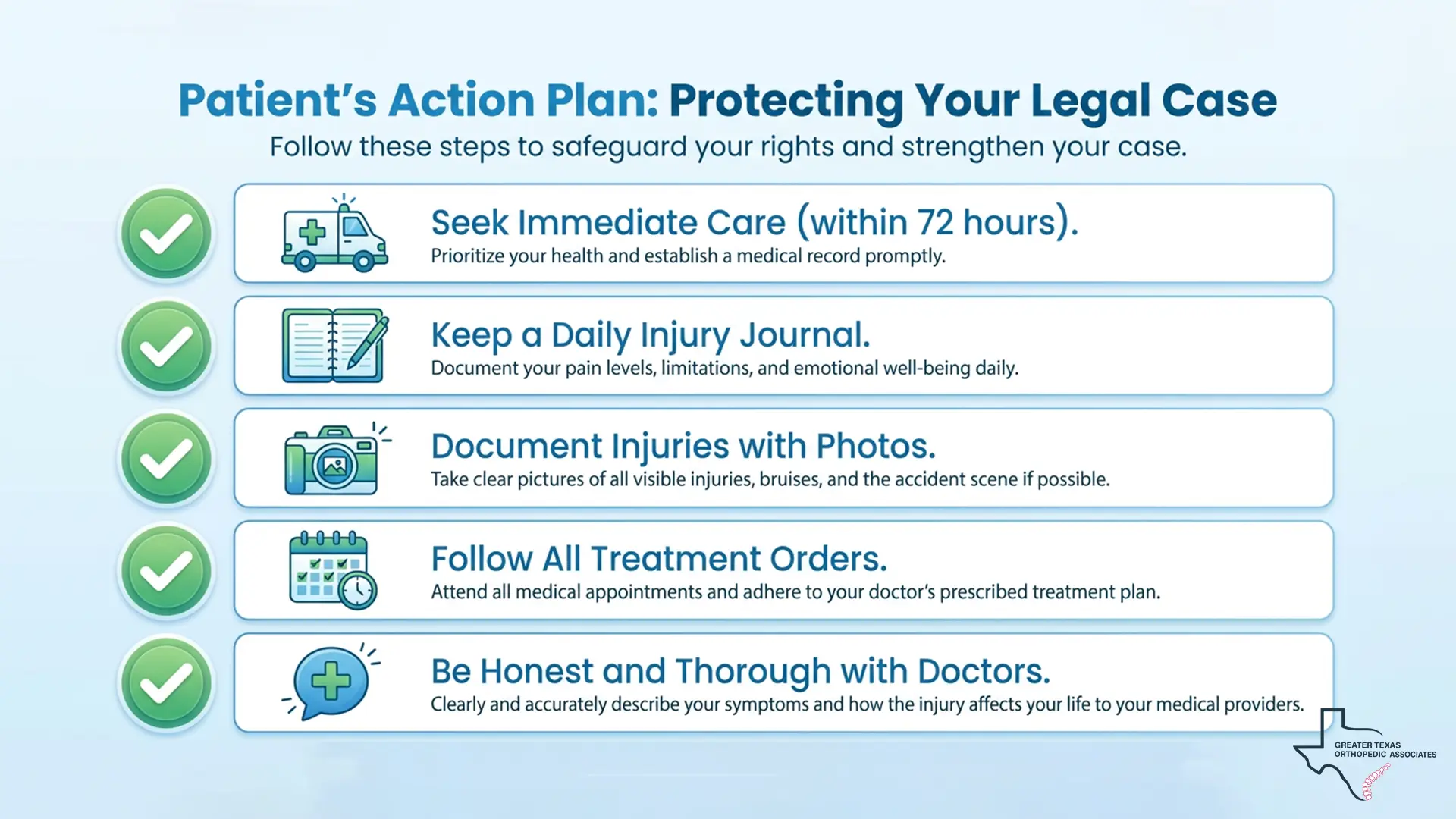
To minimize risks and protect your claim, patients should follow a detailed post-accident protocol:
- Seek an evaluation immediately: Visit an emergency room or urgent care within 72 hours, regardless of how you feel. Early evaluation ensures proper documentation and helps establish causation in your claim.
- Be honest and thorough: Report every symptom and do not hide past injuries from your attorney or doctor. Even minor issues can affect your case if left undocumented.
- Maintain a personal injury journal: Keep a daily log of pain levels, emotional struggles, and how injuries affect work or daily activities. This creates a clear record of your recovery journey.
- Follow all treatment orders: Attend every physical therapy session and take all prescribed medications as directed. Consistency demonstrates the seriousness of your injuries.
- Capture evidence early: Take photos of visible injuries, the accident scene, or relevant documentation if possible. Visual proof can reinforce your medical records.
If you want to understand more about documenting post-accident care, visit our detailed [Post-Accident Medical Checklist]
Advice for Attorneys
Lawyers play a crucial role in ensuring medical documentation meets legal scrutiny. When evaluating errors that affect lawsuits, attorneys should collaborate with partners who demonstrate:
- Forensic expertise: Ability to create documentation that satisfies both clinical and legal requirements.
- Timely reporting: Delays in medical evidence can undermine a claim and reduce settlement value.
- Objective integrity: Focus on accurate diagnosis and recovery rather than aligning with insurance companies.
- Testimony experience: Capability to explain complex medical terminology clearly during depositions or trials.
Clinicians and attorneys working in sync provide the strongest defense against mistakes that hurt injury cases, ensuring both medical precision and legal protection.
Clinical Error Prevention
Preventing clinical errors is not only the responsibility of the patient or attorney; clinicians themselves play a critical role in safeguarding both health and legal outcomes. By following structured protocols and proven safety practices, healthcare providers can minimize mistakes that may otherwise compromise a personal injury claim.
Some of the most effective strategies include:
- Adhering to the “5 Rights” of medication safety: Ensuring the right patient receives the right drug, at the right dose, by the right route, and at the right time. This foundational practice prevents medication errors that could exacerbate injuries or create new complications.
- Performing surgical “time-outs”: Verifying the patient’s identity and the correct surgical site before any procedure prevents catastrophic “never events,” such as surgery on the wrong site or leaving instruments inside a patient.
- Using advanced imaging tools: Techniques such as MRI or fluoroscopy during procedures increase precision, reduce human error, and enhance patient safety.
By integrating these practices into daily care, clinicians not only protect their patients but also strengthen the medical documentation required in legal cases. Accurate records are essential when demonstrating the link between an injury and subsequent treatment.
For patients navigating the aftermath of an accident, the GTOA team ensures that all medical assessments are thorough and well-documented. If you require a professional evaluation of your musculoskeletal injuries, our Orthopedic Evaluations provide objective findings that support strong legal claims.
Conclusion
The integrity of a personal injury case relies on the seamless integration of medical accuracy and legal vigilance. Avoiding common mistakes that hurt injury cases, such as delaying care, failing to maintain consistent records, or neglecting follow-up treatment, protects both your health and your legal rights.
Medical errors and patient missteps create vulnerabilities that insurance companies are quick to exploit. Yet, through prompt action, honest communication, and collaboration with experienced medical partners, these risks can be effectively mitigated. Choosing the right team ensures that your injuries are documented accurately, assessments are thorough, and your claim has the strongest possible foundation.
Understanding how medical errors affect lawsuits is not just a legal consideration; it is a critical step for anyone seeking fair compensation. For victims with musculoskeletal injuries, detailed documentation and professional evaluation can make a significant difference.
Navigating a personal injury claim is like building a house: without a solid foundation of precise medical documentation, even the strongest legal arguments will eventually crumble. By prioritizing careful medical evaluation, timely treatment, and consistent documentation today, you secure the foundation for both your health and your legal future.