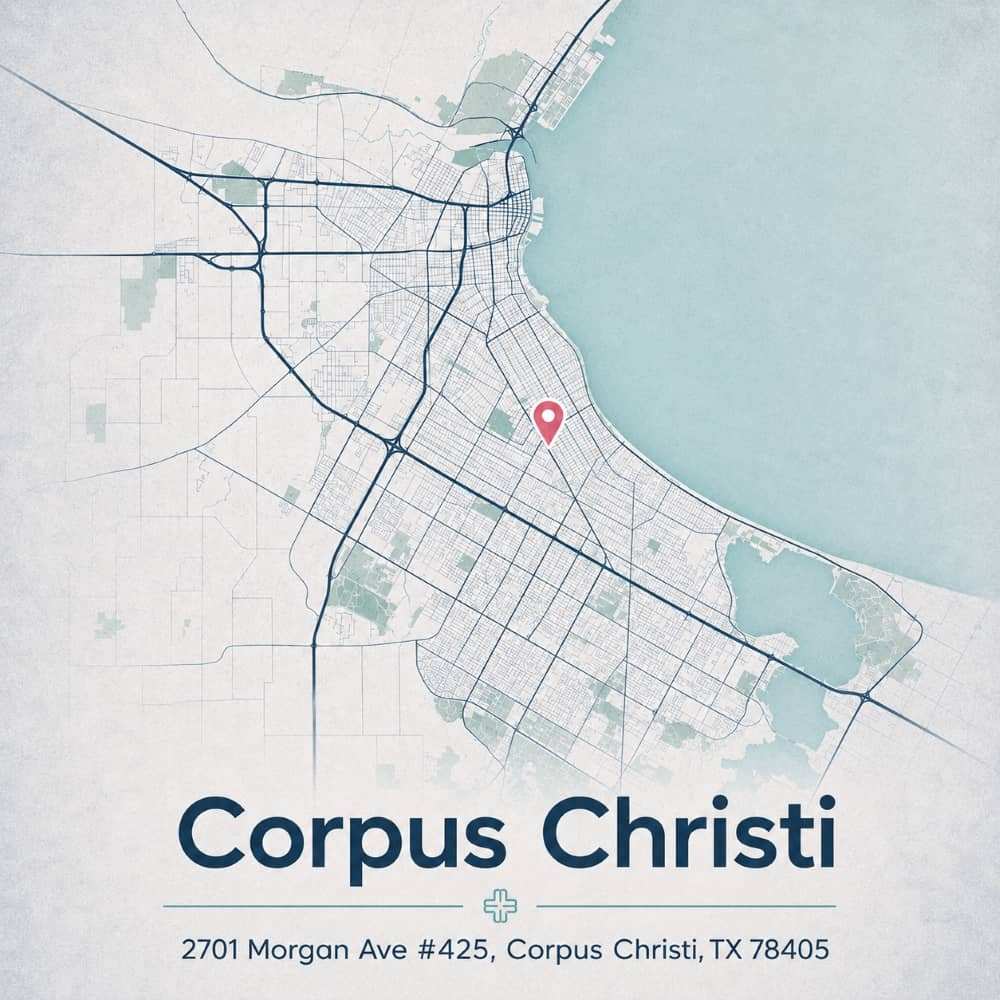
Corpus Christi
2701 Morgan Ave #425, Corpus Christi, TX 78405


Clinical assessment and ongoing management of concussion and traumatic brain injury after a car accident, fall, or work injury, including symptoms that may affect thinking, sleep, mood, balance, and daily function.
Two audiences read this page: the person navigating symptoms after a head injury, and the professional coordinating the related care or claim.
Anyone who struck their head or was violently shaken in a car accident or fall, especially with headaches, memory trouble, light sensitivity, irritability, or sleep disruption that has persisted.
Firms handling a head-injury claim that need a clear clinical timeline, documented symptoms and findings, and appropriately qualified recommendations.
A traumatic brain injury occurs when an external force, such as an impact or rapid acceleration and deceleration, disrupts normal brain function. Symptoms vary by person and may affect headache, balance, memory, attention, sleep, mood, and the ability to complete everyday activities.
CT or MRI may be normal in mild TBI and is not routinely required for every concussion. Imaging is used when clinically indicated to assess structural injury; diagnosis and follow-up also rely on the history, examination, symptoms, and clinician judgment.

TBI rarely presents as one complaint. These are the patterns we assess and track over time.
TBI care is longitudinal: the first visit establishes a baseline, and the value comes from measuring against it.
The mechanism, whether consciousness was lost, what was remembered immediately afterward, and how symptoms have evolved since. Early details matter and fade quickly, so they are recorded verbatim.
A neurological examination with symptom and cognitive screening selected by the clinician according to the patient's presentation.
Existing CT or MRI is reviewed and further testing considered when clinically indicated. A normal scan does not by itself rule out mild TBI.
The plan may include gradual return to activity, symptom-specific care, and referral for neuropsychological, vestibular, vision, or other services when indicated.
Follow-up timing is based on symptoms and clinician guidance. Progress, persistent limitations, or new concerns are documented as care continues.
The practical shape of TBI assessment, care planning, and follow-up.
The visit may include injury history, a neurological examination, and symptom or cognitive screening.
Existing scans are reviewed and additional imaging is considered when the examination or red flags warrant it.
Recovery varies with the injury, symptoms, health history, and response to a gradual return to activity.
The clinician sets reassessment timing according to symptoms, functional needs, and the care plan.
Care is individualized to the symptoms, functional needs, and clinical findings identified during evaluation.
GTOA coordinates referral intake, scheduling, available records, and status communication for patients and authorized legal teams.
History, mechanism of injury, examination findings, diagnosis, and the proposed treatment plan.
Available imaging findings are considered alongside the reported symptoms, history, and physical examination.
When clinically appropriate, documentation may discuss how the reported incident, findings, and pre-existing conditions relate.
Visits are documented with relevant symptoms, examination findings, recommendations, treatment, and response information.
The clinician may document additional evaluation, treatment, therapy, or follow-up that should be considered.
Scheduling and records timing depend on location, clinical need, record availability, and clinician review. The team confirms the next step for each request.
Coverage and payment arrangements vary. Contact the team before scheduling so eligibility and current options can be confirmed.
Contact GTOA to verify current plan participation, benefits, and any authorization requirements before the visit.
GTOA accepts letters of protection and medical liens. Eligibility, scope, billing terms, and scheduling are confirmed for each case before treatment begins.
Patients paying directly can contact the office for current pricing and available payment arrangements.
The same six reasons matter to a patient choosing a clinic and to a firm choosing where to send a client.
The history, neurological examination, symptoms, function, and available records are considered together.
Cognitive, physical, sleep, mood, and daily-function concerns are reviewed according to the patient's presentation.
Available CT or MRI is reviewed in context, and further testing is considered when clinical findings warrant it.
Activity and follow-up recommendations reflect the person's symptoms, responsibilities, and clinical course.
Records document relevant history, findings, recommendations, treatment, and response as care progresses.
Beaumont, Houston, San Antonio, Dallas, Arlington, and Corpus Christi provide access to GTOA care across Texas.
Patients can request care through Contact Us, and legal teams can begin a referral through the For Attorneys page.
The physician responsible for the medical review of this page.
Six clinics across Texas. Choose the one closest to you for hours, phone, and directions.
2701 Morgan Ave #425, Corpus Christi, TX 78405
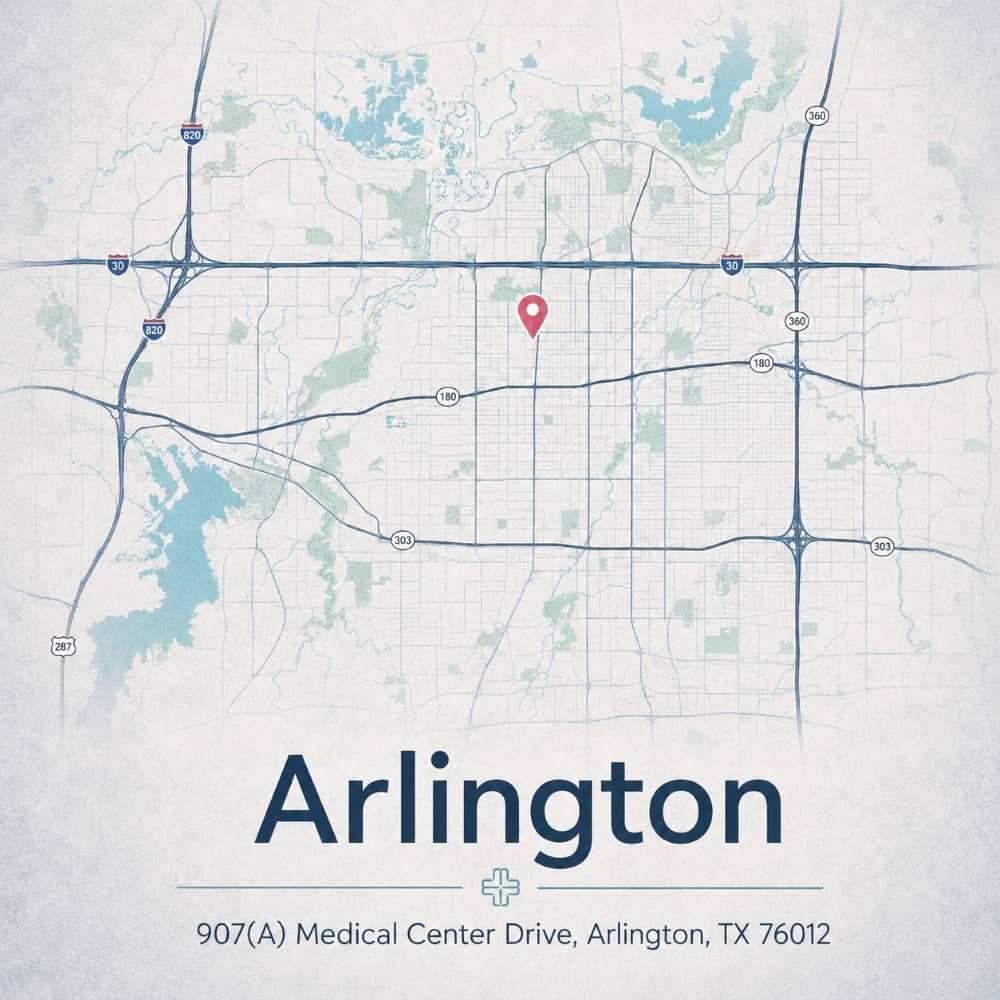
907(A) Medical Center Drive, Arlington, TX 76012

8330 Lyndon B Johnson Fwy, Suite B400, Dallas, TX 75243

7220 Louis Pasteur Drive, Suite 130, San Antonio, TX 78229

8928 Kirby Drive, Houston, TX 77054

324 North 23rd St, Beaumont, TX 77707
Services that may support care when the same incident also caused structural, musculoskeletal, or pain-related injuries.
Documentation may include the injury history, reported symptoms, neurological examination, and symptom or cognitive screening selected by the clinician, with follow-up findings recorded when appropriate.