
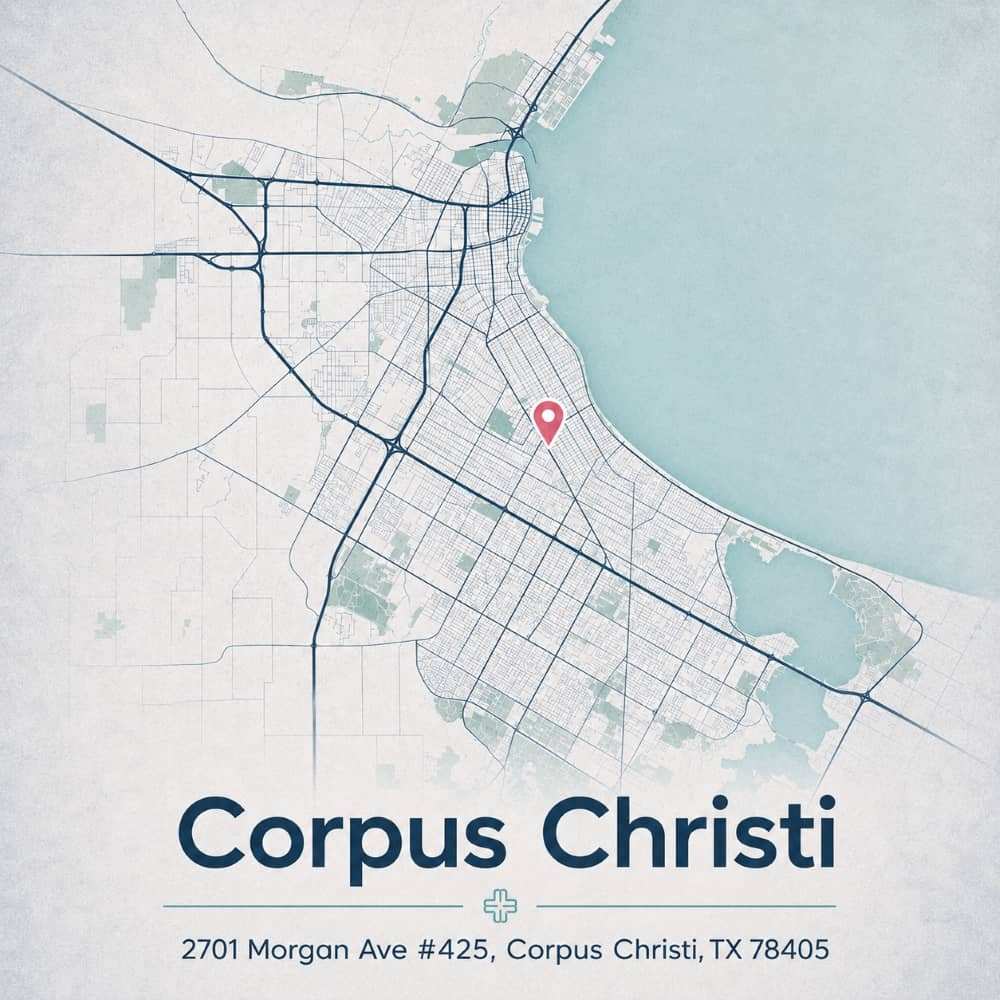
Corpus Christi
2701 Morgan Ave #425, Corpus Christi, TX 78405

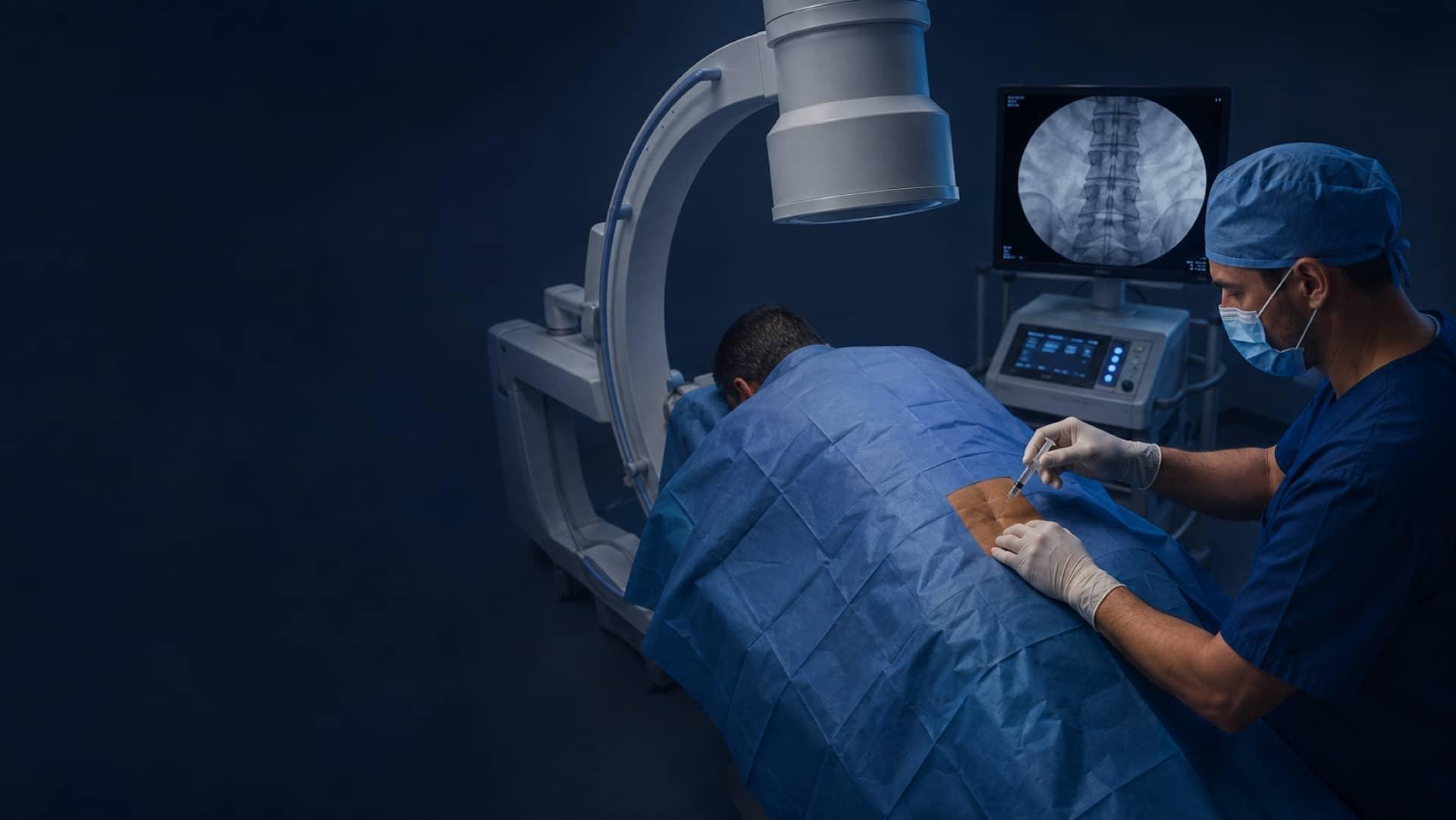
An image-guided procedure that places corticosteroid medication in the epidural space to address radiating pain from an irritated spinal nerve when clinically appropriate.
Two audiences read this page: the patient considering an interventional option, and the professional coordinating the related care or claim.
Patients with pain radiating from the spine into an arm or leg (sciatica, a pinched nerve, or a disc herniation) who want relief without surgery.
Firms coordinating a spine-injury claim that need the clinical indication, treated level, procedure details, and response documented clearly.
An epidural steroid injection places corticosteroid medication, often with a local anesthetic, into the epidural space around spinal nerves. It may be considered for cervical or lumbar radicular pain caused by conditions such as disc herniation or nerve-root irritation after clinical evaluation.
GTOA states that its epidural injections are performed with fluoroscopic guidance. Contrast may be used when appropriate to confirm needle placement before medication is delivered. Response varies, and the procedure does not by itself establish the cause of an injury or guarantee long-term relief.
An epidural steroid injection may be considered for pain that travels from the spine into a limb because of an irritated nerve root.
The exact approach, medication, preparation, and recovery instructions are confirmed for each patient before the procedure.
The clinician confirms the indication and target level, reviews available imaging and medications, and explains potential benefits, alternatives, and risks before consent.
Positioning depends on the planned approach. The injection area is cleaned, and local anesthetic is commonly used to numb the skin and deeper tissue.
The physician uses fluoroscopic imaging and, when appropriate, contrast to confirm needle placement at the intended spinal level before medication is delivered.
Corticosteroid medication, sometimes combined with local anesthetic, is placed in the epidural space according to the selected approach and treatment plan.
The patient is monitored after the injection and receives individualized activity, medication, warning-sign, and transportation instructions before leaving.
Preparation and recovery details vary by approach, medication, medical history, and facility instructions.
The team confirms check-in, medication, fasting, and transportation instructions before the appointment.
Fluoroscopy is used to guide placement; contrast may be used unless it is contraindicated.
Some patients experience short-term improvement in radicular pain or function, while others may not benefit.
The response and any adverse effects are reviewed before additional treatment is considered.
The clinician reviews expected short-term benefit, alternatives, and patient-specific risks before treatment.
GTOA coordinates referral intake, scheduling, available records, and status communication for patients and authorized legal teams.
History, mechanism of injury, examination findings, diagnosis, and the proposed treatment plan.
Available imaging is considered alongside symptoms, examination findings, and the selected spinal level.
When clinically appropriate, documentation may discuss how the reported incident, findings, and pre-existing conditions relate.
The treated level, approach, guidance, medication, and clinically assessed response are documented as appropriate.
The clinician may document additional evaluation, treatment, rehabilitation, or follow-up that should be considered.
Scheduling and records timing depend on location, clinical need, authorization, record availability, and clinician review. The team confirms the next step for each request.
Coverage and payment arrangements vary. Contact the team before scheduling so eligibility, authorization, and current options can be confirmed.
Contact GTOA to verify current plan participation, benefits, and any authorization requirements before the procedure.
Lien-based arrangements may be available for qualifying personal injury cases. The team confirms eligibility and terms for each referral.
Patients paying directly can contact the office for current pricing and available payment arrangements.
The same six reasons matter to a patient choosing a clinic and to a firm choosing where to send a client.
Symptoms, examination findings, available imaging, prior care, and patient-specific risks are reviewed before an injection is recommended.
GTOA states that epidural injections are performed with fluoroscopic guidance; contrast may be used when appropriate.
The clinician weighs potential short-term benefit against alternatives, contraindications, and the patient's goals.
Documentation can identify the indication, treated level, approach, guidance, medication, and follow-up plan.
Patients and authorized legal teams can contact GTOA about scheduling, status questions, and available records.
Beaumont, Houston, San Antonio, Dallas, Arlington, and Corpus Christi provide access to GTOA care across Texas.
Patients can request care through Contact Us, and legal teams can begin a referral through the For Attorneys page.
The physician responsible for the medical review of this page.
Six clinics across Texas. Choose the one closest to you for hours, phone, and directions.
2701 Morgan Ave #425, Corpus Christi, TX 78405

907(A) Medical Center Drive, Arlington, TX 76012

8330 Lyndon B Johnson Fwy, Suite B400, Dallas, TX 75243

7220 Louis Pasteur Drive, Suite 130, San Antonio, TX 78229

8928 Kirby Drive, Houston, TX 77054

324 North 23rd St, Beaumont, TX 77707
Services that may support evaluation or treatment when symptoms reflect a different pain source or require broader spine care.
Documentation may include the clinical indication, treated level, approach, imaging guidance, contrast use, medication, immediate tolerance, and follow-up instructions.