

Meniscus Tear: Symptoms, Causes, and Recovery Guide
Knee discomfort doesn’t always begin with sudden or sharp pain. In many cases, it develops gradually, creating a subtle feeling that something isn’t quite right. Everyday movements such as walking, bending, or climbing stairs may start to feel slightly uncomfortable before symptoms become more noticeable. For many individuals, this gradual change is often the first sign of this knee injury.
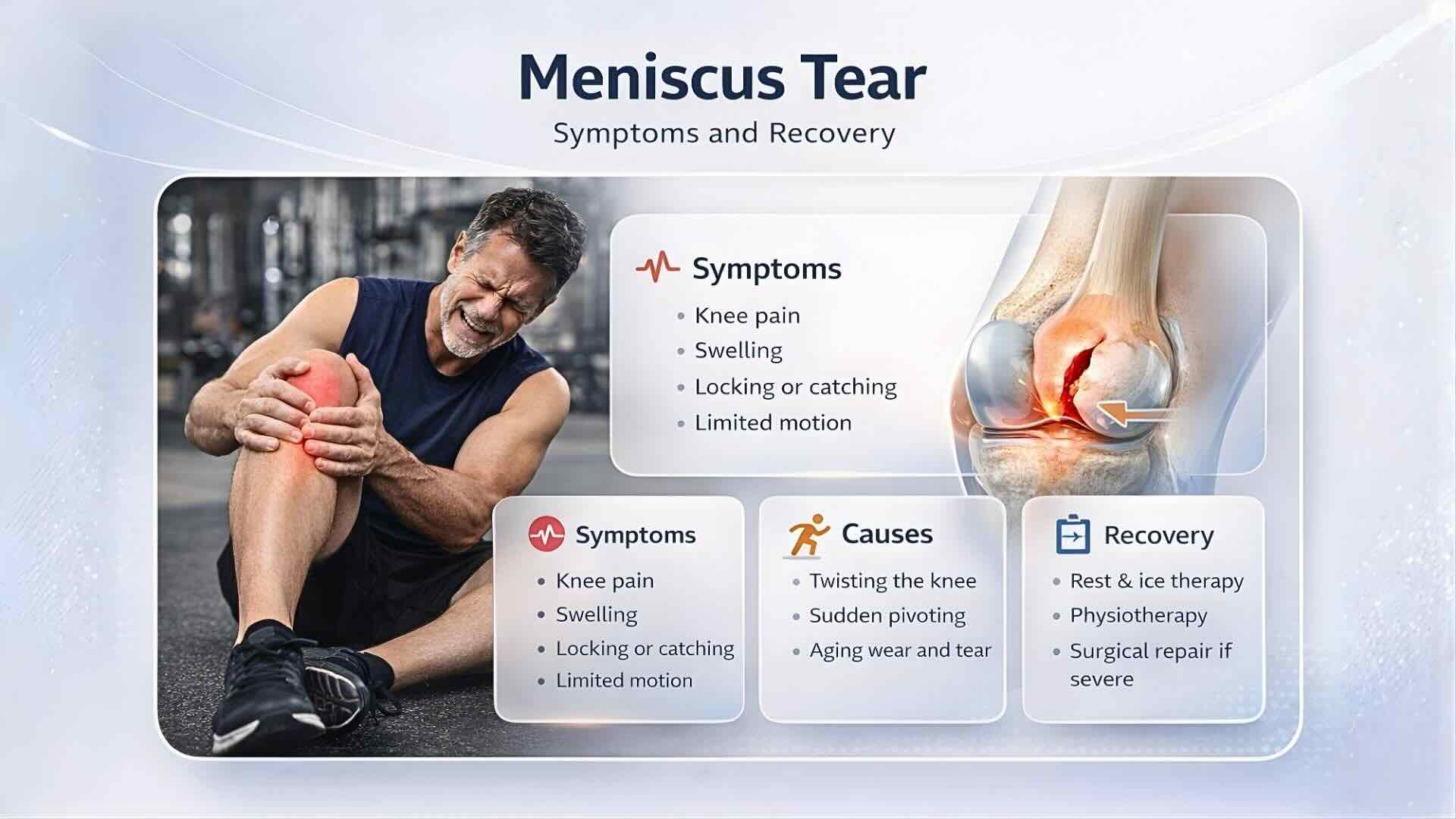
A meniscus tear is a common knee injury that affects the cartilage cushioning the joint, often causing pain, swelling, and limited movement.
It is also one of the most frequently diagnosed knee conditions in orthopedic care, affecting both active individuals and older adults. This condition occurs when the cartilage that cushions and stabilizes the knee joint becomes damaged. Because symptoms often appear slowly, patients may underestimate the seriousness of the injury in its early stages.
Early recognition of a meniscus tear is important. With proper evaluation and treatment, many patients can reduce discomfort, maintain joint function, and prevent long-term complications that could affect mobility and quality of life.
What Is a Meniscus Tear?
A meniscus tear is an injury to the meniscus, a C-shaped piece of cartilage located within the knee joint. This structure plays a critical role in absorbing shock, distributing weight, and stabilizing the knee during movement. Each knee contains two menisci one on the inner side (medial) and one on the outer side (lateral).
When this type of cartilage damage occurs, the smooth movement of the knee can be disrupted. In some cases, the injury leads to immediate symptoms, but more often, discomfort develops gradually. Depending on the size and location of the tear, patients may experience pain, swelling, or mechanical symptoms such as catching or locking.
Some meniscus tears happen suddenly, especially during sports activities that involve twisting or pivoting motions. However, many cases develop over time due to wear and tear, making this condition common among people who are not athletes.
What Causes a Meniscus Tear in the Knee?
Understanding the causes of this knee condition helps explain why symptoms and recovery can vary widely between individuals. Most meniscus tears are linked to either a sudden injury or gradual degeneration of the cartilage over time.
Common Causes of Meniscus Tear:
- Twisting or rotating the knee while the foot is firmly planted.
- Sudden pivoting movements during sports or physical activity.
- Age-related degeneration that weakens the cartilage over time.
- Repetitive stress on the knee from daily activities or occupational demands.
In younger individuals, this type of injury is often caused by a specific event, such as a sudden change in direction or direct impact. In contrast, older adults may experience tears due to degenerative changes, where the cartilage becomes less flexible and more prone to damage. In many cases, these changes are associated with conditions such as knee osteoarthritis, which can gradually affect joint structure and increase the risk of meniscal injury.
There are also different types of meniscus tears, including radial tears, flap tears, and bucket-handle tears. Each type can affect knee movement, stability, and overall function differently, which may influence how the injury is treated.
Meniscus Tear Symptoms and Warning Signs
One of the unique aspects of this knee injury is that symptoms often begin subtly. Many patients initially describe a vague sensation that something feels “off” in the knee rather than experiencing immediate pain.
Common Meniscus Tear Symptoms:
- Localized knee pain, especially during movement.
- Swelling that develops gradually rather than instantly.
- Stiffness or reduced range of motion.
- A sensation of catching, locking, or clicking in the knee.
- Feelings of instability or weakness.
Not all symptoms appear at the same time. Some individuals may notice only mild discomfort at first, which gradually worsens as the tear progresses.
How Symptoms Change Over Time
As symptoms progress, they often become more noticeable and consistent. Activities that once felt normal such as walking, squatting, or climbing stairs may begin to cause discomfort.
Over time, patients may experience:
- Increased pain during weight-bearing activities.
- Persistent swelling or stiffness.
- Difficulty fully bending or straightening the knee.
- Mechanical symptoms such as locking or clicking.
In some cases, the knee may feel unstable, especially during movements that involve turning or changing direction. Because these symptoms can overlap with other knee conditions, such as ligament injuries or early arthritis, a proper diagnosis is essential.

How Is a Meniscus Tear Diagnosed?
Diagnosing a meniscus tear requires a comprehensive evaluation. Knee pain can result from various conditions, so healthcare providers rely on a combination of clinical assessment and imaging.
Meniscus Tear Diagnosis Process:
- Reviewing the patient’s medical history and symptoms.
- Performing a physical examination to assess range of motion and stability.
- Using imaging tests such as MRI to confirm the presence of a tear.
An accurate diagnosis is important because the treatment approach depends on factors such as the location and severity of the tear. Some parts of the meniscus have limited blood supply, which affects healing potential.
If you are experiencing ongoing knee symptoms, a professional orthopedic evaluation can help determine the exact cause and guide appropriate care.
Torn Meniscus Treatment Options
Treatment for a torn meniscus varies depending on several factors, including the size of the tear, its location, and the patient’s lifestyle. Not all meniscus tears require surgery, and many cases can be managed with conservative treatment.
Non-Surgical Meniscus Tear Treatment
For mild to moderate injuries, meniscus tear treatment typically begins with non-surgical approaches. These methods focus on relieving symptoms, improving joint stability, and supporting the body’s natural healing process.
Common non-surgical treatments include:
- Physical therapy to strengthen surrounding muscles.
- Activity modification to reduce stress on the knee.
- Anti-inflammatory strategies to manage pain and swelling.
- Guided exercise programs, including corrective exercises for knee pain, designed to restore mobility and support joint function.
These approaches often allow patients to return to normal activities without the need for invasive procedures, especially when treatment is started early and followed consistently.
When Is Surgery Needed for a Meniscus Tear?
In more complex cases, surgery may be recommended. This is typically considered when symptoms persist, mechanical issues develop, or the knee becomes unstable.
Surgical options aim to either repair or remove the damaged portion of the meniscus, depending on the type of tear and its location. The goal is to restore smoother joint movement while preserving as much healthy tissue as possible.
Meniscus Tear Recovery Timeline and Rehabilitation
Recovery from this type of knee injury can vary significantly depending on the severity of the injury and the chosen treatment method.
What to Expect During Recovery
In non-surgical cases, recovery focuses on:
- Reducing inflammation.
- Gradually restoring strength.
- Improving flexibility and joint stability.
Patients typically follow structured rehabilitation programs designed to protect the knee while encouraging healing.
After surgery, recovery is more structured and may include:
- Physical therapy sessions.
- Controlled movement exercises.
- Gradual return to activity.
Recovery timelines can range from a few weeks to several months, depending on individual healing and treatment type.
Returning to Daily Activities
A common concern for patients with a meniscus tear is when they can safely return to their normal routine. The answer depends on how well the knee responds to treatment.
Returning too quickly can increase the risk of re-injury. A gradual approach guided by medical professionals ensures that the knee regains strength and stability before resuming full activity.
When Should You Seek Medical Attention?
While some mild knee discomfort may improve with rest, certain symptoms should not be ignored.
Signs You Should See a Doctor:
- Knee pain that does not improve after several days.
- Increasing swelling or stiffness.
- Difficulty moving the knee.
- A feeling that the knee is unstable or locking.
Early evaluation of the injury can prevent further damage and improve long-term outcomes.
Living With a Meniscus Tear
Managing a meniscus tear often requires ongoing attention rather than a one-time solution. Many patients adjust their activity levels while maintaining strength and flexibility in the knee.
Long-term joint health depends on maintaining balanced movement, avoiding excessive strain, and following a structured care plan when needed. With proper guidance, many individuals are able to remain active without significant limitations.
If symptoms continue to affect your mobility, exploring orthopedic knee treatment services can help you find the right path forward.
Why Early Treatment of a Meniscus Tear Matters
Delaying treatment is one of the most common reasons knee injuries become more severe. Because this condition can develop gradually, many people wait until symptoms interfere with daily life before seeking care.
Early treatment offers several advantages:
- Greater range of treatment options.
- Reduced risk of long-term joint damage.
- Faster and more effective recovery.
Although not all meniscus tears can be prevented, strengthening the muscles around the knee and using proper movement techniques can help reduce the risk.
Conclusion
A meniscus tear is a common knee injury that affects the cartilage cushioning the joint and can cause pain, swelling, stiffness, and limited movement. While symptoms may begin subtly, they can worsen and significantly impact mobility if left untreated.
Understanding the symptoms of this knee injury, obtaining an accurate diagnosis, and choosing the right treatment approach are essential steps toward recovery.
With proper care, rehabilitation, and medical guidance, many patients are able to return to normal activities while protecting long-term knee health.
If you’re experiencing persistent knee pain or suspect a meniscus tear, scheduling an evaluation with an orthopedic knee specialist can help you get the right diagnosis and treatment plan.