Returning to Sports or Work After an Orthopedic Injury
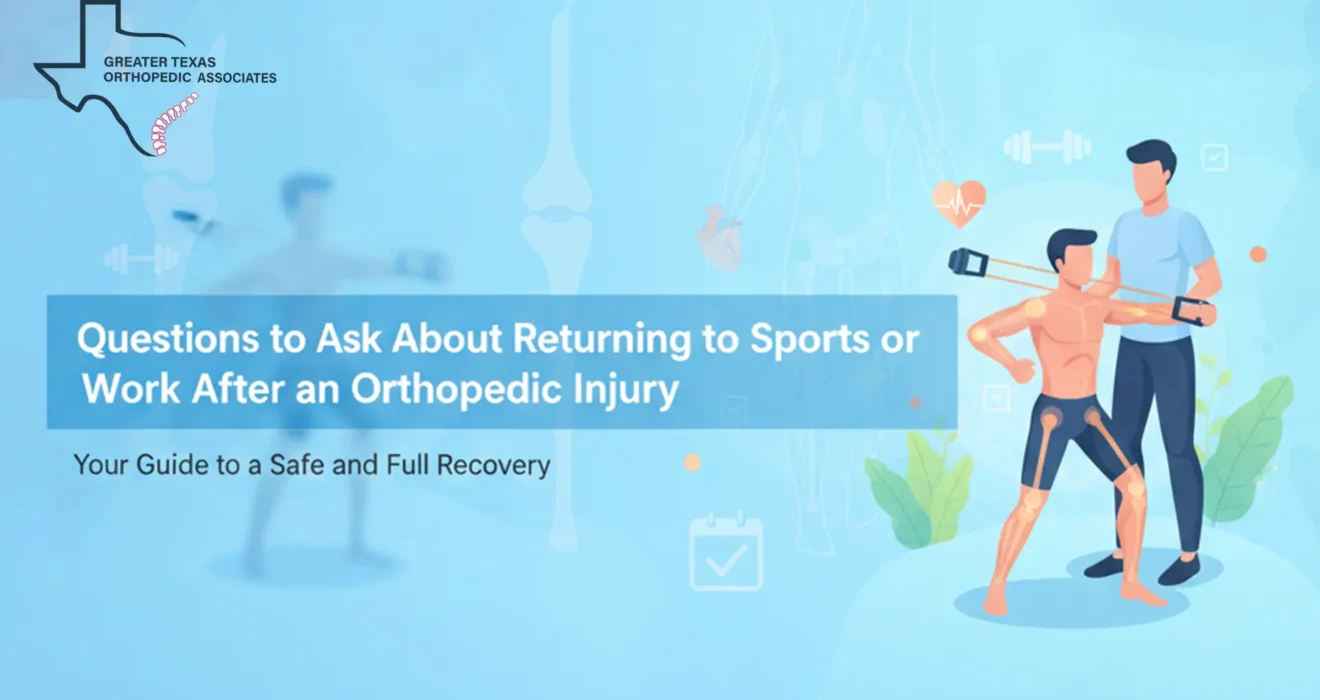
The transition from a period of recovery back to the demands of physical labor or competitive athletics is one of the most critical phases in musculoskeletal medicine. While the initial treatment of a fracture, ligament tear, or spinal condition focuses on stabilization and pain reduction, the final goal is the restoration of functional independence. However, the path to returning to sports or work after an orthopedic injury is not always linear, and rushing this process can lead to significant setbacks or chronic disability.
Effective recovery requires a partnership between the patient and a multidisciplinary medical team. Understanding the specific criteria for safety and readiness allows individuals to make informed decisions about their health. This article provides a comprehensive framework for navigating the return-to-activity process, focusing on the essential questions patients should ask their providers and the objective benchmarks used to determine clearance.
The Biological Reality of Healing
One of the most common misconceptions in recovery is that the absence of pain equates to the completion of healing. In reality, biological tissues, such as tendons, ligaments, and bone, undergo specific phases of repair that dictate their mechanical strength. For example, after an anterior cruciate ligament (ACL) reconstruction, the graft actually becomes weaker during the revascularization phase (weeks 4-12) before it begins the long process of “ligamentization”. During this period, a patient may feel capable of high-impact movement, but the tissue lacks the tensile strength to survive those forces.
When discussing resuming sports or work after an orthopedic injury, it is vital to ask where you stand in this biological timeline. Is the bone fully consolidated? Has the soft tissue integrated with the bone? Only a specialist can provide these answers through clinical assessments and imaging tools such as MRI scans, which are the gold standard for evaluating soft tissue integration.
The Role of an Orthopedic Evaluation Before Return to Activity
A formal pre-activity checkup serves as the definitive bridge between rehabilitation and full participation. This process is far more involved than a simple physical check-up. It typically includes a review of medical history, a detailed physical exam, and functional testing to assess the kinetic chain.
Key Questions for Your Evaluation:
- What is the status of my joint stability? Ask your doctor to perform specific manual tests, such as the drawer or fulcrum tests for the shoulder or knee.
- Are there persistent deficits in my range of motion? A full, non-painful range of motion (ROM) is often a prerequisite for more advanced activity.
- What imaging is necessary before clearance? While X-rays show bone healing, an MRI or CT scan may be required to assess [lumbar disc herniation] or other soft tissue structures.
Functional Readiness: Moving Beyond the Calendar
Historically, many clinicians relied solely on time-based clearance. For example, clearing an athlete at exactly six months post-surgery. However, research indicates that time-based clearance alone fails to meet the needs of a significant percentage of individuals because it does not account for individual variation in muscle recovery and neuromuscular control. Modern protocols emphasize “criterion-based” clearance, meaning a patient must hit specific performance benchmarks regardless of how much time has passed.
A comprehensive orthopedic evaluation before return to activity should include objective measurements of strength symmetry. In most cases, the injured limb should demonstrate at least 90% of the strength of the uninjured limb before high-intensity activity is considered. This reduces the risk of the body overcompensating and causing a new injury.
Navigating the Workplace: Return to Work Clearance After Injury
For many individuals, the primary concern is not a playing field but the ability to perform occupational duties. Achieving return to work clearance after injury is a collaborative process involving the patient, the employer, and the medical provider. Unlike sports, work clearance often involves legal and insurance documentation, particularly in personal injury or workers’ compensation cases.
The standard for returning to sports or work after an orthopedic injury in an occupational setting often hinges on “essential tasks”. A doctor must evaluate whether a patient can lift a specific weight, stand for a required duration, or perform repetitive motions without exacerbating a condition like [facet joint syndrome] or nerve irritation.
Essential Questions for Work Clearance:
- Can I return to modified duties? Many employers offer “light duty” or modified roles, such as reduced hours or ergonomic adjustments.
- What are my specific physical restrictions? Your clearance document should clearly list weight limits, standing intervals, and prohibited movements (such as overhead reaching or repetitive twisting).
- How will my progress be monitored? A successful transition often requires periodic reviews of the return to work plan to ensure that, as the patient’s condition improves, their responsibilities can safely increase.
Having a work clearance after injury that is precisely documented is essential. Accurate records substantiating the patient’s limitations provide the objective evidence necessary to support claims for lost wages and future medical needs.
The “3 P” Program for Athletes
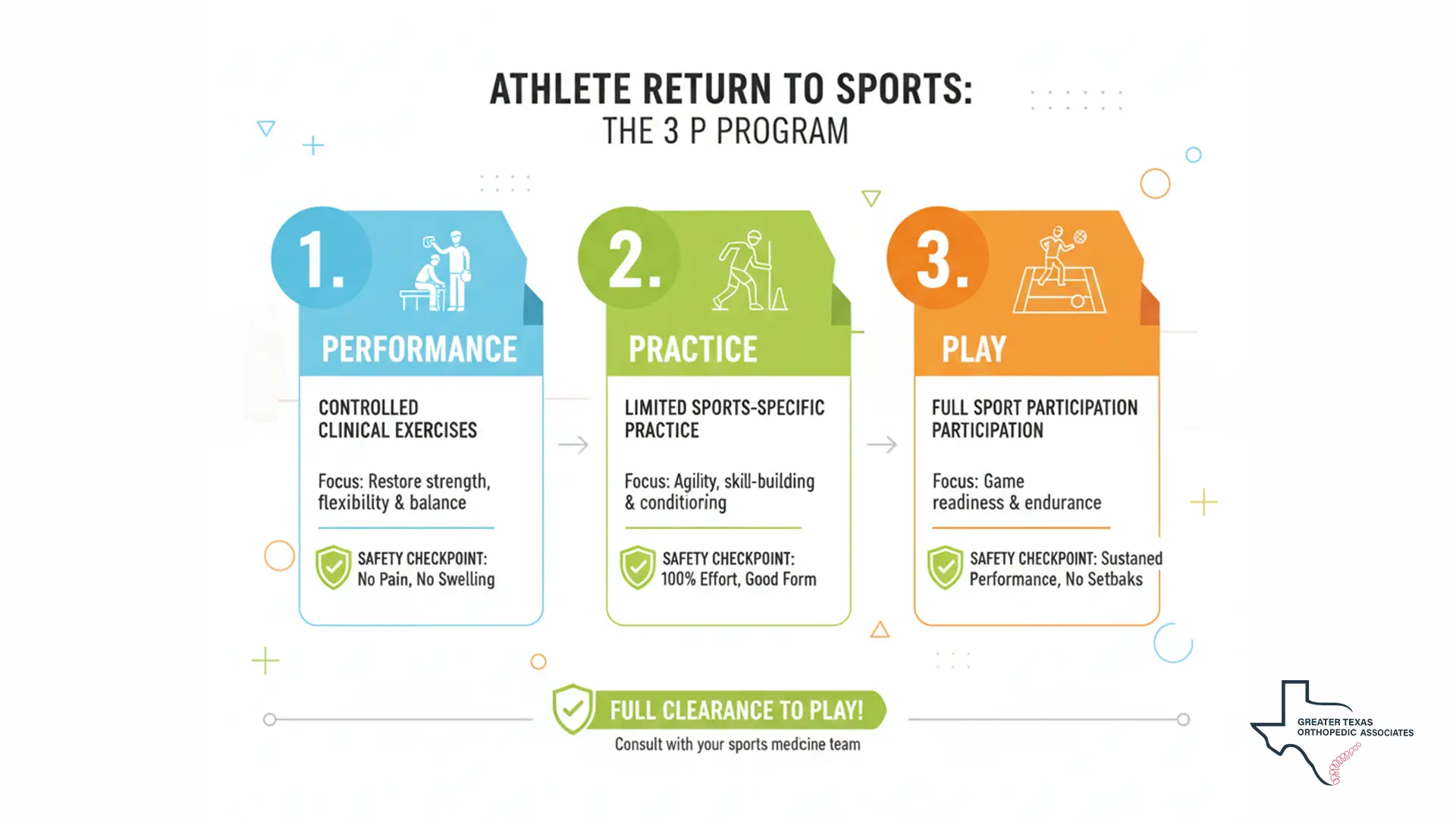
Determining when to return to sports after orthopedic injury is often guided by a tiered progression known as the 3 P Program: Performance, Practice, and Play. This structured approach ensures that the athlete is not suddenly exposed to the high-velocity, unpredictable forces of a game without preparation.
- Performance Training: This stage involves high-level rehabilitation in a controlled clinical setting. Exercises focus on sport-specific drills, plyometrics, and restoring proprioception, the body’s ability to sense its position in space.
- Practice Participation: Once performance benchmarks are met, the athlete progresses to limited, controlled practice. This might involve participating in non-contact drills or restricted scrimmage time.
- Play: Full clearance to unrestricted competition occurs only after the athlete demonstrates 100% effort in practice without pain, swelling, or instability.
Psychological Readiness: The Hidden Barrier
A patient may be physically healed but mentally unprepared to return to activity. Kinesiophobia, or the fear of re-injury, is a significant predictor of poor outcomes. If an athlete hesitates during a cutting movement or a worker avoids using a previously injured limb out of fear, they are at an increased risk of a new injury due to altered mechanics.
The [IPRRS] (Injury Psychological Readiness to Return to Sport Scale) is a validated tool that clinicians use to measure a patient’s confidence levels. When you undergo an orthopedic assessment before resuming activity, it is worth asking your provider to assess your psychological readiness. If fear remains a barrier, a more gradual “graded exposure” protocol may be necessary to rebuild confidence.
Managing Chronic Pain During the Transition
In some cases, the injury may lead to chronic symptoms that require ongoing management even after a patient returns to work or play. For example, a patient with a history of spinal stenosis may need periodic interventions to maintain their activity level.
Specialized procedures can offer a window of relief that facilitates continued rehabilitation. Facet joint injections and medial branch blocks are often used to address localized spine pain, while radiofrequency ablation (RFA) can provide longer-term relief by deactivating pain-transmitting nerves. If you are getting back to sports or work after an injury but still experiencing significant discomfort, ask your provider if you are a candidate for interventional pain management to help you stay active.
Risk Mitigation and Re-injury Prevention
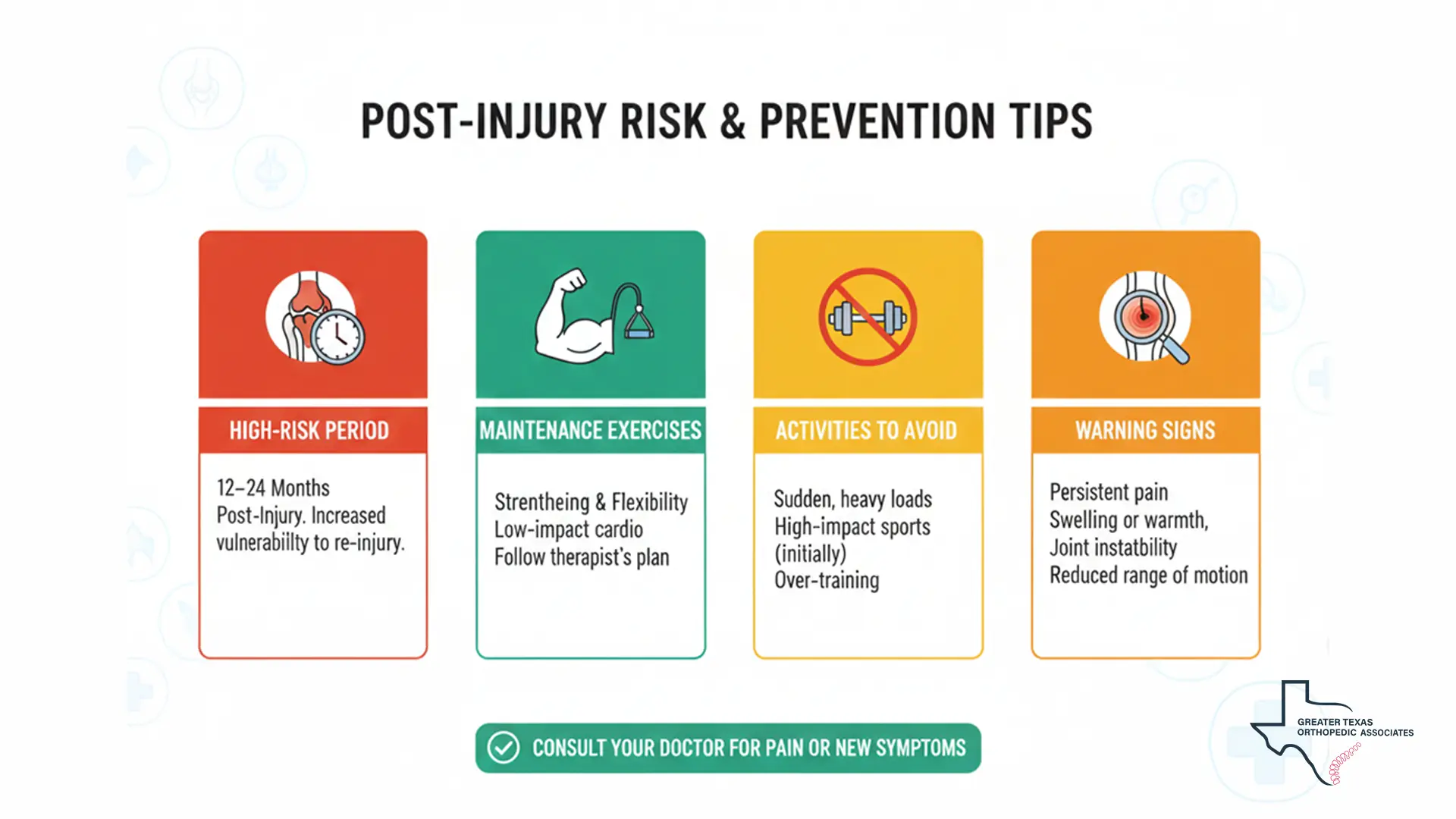
The risk of a second injury is highest in the first 12 to 24 months after returning to sports or work after an orthopedic injury. This “danger zone” occurs because physical strength often recovers faster than neuromuscular control and tissue integration. To mitigate this risk, patients must adhere to a maintenance program even after they have received their final clearance.
Questions About Prevention:
What maintenance exercises are non-negotiable?
Many injuries, such as [ACL tears] or rotator cuff strains, require lifelong strength training of the supporting musculature to prevent recurrence.
Are there certain activities I should avoid forever?
Depending on the severity of the injury, some high-impact or repetitive twisting motions may be permanently contraindicated to prevent the early onset of osteoarthritis.
How do I monitor for warning signs?
Learn to distinguish between typical muscle soreness and “reactive” symptoms, such as joint warmth or swelling that lasts more than 24 hours.
The Importance of Comprehensive Documentation
Beyond the clinical aspects, the documentation provided during the recovery process is paramount for anyone involved in a legal or insurance claim. A vague or incomplete return to work clearance after injury can jeopardize a personal injury case or lead to a denial of benefits.
Top-tier medical providers ensure that every record includes the mechanism of injury, current functional limitations, and a clear prognosis. This level of detail is necessary to prove causation, the direct link between an accident and the resulting orthopedic state. If you are working with an attorney, ask your doctor if they provide litigation-ready reports and expert testimony.
Decision-Making and Final Clearance
The decision regarding when to return to sports after orthopedic injury ultimately lies with the medical specialist, but it must be based on a synthesis of objective data and patient feedback. A surgeon may provide structural clearance (the bone is healed), but a physical therapist may withhold functional clearance (the muscles are not yet strong enough to protect the bone).
When you feel ready to take that final step, ensure that your orthopedic evaluation before return to activity has addressed every domain: biological healing, functional strength, movement quality, and psychological readiness. If any of these pillars are weak, the entire foundation of your recovery is at risk.
A Step-by-Step Checklist for Your Final Appointment:
- Verify limb symmetry (at least 90% in strength and hop tests).
- Confirm the absence of apprehension during provocative stability tests.
- Review the “return-to-play” or “return-to-work” schedule for gradual reintegration.
- Secure a signed copy of your “return-to-work assessment” with specific restrictions.
- Discuss long-term maintenance and signs of overtraining.
Conclusion
Successfully returning to sports or work after an orthopedic injury is a significant milestone that represents the culmination of months of hard work and professional guidance. It is a transition that should be approached with patience and a commitment to objective standards. By asking the right questions and ensuring a thorough orthopedic evaluation before return to activity, you can protect your long-term health and move forward with confidence.
Whether you are recovering from neck disc problems, a torn meniscus, or a broken arm, the principles of safe reintegration remain the same: allow the body time to heal biologically, build the functional strength to handle the load, and address the mental barriers that can hinder performance. With the support of an experienced team and a clear, evidence-based plan, you can regain your mobility and return to the activities you love.
Navigating a complex recovery is much like rebuilding a bridge after a storm: while it may look solid on the surface, its true safety is only confirmed through rigorous testing and a deep understanding of its structural integrity. Only when the foundation is sound, and the materials have fully cured can it safely handle the weight of the traffic once again.