

Rotator Cuff Tear: Symptoms, Causes, Treatment & Recovery
A rotator cuff tear is one of the most common causes of shoulder pain and reduced arm mobility. This injury occurs when one or more of the tendons that stabilize the shoulder joint become partially or completely torn. Because the shoulder moves in many directions, even a small rotator cuff injury can make simple activities like lifting, reaching, or carrying objects uncomfortable.
The rotator cuff is made up of four muscles and their tendons that work together to support the shoulder and help the arm move smoothly. When these tendons become injured, patients may experience shoulder weakness, pain when lifting the arm, and difficulty performing everyday tasks.
Some shoulder injuries happen suddenly after a fall, heavy lifting, or sports activity. However, many shoulder rotator cuff tears develop gradually over time due to repetitive overhead stress and age-related tendon degeneration. People who frequently perform overhead movements such as athletes, painters, mechanics, or construction workers are at greater risk.
Recognizing rotator cuff tear symptoms, obtaining an accurate diagnosis, and exploring effective torn rotator cuff treatment options can help patients recover more quickly and avoid long-term shoulder problems.
Patients seeking specialized care for shoulder injuries can learn more about treatment options provided by the orthopedic specialists at Greater Texas Orthopedic Associates.
What Is a Rotator Cuff Tear?
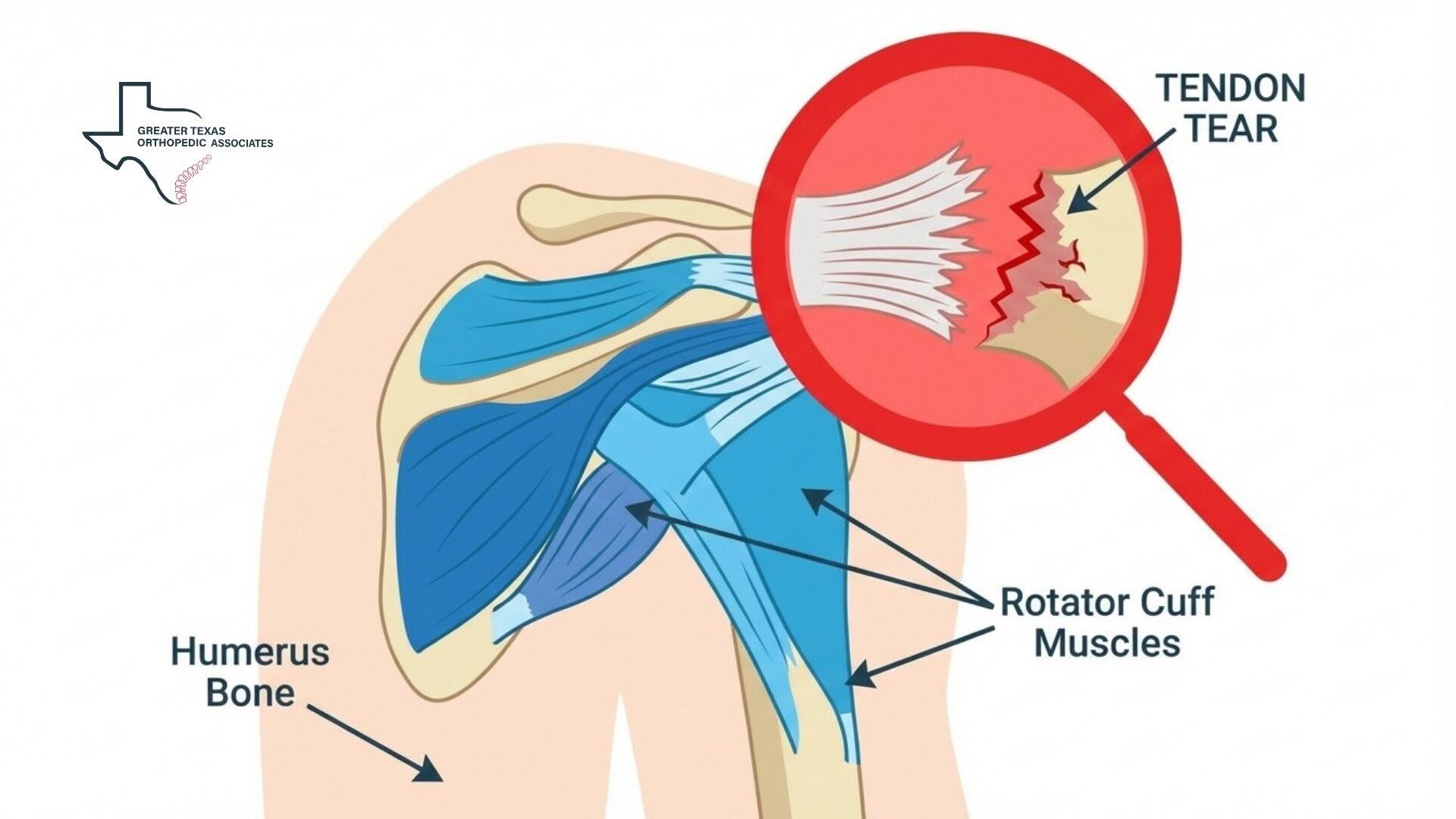
A rotator cuff tear occurs when one or more tendons within the rotator cuff become damaged or detached from the upper arm bone (humerus). The rotator cuff plays a critical role in stabilizing the shoulder joint and allowing controlled arm movement.
The rotator cuff consists of four muscles:
- supraspinatus
- infraspinatus
- teres minor
- subscapularis
These muscles work together to keep the shoulder joint stable while allowing the arm to rotate and lift in multiple directions.
When a tendon tears, the shoulder may become weak, painful, and unstable. Some patients develop a partial shoulder tendon damage, where the tendon is damaged but not fully separated. Others experience a full-thickness tear, where the tendon completely detaches from the bone.
Even a small shoulder rotator cuff tear can lead to ongoing shoulder pain if the condition is not properly evaluated and treated by an orthopedic specialist.
Common Causes of Rotator Cuff Tears
Rotator cuff tears may occur after a sudden shoulder injury or develop gradually due to long-term wear on the tendons. Understanding how the injury happened helps doctors choose the most appropriate treatment plan.
One common cause is degenerative tendon damage. Over time, repeated shoulder movements and reduced blood supply to the tendons may weaken the rotator cuff and increase the risk of tearing.
Another frequent cause is acute trauma. Falls, lifting heavy objects, or sudden shoulder strain can place excessive force on the tendons.
Risk factors that increase the likelihood of a torn shoulder tendon include:
- Repetitive overhead arm movements
- Heavy lifting or sudden shoulder strain
- Age-related tendon degeneration
Sports such as baseball, swimming, and tennis place repeated stress on the shoulder joint, increasing the risk of tendon injuries in the rotator cuff.
Rotator Cuff Tear Symptoms
The symptoms of this shoulder tendon injury often depend on the size of the tear and which tendon in the rotator cuff is affected. Some people experience mild shoulder discomfort, while others develop severe shoulder pain and weakness.
One of the most common symptoms is persistent shoulder pain, especially when lifting the arm or reaching overhead.
Many patients also notice pain while sleeping, particularly when lying on the affected shoulder.
Other symptoms may include:
- Weakness when lifting or carrying objects
- Limited shoulder range of motion
- A clicking or popping sensation during movement
Individuals with more severe shoulder tendon tears may have difficulty performing everyday activities such as dressing, brushing their hair, or reaching for items above shoulder height.
Because shoulder tendon injuries can worsen over time, early evaluation by an orthopedic specialist is important.
Why Rotator Cuff Tears Can Worsen Over Time
A small shoulder tendon tear may gradually worsen if the shoulder continues to experience repetitive stress. Without proper treatment, the damaged tendon may retract from the bone and weaken surrounding muscles.
As the tear grows larger, shoulder mechanics can become unstable. This imbalance may lead to chronic inflammation, decreased strength, and progressive loss of shoulder mobility.
Orthopedic specialists at Greater Texas Orthopedic Associates frequently evaluate patients with shoulder injuries, including tendon injuries affecting the rotator cuff. Early diagnosis allows physicians to develop a treatment plan that protects the shoulder and prevents additional damage.
Patients who want to better understand how orthopedic injuries are evaluated can read this related article: https://greatertxortho.com/first-orthopedic-evaluation-after-injury/
How Doctors Diagnose a shoulder tendon tear
To diagnose a rotator cuff tear, doctors typically begin with a physical examination of the shoulder. During this evaluation, physicians review the patient’s symptoms, medical history, and any recent injuries affecting the shoulder.
They then assess shoulder strength, flexibility, and range of motion.
Physical Examination
During the exam, doctors may ask patients to perform specific arm movements that help evaluate rotator cuff function.
Pain or weakness during these movements may indicate tendon damage.
Imaging Tests
Imaging tests are often used to confirm the diagnosis and determine the severity of the injury.
X-rays may be performed to rule out fractures or arthritis that could contribute to shoulder pain.
MRI scans are commonly used to examine soft tissues such as tendons and muscles. These scans allow physicians to determine the size and location of the shoulder tendon tear.
Patients experiencing persistent shoulder pain may benefit from evaluation by specialists within the orthopedic departments that diagnose and treat musculoskeletal injuries.
torn shoulder tendon Treatment Options
Treatment for a rotator cuff tear depends on several factors, including the severity of the injury, the patient’s activity level, and the size of the tear.
Many patients improve with conservative treatment methods that focus on reducing pain and restoring shoulder strength.
Common torn rotator cuff treatment options include:
- Anti-inflammatory medications that reduce swelling and pain
- Physical therapy programs that strengthen shoulder muscles
- Rehabilitation exercises that improve mobility and stability
Conservative Treatment
For partial tears, non-surgical treatment is often recommended. Rest, ice therapy, and guided physical therapy can reduce inflammation and strengthen surrounding muscles.
Rehabilitation exercises help restore normal shoulder movement and prevent stiffness.
Advanced Treatment Options
If conservative treatment does not relieve symptoms, physicians may recommend more advanced interventions.
Corticosteroid injections may help reduce severe shoulder inflammation and pain.
For larger tears, rotator cuff surgery may be necessary. Modern surgical procedures often use minimally invasive arthroscopic techniques that allow surgeons to repair the damaged tendon through small incisions.
Recovery Timeline After Rotator Cuff Tear Treatment
Recovery time varies depending on the severity of the shoulder injury and whether surgery is required.
Patients receiving conservative treatment may notice improvement within several weeks, although full recovery may take several months.
Individuals who undergo rotator cuff surgery typically require a longer rehabilitation period. A sling may be used initially to protect the shoulder while the tendon heals.
Physical therapy plays an essential role in restoring shoulder strength and mobility during recovery.
Following the rehabilitation plan recommended by your orthopedic specialist can help the shoulder heal properly and reduce the risk of reinjury.

When to Seek Medical Care
While mild shoulder soreness may improve with rest, certain symptoms require professional medical evaluation.
Individuals should seek medical care if they experience:
- Persistent shoulder pain
- Noticeable weakness in the arm
- Difficulty lifting objects or raising the arm
Early diagnosis of a shoulder tendon tear allows physicians to begin treatment before the injury becomes more severe.
Preventing Rotator Cuff Injuries
Although not all shoulder injuries can be prevented, certain habits can reduce the risk of developing a shoulder tendon tear.
Strengthening the shoulder and upper back muscles can help support the joint and reduce strain on the rotator cuff.
Using proper technique during sports or physical work is also important. People who perform repetitive overhead movements should take regular breaks and use correct lifting mechanics.
Stretching and strengthening exercises can improve shoulder flexibility and help protect the tendons from injury.
Conclusion
A rotator cuff tear is a common shoulder injury that can significantly affect arm strength, shoulder mobility, and daily activities. Damage to the rotator cuff tendons may occur gradually due to repetitive stress or suddenly after trauma.
Recognizing the early symptoms of a rotator cuff tear and obtaining an accurate diagnosis can help patients begin treatment sooner and improve recovery.
With early diagnosis and proper treatment, many patients are able to regain shoulder strength and return to their normal activities.
If you are experiencing persistent shoulder pain or weakness, seeking an early orthopedic evaluation can help prevent further injury and improve recovery outcomes. An orthopedic evaluation can help determine whether the pain is related to a rotator cuff injury and what treatment options may be most effective.