

Future Medical Costs in Personal Injury Claims
After an injury, most patients focus on immediate pain relief and early treatment, often without realizing that the cost of recovery may extend well beyond the initial phase of care. The financial impact of an orthopedic injury often becomes clear later, especially when patients require continued rehabilitation, follow-up visits, or additional procedures.
In many personal injury cases, these ongoing medical expenses can influence not only the value of a claim but also a patient’s ability to continue treatment without financial strain.
Orthopedic injuries commonly affect the spine, joints, ligaments, or nerves, all of which play a critical role in movement and overall function. These injuries often require extended recovery time and, in some cases, may not fully return to their pre-injury condition. For that reason, projected treatment costs should be evaluated early and supported by medical documentation rather than estimated too late in the process.
In clinical practice, musculoskeletal injuries frequently require care beyond the initial stage, particularly when symptoms such as pain, weakness, or limited mobility persist. While many patients focus on returning to daily activities, continued care such as therapy, injections, or even surgical intervention may become necessary as the condition progresses.
What Are Future Medical Costs in Personal Injury Claims?
Future medical costs in personal injury claims refer to the projected healthcare expenses a patient is expected to incur after a claim is resolved. These are not current medical bills, but medically supported projections based on clinical evaluations, injury severity, and expected long-term recovery patterns.
In orthopedic cases, these costs often include ongoing physical therapy, follow-up evaluations, medications, imaging studies, and potential surgical procedures. Because many injuries evolve over time, physicians must assess both the current condition and how it may progress.
For example, a patient with lower back nerve pain may initially respond to conservative treatment. However, if symptoms persist, additional interventions such as injections or surgery may become necessary. This type of progression highlights why future medical costs cannot be accurately estimated based on early treatment alone.
Accurately identifying these projected costs helps ensure that patients can continue treatment without interruption and that future care estimates reflect realistic long-term needs.
Why Future Treatment Costs Matter in Personal Injury Claims
Future treatment expenses in an injury claim play a major role in determining fair compensation. Orthopedic injuries are rarely limited to short-term discomfort. Instead, they often affect mobility, strength, and daily function as the condition progresses.
For instance, a patient experiencing sciatic nerve pain or joint instability may initially improve with therapy. However, persistent inflammation or structural damage can later require more advanced care. These changes are often not immediately visible during early treatment, which can lead to underestimating the true cost of ongoing care.
If these projected expenses are not included in the claim, the final settlement may not reflect the full impact of the injury. This can leave patients responsible for significant out-of-pocket costs related to continued care, including rehabilitation, repeat imaging, or pain management procedures.
Insurance carriers may challenge future treatment projections when they are not clearly supported by medical records, imaging, and physician recommendations. For that reason, early documentation of anticipated care needs can play a critical role in claim valuation.
Evaluating these costs early helps ensure that the claim reflects both the patient’s ongoing care requirements and the financial impact of continued treatment.
Common Future Medical Costs After an Orthopedic Injury
Orthopedic injuries often lead to a broad range of future medical expenses, depending on the severity of the injury, the affected area, and the patient’s response to treatment.
Common examples include:
- Physical therapy and structured rehabilitation.
- Diagnostic imaging such as MRI or CT scans.
- Pain management treatments including medications or injections.
In addition, patients may require specialist follow-up visits, assistive devices, or surgical procedures. In some cases, injuries may lead to long-term degenerative changes that require ongoing monitoring.
In many cases, future treatment costs involve multiple layers of care, which can significantly increase both the cost of recovery and the value of the claim.
Understanding the full recovery process helps explain why future medical costs in personal injury claims can vary significantly.

Calculating Future Medical Costs: How Doctors Estimate Care
Calculating future medical costs in personal injury claims requires detailed clinical evaluation and a structured approach to long-term treatment planning. Orthopedic specialists assess both current symptoms and long-term outcomes to create accurate projections.
Medical Evaluation
The process begins with a detailed assessment of the patient’s condition. Physicians review symptoms, physical limitations, imaging results, and response to treatment.
Treatment Planning
Based on the diagnosis, doctors develop a structured treatment plan. This may include therapy, medications, injections, or surgical options depending on the severity of the injury.
Long-Term Prognosis
Orthopedic specialists evaluate how a condition is likely to progress over time. While some injuries improve steadily, others may result in persistent pain or reduced mobility.
These clinical evaluations help guide treatment planning, document future care needs, and support claims involving projected medical expenses and ongoing treatment requirements. This process ensures that cost estimates are based on objective medical evidence rather than assumptions. Patients can learn more about the evaluation process here.
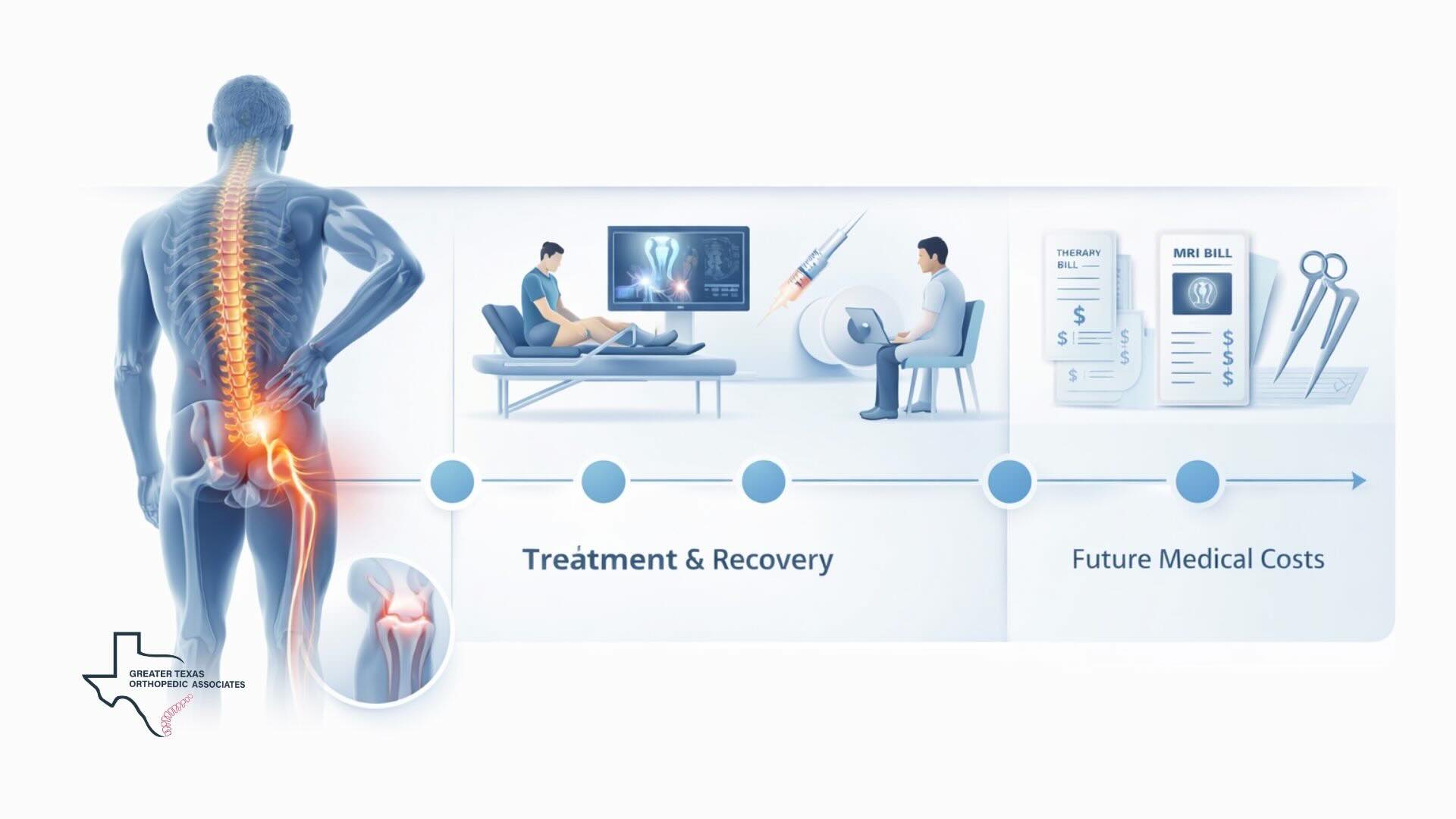
The progression from initial treatment through recovery often plays a key role in determining the overall cost of future care in personal injury claims.
Factors That Affect Future Medical Cost Calculations
Several factors influence how future medical costs are calculated in personal injury claims. These variables determine the level of care a patient may require.
One of the most important factors is the severity of the injury. More serious injuries typically require longer recovery and more complex treatment.
Another key factor is the type of treatment expected. Patients who may need injections, surgery, or long-term therapy usually have higher projected costs than those recovering with basic care.
Other important considerations include:
- Age and overall health.
- Activity level and occupation.
- Pre-existing conditions.
In some cases, even small changes in a patient’s condition can significantly increase long-term medical costs. This makes calculating future medical costs more complex and more important for accurate claim evaluation.
The Legal Importance of Future Medical Costs
From a legal perspective, projected medical expenses play a critical role in determining the value of an injury claim. Personal injury cases are not limited to past bills; they also involve anticipated healthcare needs and the cost of continued care throughout recovery.
Attorneys and insurance providers rely on medical documentation such as physician reports, imaging findings, and functional limitations to support these projections.
If these costs are underestimated, patients may receive compensation that does not fully cover ongoing care. This can place unexpected financial pressure on patients at a time when continued treatment is still necessary.
Strong medical documentation helps demonstrate that the injury has lasting consequences and that ongoing treatment is medically necessary.
The Role of Orthopedic Specialists in Injury Claims
Orthopedic specialists play a critical role in evaluating injuries and estimating future treatment costs. Their expertise helps determine how an injury may affect the body over time.
These specialists provide detailed reports outlining the diagnosis, expected recovery timeline, functional limitations, and potential long-term complications. This information is essential in both medical planning and legal claims, especially when patients need support from an orthopedic specialist.

Real-World Example of Future Treatment Costs
Consider a patient who develops persistent knee pain and instability after an accident. Initial treatment may include rest, medication, and physical therapy. However, if symptoms persist, additional care such as imaging, injections, or surgery may be required.
Following surgery, the patient may need several months of rehabilitation along with follow-up visits. These ongoing medical needs can significantly increase total treatment costs.
If these future treatment costs are not included in the injury claim, the patient may not receive enough compensation to complete recovery.
This example shows why future medical costs should be addressed early, before a claim is resolved and before additional treatment becomes the patient’s personal financial burden. Many patients do not anticipate this type of situation at the beginning of their recovery, which is why early medical planning is so important.
Long-Term Financial Impact of Orthopedic Injuries
In many orthopedic injury claims, projected long-term care expenses can represent a large portion of total compensation. Depending on the injury, treatment may continue for an extended period and require ongoing care.
Long-term medical expenses may include repeated therapy, pain management, surgical follow-up care, and additional evaluations over time. For that reason, accurately calculating future medical costs is essential if the claim is expected to reflect the full scope of recovery and the likely cost of future care.
Failing to account for these costs can create financial pressure at a time when continued treatment is still necessary.
Conclusion
The long-term impact of an orthopedic injury often becomes clear only when patients continue to need treatment well beyond the initial stage of recovery.
Understanding how to calculate future medical costs and planning for long-term care needs are essential steps in building a claim that reflects the full financial impact of an orthopedic injury. With proper planning and evaluation, patients can better protect both their health and financial stability.
If you are dealing with an orthopedic injury, early evaluation by a specialist can help identify future treatment needs, support stronger medical documentation, and reduce the risk of unexpected financial burdens later in recovery.