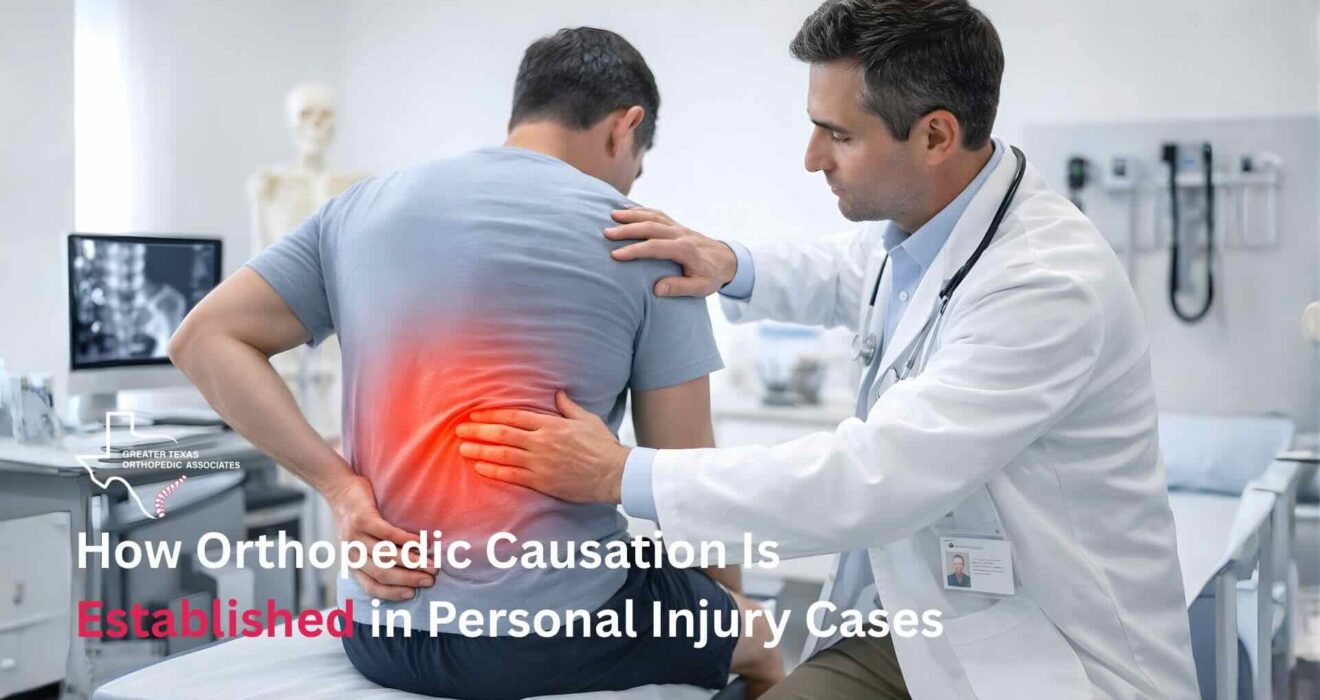
How Orthopedic Causation Is Established in Personal Injury Cases
In personal injury cases, one of the most important questions is not just what the injury is, but whether it can be clearly linked to the reported event. For attorneys, insurers, and injured patients, establishing causation in an orthopedic case can affect treatment approval, claim value, and the overall strength of the case. When that connection is unclear, even valid injuries may be challenged or undervalued.
Orthopedic causation is the medical process of determining whether a musculoskeletal injury is directly related to a specific accident or traumatic event. To make that determination, orthopedic specialists consider the mechanism of injury, the timing of symptoms, physical examination findings, imaging results, and prior medical history. Clear evaluation and well-documented records are often essential to showing whether the injury is consistent with the reported event and whether treatment is medically necessary.
What Is Medical Causation in Personal Injury Cases?
Medical causation in personal injury cases refers to the process of determining whether a specific injury or condition was directly caused by an accident or event. In orthopedic settings, this is commonly described as orthopedic causation, where physicians evaluate whether musculoskeletal injuries are consistent with the reported incident.
This process involves more than simply identifying a diagnosis. It requires medical evidence that clearly links the injury to the reported incident. In other words, the key issue is not just what the injury is, but what caused it.
In orthopedic cases, physicians typically evaluate:
- The mechanism of injury and how the accident occurred
- The timing of symptoms in relation to the event
- Clinical findings and diagnostic imaging results
Taken together, these findings help determine whether the injury is consistent with the reported incident.
For example, a patient may report back pain after a car accident. However, proving medical causation requires showing that the spinal condition is directly related to that event and not caused by unrelated or pre-existing factors.
Why Proving Medical Causation Matters
Proving medical causation is one of the key factors in how a personal injury claim is evaluated. It directly affects treatment approval, insurance decisions, and overall compensation.
In many cases, proving medical causation determines whether a claim is accepted or challenged by insurers. Without clear medical support, even legitimate injuries may be questioned or undervalued.
Orthopedic injuries often make this process more complex, especially when symptoms develop gradually or overlap with prior conditions. A patient may initially experience mild discomfort and continue daily activities, only to develop more serious symptoms later. If this progression is not properly documented, the connection to the original injury may be questioned.
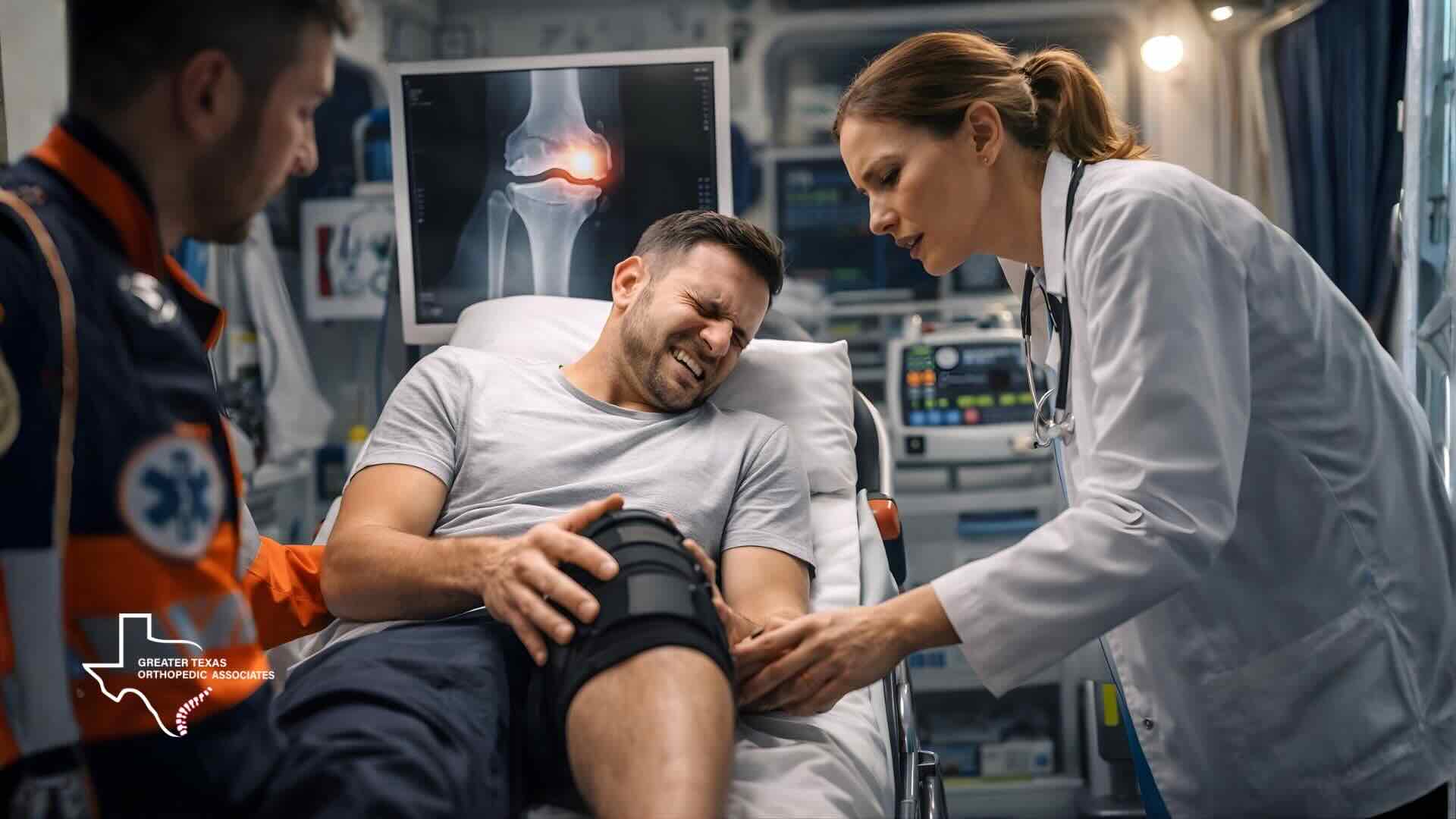
For example, a knee injury may appear minor at first but later require imaging or surgical evaluation. Without early documentation, establishing causation in an injury claim becomes more difficult and may delay care or reduce compensation.
This is why early orthopedic evaluation and consistent medical records are essential. The earlier the connection is documented, the stronger the claim becomes.
Key Factors Used in Establishing Causation
Establishing causation in an injury claim goes beyond identifying a diagnosis. It requires clear clinical justification, supported by medical evidence showing that the condition is connected to the reported event.
Physicians first analyze the mechanism of injury to determine whether the reported event could realistically cause the condition. The type of force involved must align with the diagnosis.
The timing of symptoms is another critical factor. Symptoms that appear shortly after an incident are easier to connect, while delayed symptoms require more detailed medical reasoning.
Diagnostic findings also play a key role. Imaging results, physical examinations, and functional limitations must support both the diagnosis and its cause.
Finally, pre-existing conditions must be considered. Many patients have prior injuries or degenerative changes, especially in the spine or joints. Distinguishing between old and new damage is essential when proving medical causation.
How Orthopedic Specialists Establish Causation
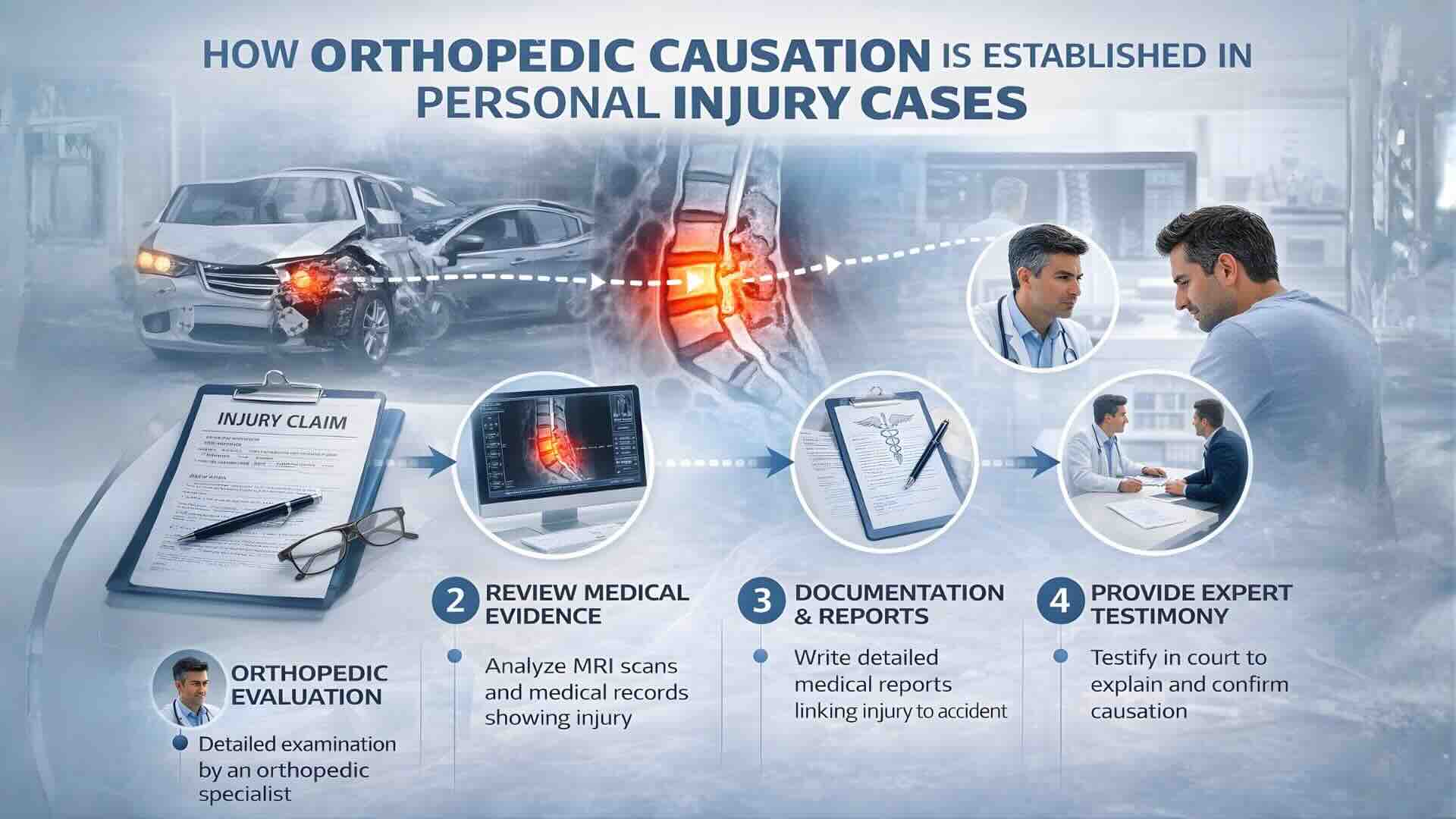
The process typically includes the following steps
Orthopedic specialists play a critical role in establishing medical causation, particularly in personal injury cases where clinical findings must clearly support the relationship between the injury and the reported event.
Determining causation in an injury claim goes beyond making a diagnosis. In complex orthopedic cases, it depends on how well clinical findings align with the reported mechanism of injury and symptom progression.
Specialists rely on several key steps:
- Reviewing how the injury occurred and the forces involved
- Evaluating how symptoms developed and progressed over time
- Analyzing imaging results and physical examination findings
Together, these elements allow physicians to reach a clear and medically supported conclusion about causation.
Medical Evaluation
The process begins with a detailed patient history. Physicians review how the injury occurred, when symptoms started, and how they have changed over time. This helps establish a clear timeline between the reported event and the development of symptoms.
Clinical Examination
A physical examination assesses mobility, strength, pain response, and functional limitations. These findings provide insight into how the injury affects the body.
Diagnostic Imaging
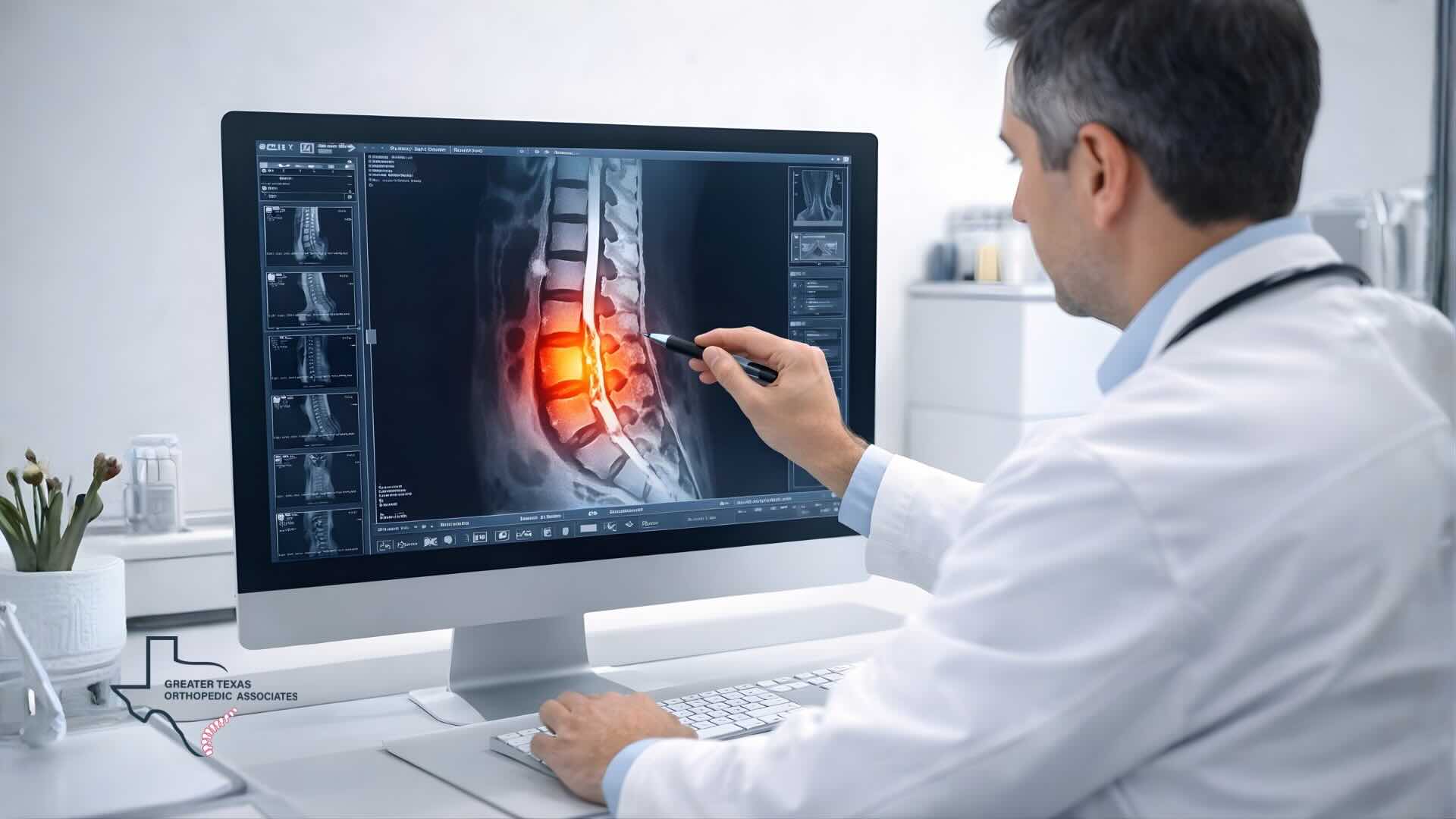
MRI and CT scans provide objective evidence that must align with both the diagnosis and the suspected cause of the injury.
Ongoing Assessment
Causation is often evaluated over time. As treatment progresses, physicians assess whether recovery patterns match what would be expected from the reported injury.
The Role of Medical Documentation in Proving Causation
Medical documentation plays a critical role in proving causation in personal injury cases. A diagnosis alone is often not enough the medical record must clearly connect the injury to the reported event. For attorneys, this supports liability and damages. For insurers, it helps determine whether treatment is reasonable and accident-related. For patients, it can affect both access to care and compensation.
Clear documentation also creates a timeline of the injury, including symptom onset, examination findings, imaging results, and functional limitations. In disputed cases, delayed treatment, gaps in care, or inconsistent records can weaken causation. By contrast, timely and well-organized medical records strengthen both the clinical and legal basis of the claim by showing a consistent link between the accident, the injury, and the need for treatment.
Challenges in Proving Medical Causation
Proving medical causation is not always straightforward. Several factors can complicate the process and make the connection harder to establish.
Common challenges include:
- Symptoms that appear days or weeks after the incident
- Pre-existing conditions that overlap with the new injury
- Inconsistencies between patient reports and medical records
These challenges can create doubt about the origin of the injury if they are not properly addressed.
Delayed symptoms may raise questions about whether the injury is truly related to the accident. Similarly, pre-existing conditions may make it difficult to distinguish between prior damage and new trauma.
Because of these challenges, establishing causation usually depends on careful evaluation, consistent documentation, and experienced clinical judgment.
Real-World Example of Establishing Causation
Consider a patient involved in a car accident who initially reports mild back discomfort. At first, the symptoms may seem manageable and may not significantly interfere with daily activities.
Over time, the pain worsens and begins to limit movement and function. An MRI later reveals a disc injury.
At this stage, proving medical causation requires linking the accident to the spinal condition. Physicians evaluate the mechanism of injury, the timing of symptoms, and the imaging results.
If these factors align, causation can be established. However, if treatment was delayed or documentation is incomplete, the connection may be questioned—even if the injury is legitimate.
This example clearly demonstrates how early evaluation and consistent records play a critical role in supporting an injury claim, especially when understanding the value of a first orthopedic visit.
The Legal Importance of Medical Causation
Medical causation in personal injury cases is closely tied to legal outcomes.
Attorneys and insurance providers rely on medical evidence such as physician reports, imaging findings, and documented functional limitations.
Strong causation findings can directly influence how insurers and legal teams evaluate claim value, treatment necessity, and future damages.
If causation is not clearly established, treatment may be denied and compensation may be reduced. This can leave patients responsible for ongoing medical expenses at a time when they still require care.
Clear medical support strengthens the ability to demonstrate that the injury is directly related to the accident and that future treatment should be included in the claim.
Conclusion
Establishing medical causation is one of the most important steps in any personal injury case. It determines whether an injury is recognized as accident-related and whether treatment and compensation are supported.
Orthopedic injuries can be complex, especially when symptoms develop over time or involve pre-existing conditions. This makes proving medical causation a critical part of both medical evaluation and legal strategy.
When causation is clearly established, it becomes much easier to support treatment decisions and the full value of the claim.
With proper evaluation, consistent documentation, and expert medical input, patients are better positioned to receive appropriate treatment and protect the full value of their injury claim, especially when working with experienced specialists.