
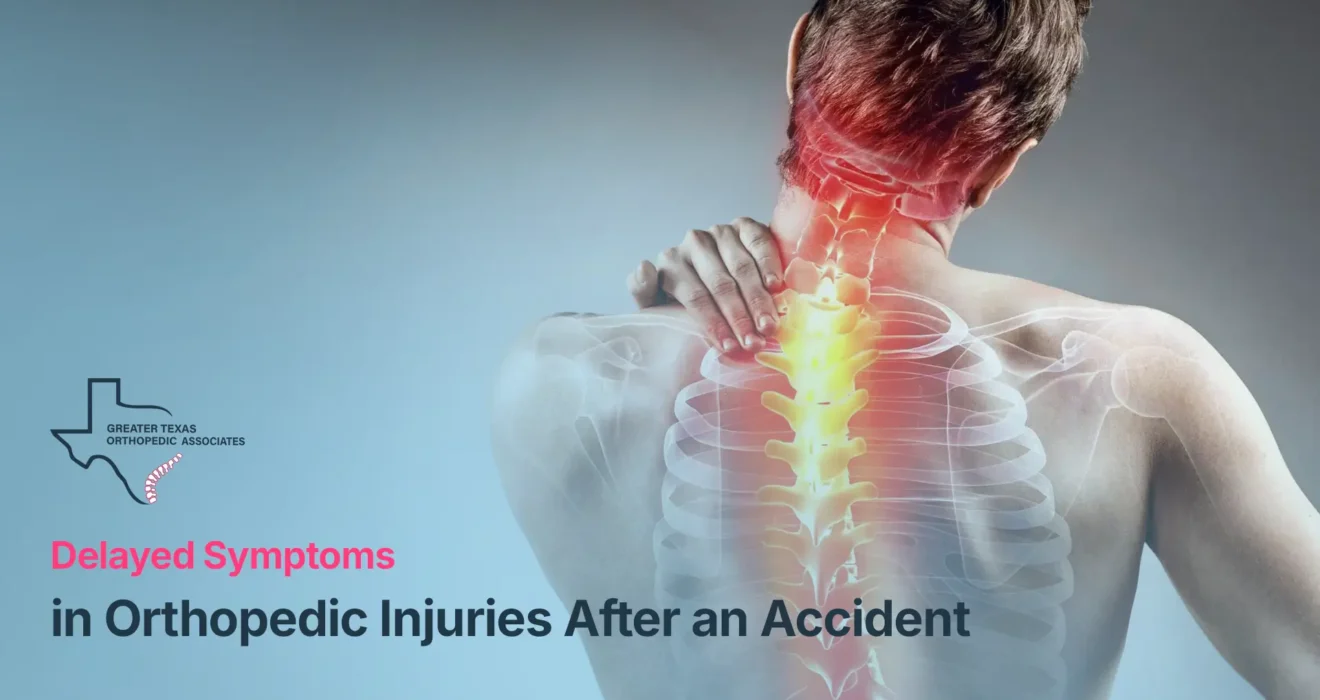
Delayed Symptoms in Orthopedic Injuries After an Accident
It is a frequent occurrence for individuals involved in a motor vehicle collision or a sudden fall to walk away from the scene feeling relatively unscathed. In the immediate aftermath, the focus is often on visible property damage or the initial shock of the event rather than physical health. However, the absence of immediate pain does not necessarily mean that there is no injury.
Delayed symptoms after an accident refer to physical or neurological signs of injury that do not appear immediately after trauma but develop gradually over hours or days as the body’s inflammatory and stress responses evolve. These types of symptoms are a well-recognized medical phenomenon, where orthopedic trauma may not manifest until hours, days, or even weeks after the initial impact. It is important to understand why these symptoms do not always appear instantly in order to ensure proper recovery and prevent long-term functional decline.
Why Some Injuries Do Not Hurt Right Away
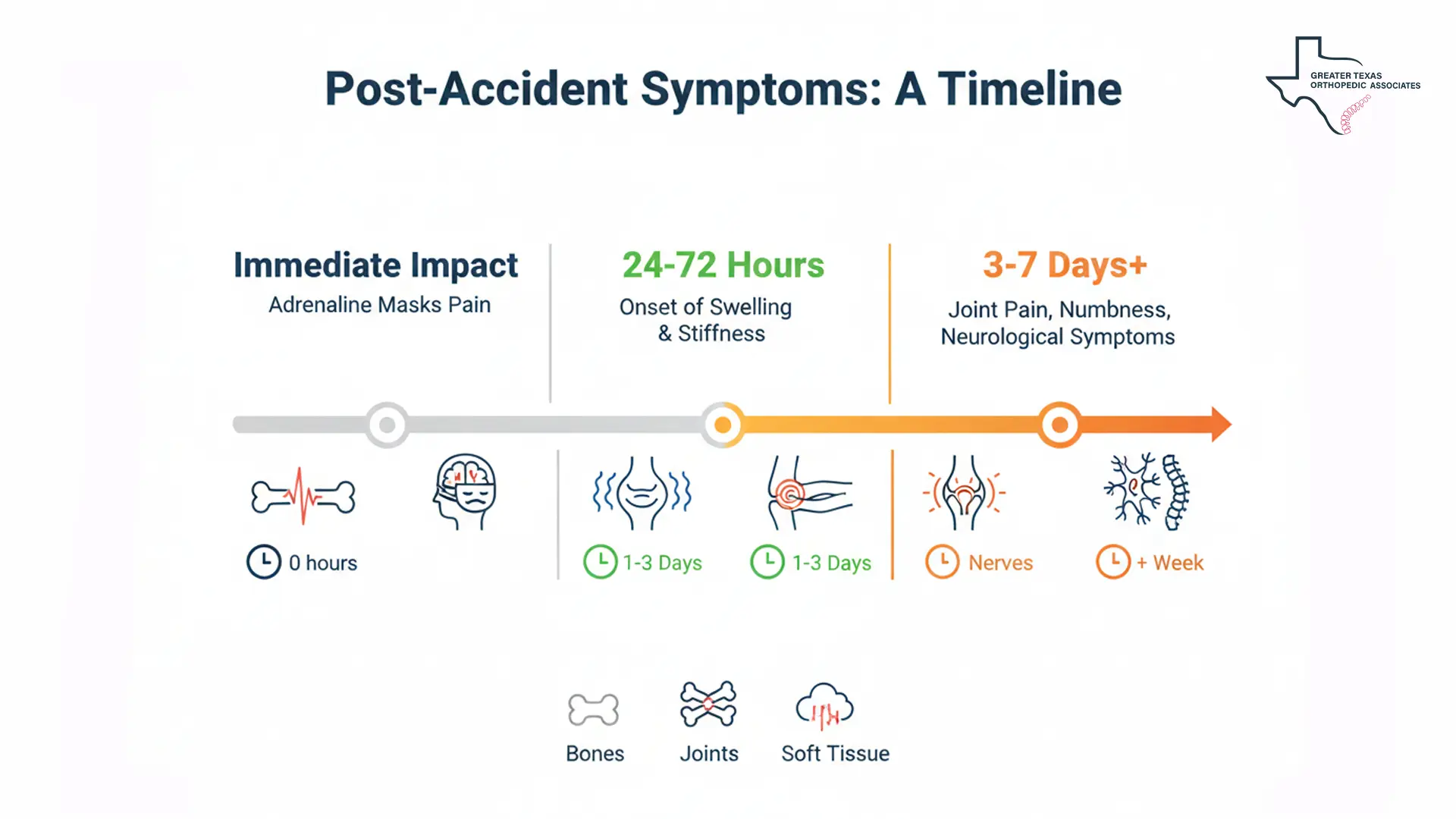
The human body possesses complex survival mechanisms that can temporarily mask the severity of trauma. During a high-stress event like a car crash, the brain triggers a massive surge of adrenaline and endorphins. This “fight or flight” response is designed to dull pain and heighten alertness, allowing an individual to navigate an emergency without being overwhelmed by physical discomfort. As this chemical surge eventually subsides, the true extent of hidden injuries after accident becomes clearer, often leading to a sudden onset of pain several hours later.
Furthermore, the timeline of the body’s inflammatory response plays a significant role in delayed onset. While some structural damage, such as a fracture, may be immediately obvious, other forms of damage, particularly soft tissue injuries, depend on the accumulation of inflammation.
Swelling and bruising do not always occur instantly; they develop as the immune system sends blood and fluid to the site of injury to begin the repair process. This gradual buildup of pressure on surrounding nerves and tissues explains why a patient may feel fine at the scene but experience debilitating stiffness the following morning.
Common Delayed Orthopedic Symptoms
Orthopedic injuries involve the musculoskeletal system, including bones, joints, ligaments, tendons, and muscles. Because these structures are interconnected, an injury in one area can cause compensatory strain in another, leading to varied symptoms appearing days after accident.
Neck and Back Pain
Neck and back injuries are among the most common results of vehicular trauma, particularly whiplash. Whiplash occurs when the head is jerked forward and backward with great force, straining the ligaments and muscles of the cervical spine.
Symptoms of whiplash, such as stiffness, tenderness, and a reduced range of motion, frequently take 24 to 72 hours to develop. Similarly, back pain may stem from a herniated disc, where the jelly-like center of a spinal disc pushes through a tear in its outer ring. This can lead to radiating pain or sciatica that intensifies as the disc material irritates nearby nerve roots. Delayed symptoms after an accident involving the spine should never be dismissed, as they may indicate progressive structural damage.
Joint Stiffness and Swelling
Joints like the knees, shoulders, and wrists are highly susceptible to “hidden” trauma. A phenomenon known as “dashboard knee” or a ligament tear (such as an ACL or meniscus injury) may initially present as minor soreness. As the body attempts to stabilize the joint through muscle guarding (a reflex where muscles tighten to protect the injured area), the joint may become increasingly stiff and swollen over several days.
Numbness or Tingling
Paresthesia, commonly described as a “pins and needles” sensation, is a warning sign of nerve involvement. This sensation may not appear immediately, but can emerge as post-traumatic swelling begins to compress spinal nerves or peripheral nerves in the limbs. If left unaddressed, persistent numbness can lead to long-term neurological deficits or muscle weakness.
The Science Behind Hidden Injuries
To understand why symptoms wait to appear, we must look at the microscopic level of tissue response. Many post-accident injuries involve tissue microtrauma, small tears in the collagen fibers of ligaments or tendons that do not cause immediate mechanical failure but trigger a delayed inflammatory cascade.
When soft tissues are overstretched, the body initiates a protective inflammatory response. This involves the release of inflammatory proteins and increased blood flow to the area, which causes the classic symptoms of redness, warmth, and swelling. This process takes time to reach a threshold where pain receptors are sufficiently stimulated to alert the brain. Additionally, our team notes that internal crowding, such as in acute compartment syndrome, occurs when pressure builds within a muscle compartment that cannot expand.
If internal bleeding or swelling continues within the fascia (the inflexible tissue surrounding muscles), the resulting pressure eventually cuts off the tissue’s oxygen and nutrient supply, leading to severe pain disproportionate to the visible injury. These hidden injuries after accident require precise diagnostic tools to identify before the damage becomes irreversible.
When Should You Seek Medical Evaluation?
We recommend that any individual involved in a significant trauma seek a medical assessment within 72 hours, even if they currently feel fine. Establishing a baseline medical record is essential for monitoring how delayed symptoms after an accident evolve.
Certain “red flag” symptoms require immediate emergency intervention. These include:
- Sudden loss of bowel or bladder control.
- Saddle anesthesia (numbness in the inner thighs or groin area).
- Progressive weakness in the limbs that makes standing or walking difficult.
- Severe abdominal pain or deep, dark bruising, which may indicate internal bleeding.
- Intense pain that does not improve with rest or medication, potentially signaling compartment syndrome.
Monitoring for symptoms appearing days after accident is a proactive step in managing your recovery and ensuring that minor issues do not escalate into chronic conditions.

Why Early Assessment Still Matters
Wait-and-see approaches can be detrimental to orthopedic health. Early intervention allows to identify structural issues that may be masked by the body’s natural defense mechanisms. Without an objective evaluation, there is a significant risk of misdiagnosis or the dismissal of serious trauma as “simple soreness”.
A comprehensive orthopedic evaluation utilizes advanced diagnostic imaging to look beyond what is visible to the naked eye. While X-rays are excellent for identifying bone fractures, they are limited in their ability to visualize soft tissue. specialists often utilize Magnetic Resonance Imaging (MRI) to provide detailed, multi-planar views of ligaments, tendons, and spinal discs. Identifying a disc herniation or a ligamentous tear early in the recovery window can prevent the development of chronic pain and long-term functional decline.
Related Considerations in Multi-Injury Cases
In many accidents, orthopedic injuries do not occur in isolation. A patient may be dealing with fractured ribs alongside a traumatic brain injury (TBI) or emotional trauma such as Post-Traumatic Stress Disorder (PTSD). These multi-injury cases present unique coordination challenges, as psychological stress can heighten the body’s sensitivity to pain and potentially prolong the inflammatory response.
Because delayed symptoms after an accident can be both physical and neurological, it is important to address the holistic needs of the patient. For example, persistent headaches may be a symptom of whiplash, but they can also indicate a concussion. Managing these overlapping symptoms appearing days after accident requires a team that can distinguish between musculoskeletal pain and neurological deficits. In certain cases, escalating pain and swelling may signal a more serious internal pressure condition.
Read more about compartment syndrome to understand how rising pressure within enclosed muscle compartments can become a limb-threatening emergency if not promptly diagnosed. When dealing with hidden injuries after accident, thorough documentation and specialized expertise are the most effective tools for ensuring no aspect of the trauma is overlooked.
Conclusion
The path to recovery after an accident is rarely a straight line. The biological reality of adrenaline, delayed inflammation, and tissue microtrauma means that your physical state 48 hours after an impact may be very different from your state at the scene. Recognizing that pain and dysfunction can emerge long after the event is the first step in protecting your long-term mobility.
By seeking a timely evaluation and remaining vigilant for new or worsening symptoms, you ensure that your body receives the support it needs to heal properly. Our commitment is to provide the medical clarity and specialized care necessary to navigate these complexities. If you are experiencing delayed symptoms after an accident, prioritizing a professional orthopedic assessment is the most reliable way to secure your health and your future recovery.