
Why Medical Documentation Matters in Injury Lawsuits
If you or a client has suffered an injury due to an accident, you are likely facing physical pain, financial strain, and complex legal uncertainty. Whether you are seeking treatment for chronic back pain, evaluating a traumatic brain injury (TBI), or navigating a personal injury claim, one element is absolutely critical: precise and comprehensive medical documentation.
In the highly specialized area of personal injury litigation, the pathway to securing fair compensation hinges fundamentally on medical evidence. Therefore, understanding the integral role of Medical Documentation in Injury Lawsuits is essential, as these records serve as the foundation upon which successful claims are built.
This article explains why these records are indispensable legal evidence, detailing how these records can affect lawsuits by proving your injury, justifying treatment, and maximizing your case’s value.
The Foundational Role of Medical Records in Personal Injury Cases
In a personal injury case, the injured party bears the burden of proving that the negligence of another party directly caused their harm. In this context, medical records operate as the primary form of objective evidence, forming a detailed blueprint of the patient’s health history and providing the objective support necessary for legal proceedings. Without robust, credible, and accurate medical evidence, even the most compelling case of negligence can fail during negotiations or in the courtroom.
Establishing Causation: The Critical Link
The cornerstone of any successful injury claim is establishing causation, the direct link between the accident and the sustained injuries. Therefore, the medical documentation must create an official, direct link between the trauma of the accident and the resulting symptoms.
Contemporaneous notes from the initial injury, such as from the emergency room (ER) or first physician visit, are crucial evidence. If treatment is delayed beyond the critical window (ideally 24 to 72 hours), insurance adjusters may argue that the injuries were not serious, were pre-existing, or resulted from an unrelated event. Clear, continuous records are indispensable for countering these arguments.
Our specialized orthopedic and pain management team, with over 70 years of combined experience, is dedicated to supporting law firms and patients by providing comprehensive injury assessments that precisely document causation.
Proving Damages and Severity of Injuries
Beyond just proving that the accident caused the injury, medical documentation for legal cases must clearly and authoritatively establish the full scope of a client’s physical and emotional suffering. These records are essential for demonstrating the severity of the injuries, the treatment required, the recovery timeline, and any anticipated future complications.
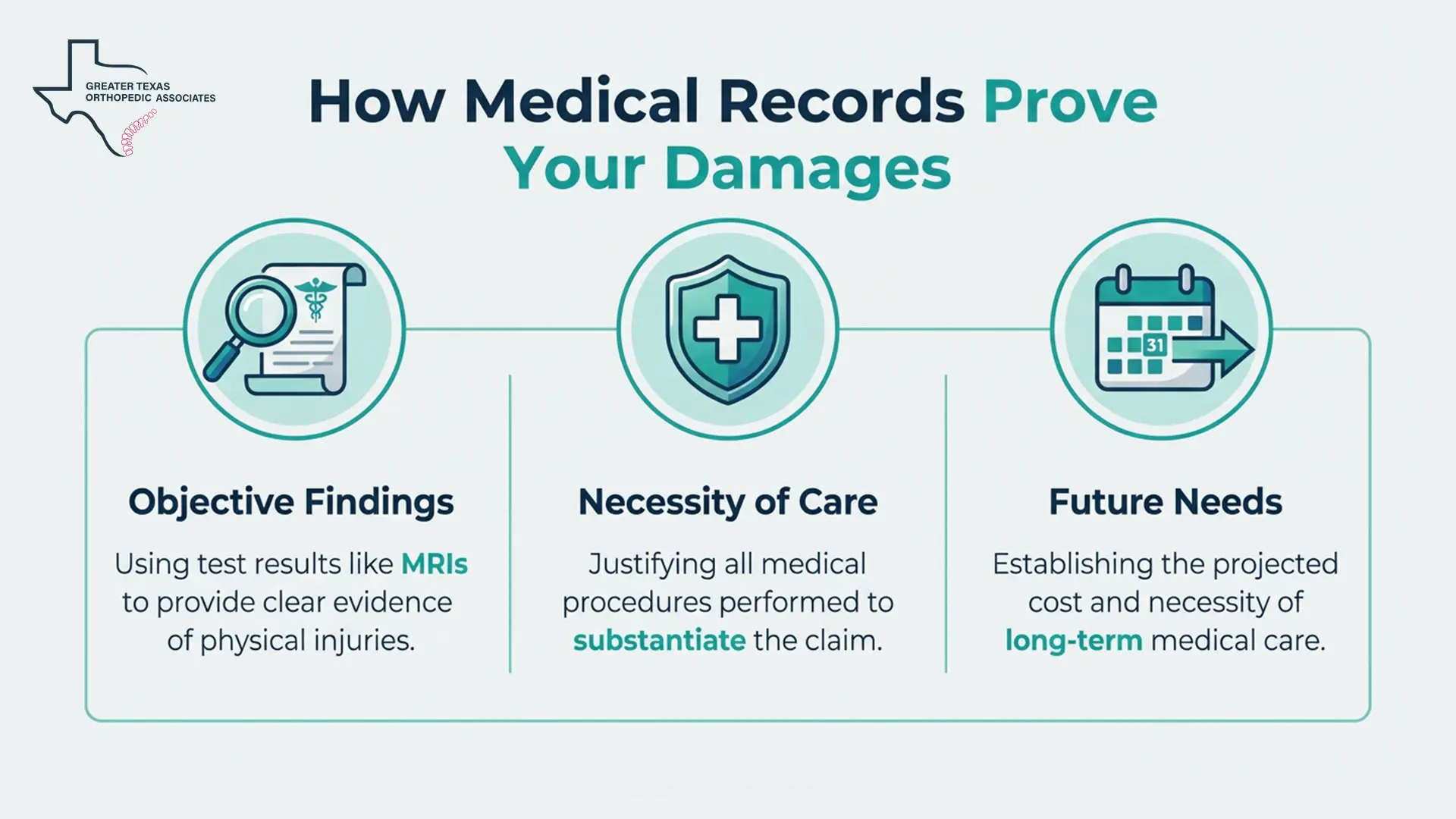
Medical records also enable the attorney to accurately calculate the financial losses recoverable by the victim, which can include current and future medical bills, medication costs, rehabilitation expenses, lost wages, and compensation for pain and suffering. Specifically, detailed documentation helps establish:
- Objective Findings: Objective test results, like X-rays and MRIs, provide clear, undisputed evidence of physical injuries such as disc damage or soft tissue pathology.
- Necessity of Care: The records justify the medical necessity of all procedures performed, from diagnostic injections to pain relief treatments, which substantiates the injury claim.
- Prognosis and Future Needs: Prognosis reports and impairment ratings are vital for establishing the projected cost and necessity of any long-term or future medical care.
In short, organized and meticulous medical records in personal injury cases are critical because they prove the necessary elements of the legal claim and ultimately determine the potential value of the compensation award.
How Medical Records Affect Lawsuits
Medical records impact every stage of a lawsuit, from initial filing to final settlement or trial. In tort law, a successful negligence claim requires proving four core elements: duty of care, breach of that duty, causation (the breach caused the injury), and damage (loss or injury occurred). Medical Documentation in Injury Lawsuits directly supports the claimant in overcoming these legal hurdles.
Supporting Legal Elements of Negligence
- Proving the Breach of Duty (Standard of Care): While the primary focus in injury claims is typically causation, the medical records can sometimes shed light on whether the treatment provided by another party met a reasonable standard. In medical negligence claims, for example, obtaining and reviewing medical records from all relevant sources is essential for investigating whether professional negligence allegations can be properly made. The records, often reviewed by an independent medical expert, are instrumental in demonstrating that the care received was below a reasonable standard.
- Establishing Causation (The “But For” Test): Causation is often the most difficult element to prove. It requires the claimant to prove, on the balance of probabilities, that the defendant’s action was responsible for the harm. This is typically measured using the “but for” test-meaning, “but for the defendant’s breach of duty, would the plaintiff have suffered harm?” Clear medical documentation for legal cases is required to satisfy this precise legal definition. The records must link the timeline of the injury, the specific diagnosis, and the subsequent treatment timeline directly to the accident to avoid failing the “but for” test. Our neurosurgical team and pain management experts specialize in complex cases, providing detailed reports that link trauma to neurological injury and permanent impairment, ensuring the evidence required to establish this crucial link is present.
- Quantifying Loss and Damages: The records provide verifiable data on the extent of the client’s physical and emotional suffering, substantiating the claim for economic and non-economic damages. The comprehensive records allow the attorney to accurately calculate how much compensation the victim is eligible to recover. They document the treatment timeline, frequency of care, severity of the injuries, and expected long-term effects, which directly translate into the financial valuation of the case.
The Role of Specialized Experts and Testimony
Complex injuries like spinal trauma or TBI demand specialized evaluations. Specialists such as orthopedic surgeons and neurosurgeons review comprehensive medical records in personal injury cases to assess causation, determine injury extent, and provide a prognosis. Their expert reports and testimony are critical for explaining complex medical details to the court and lending credibility to the claim.
The value of specialized medical documentation in injury lawsuits is most evident during testimony. Medical experts have a duty to the court to provide objective, impartial opinions, and a board certified physician’s report is often considered more credible. Our team of specialists works closely with attorneys to provide the authoritative documentation and testimony that meets these rigorous standards. For more on our services, including comprehensive injury assessments, please visit our [Services] page.
Ultimately, the reliability of these specialized records dictates how medical records affect lawsuits by creating a strong, evidence-backed argument for fair compensation.
Common Pitfalls in Medical Documentation
Despite their crucial role, pitfalls in medical documentation or patient compliance can severely undermine an injury claim. Defense attorneys and adjusters meticulously review every note for inconsistencies or gaps they can exploit to cast doubt on the claim’s legitimacy.
The Dangers of Delayed Treatment and Gaps in Care
Two of the biggest liabilities in personal injury claims are delaying initial care and creating gaps in medical treatment. Seeking medical attention within 72 hours of an accident is paramount; any delay gives opponents an opening to argue the injuries aren’t severe or were caused by an intervening event.
Similarly, skipping follow up appointments allows adjusters to argue that you failed to mitigate damages or that the symptoms weren’t serious enough to warrant compensation. Consistent care is crucial to demonstrate you are actively managing the injury.
Inaccurate or Inconsistent Records
Poor or inadequate medical documentation in injury lawsuits provides weak evidence that insurers can easily dispute. Records that are illegible, ambiguous, or inconsistent, such as an ER report that conflicts with later evaluations, can be exploited by insurance companies to reduce or deny a claim. Furthermore, faulty documentation of pre-existing conditions aggravated by the accident can lead to a significant under-settlement.
Credibility and Ethical Concerns
The provider’s reputation is paramount, as opposing counsel will scrutinize their billing, past testimony, and practices to discredit their objectivity. Any perception of a “built-up” case raises red flags. Bad medical documentation for legal cases, such as altered notes, ruins a provider’s credibility and undermines the claim.
This underscores how medical records affect lawsuits based on the integrity of the record-keeper. Our team is committed to providing objective, accurate care and precise documentation, supported by specialists experienced in authoritative testimony.
Actionable Tips for Patients
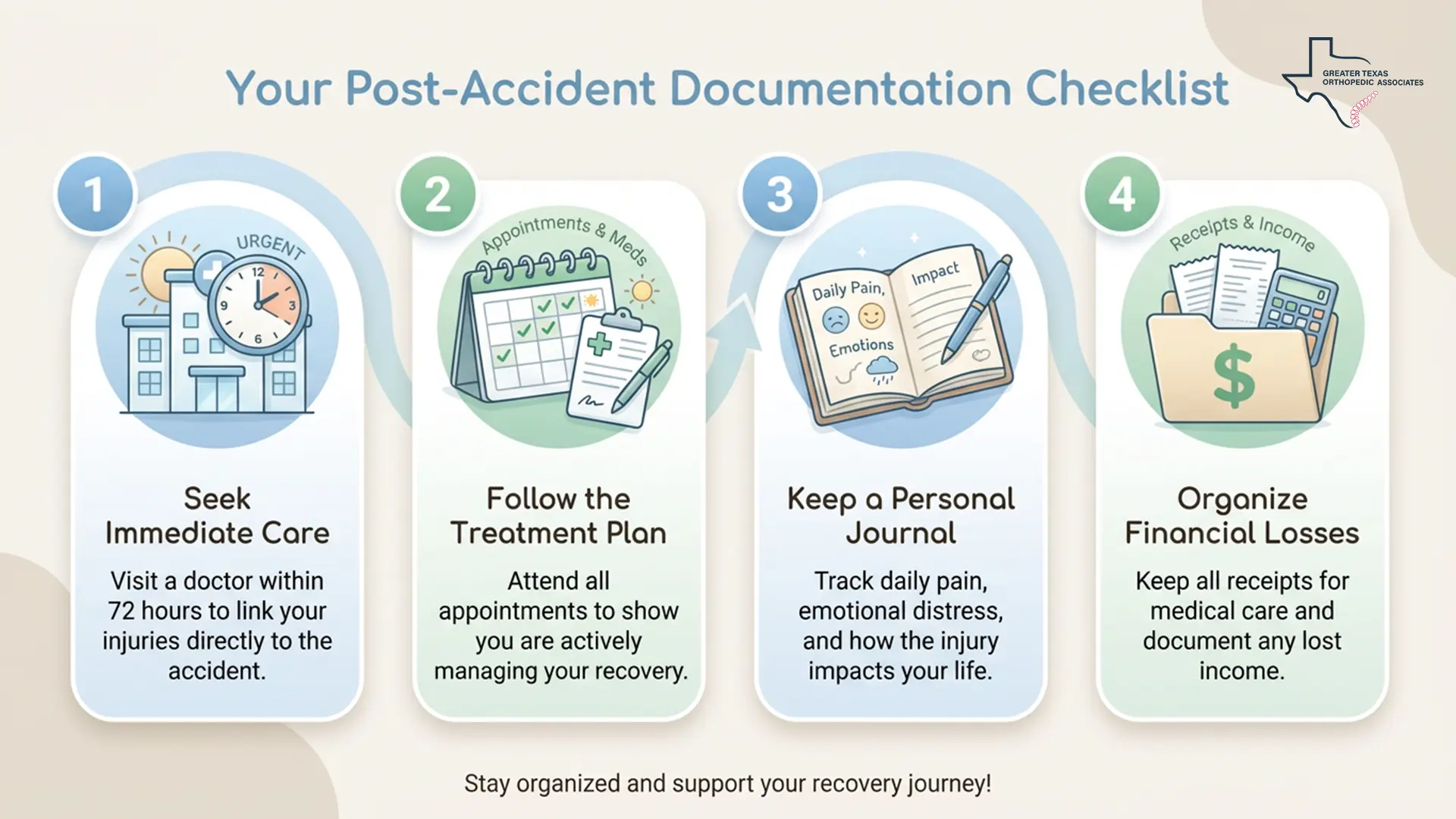
For individuals involved in injury claims, taking proactive steps in managing your health and documentation ensures that your recovery is prioritized and your legal rights are protected. Following a rigorous post-accident medical checklist is a critical component of personal injury case preparation.
1. Seek Immediate and Specialized Medical Care
The most vital step is to seek medical advice immediately after an accident (within 72 hours) to establish the crucial link to your injuries.
Report all symptoms to your provider accurately and completely; do not downplay pain or discomfort.
It is advisable to consult specialists, like orthopedic surgeons, who can identify hidden trauma. Our team offers such specialized services, including advanced diagnostic injections like Medial Branch Blocks (MBBs) and Facet Joint Injections (FJIs), to precisely diagnose and treat spinal pain.
2. Maintain Strict Adherence to Treatment and Follow-Up
Once a treatment plan is established, strict adherence to all medical advice is non-negotiable. Attend all follow-up appointments, physical therapy sessions, and scheduled diagnostic tests. Skipping these appointments weakens the legal claim and can negatively impact your long-term health. If chronic pain persists, consistent follow-up with a Pain Management specialist is necessary to implement targeted solutions.
3. Keep a Detailed Personal Injury Journal
Since intangible losses like pain, emotional distress, and loss of enjoyment of life are challenging to prove, maintaining a detailed personal injury journal (diary) is a powerful piece of documentation. This log should track:
- Daily pain levels and specific characteristics of the discomfort.
- Emotional toll, including anxiety, depression, or sleep disturbances resulting from the accident.
- How does the injury limit daily activities, work capacity, and hobbies?
- All medical appointments, therapies, and any recovery setbacks.
This journal helps quantify non-economic damages and serves as crucial corroborating evidence alongside objective medical records in personal injury cases.
4. Organize and Document Financial Losses
Meticulously track all financial losses related to the injury, retaining receipts for medical care, prescriptions, and necessary equipment. Also, maintain documentation of lost income, missed workdays, or reduced productivity, which must be substantiated by employer verification or pay stubs. This financial documentation helps underscore the compensation claim by quantifying the quantifiable loss associated with the damage.
By diligently executing these steps, patients ensure that every aspect of their injury and recovery is chronicled, transforming their healthcare journey into robust evidence that clearly dictates how medical records affect lawsuits and subsequent settlements.
Conclusion: Securing Justice Through Precision
The pivotal role of Medical Documentation in Injury Lawsuits cannot be overstated. It is the primary tool for proving injury severity, establishing causation, and determining compensation value. The quality and consistency of every medical record, from the ER visit to the final prognosis, will either build an ironclad case or expose it to denial.
The best outcomes are achieved through strong physician-legal collaboration, where medical professionals are committed to delivering the precise medical documentation for legal cases required to withstand scrutiny.
Partnering with specialists dedicated to meticulous reporting helps individuals maximize their recovery while establishing the record needed to secure justice. Ultimately, the story of pain and recovery, told through accurate medical records, remains the cornerstone of every successful injury claim.