
How Orthopedic Injury Severity Affects Settlement Value
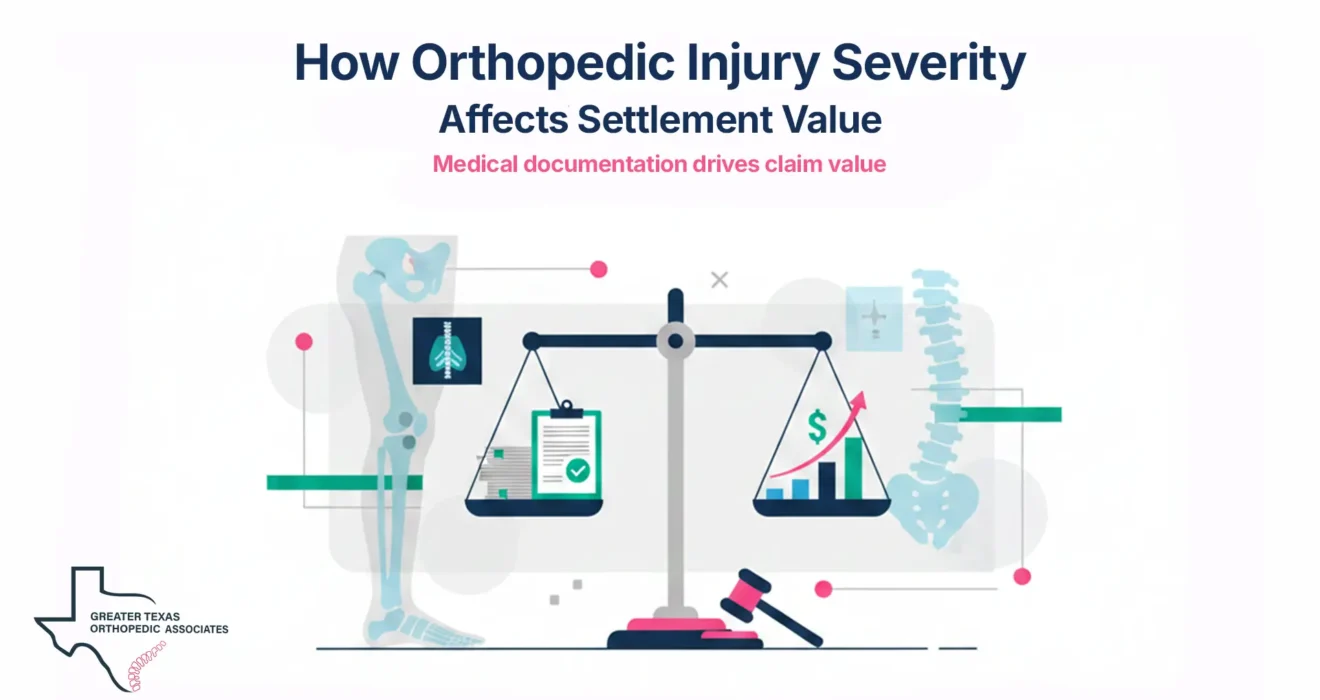
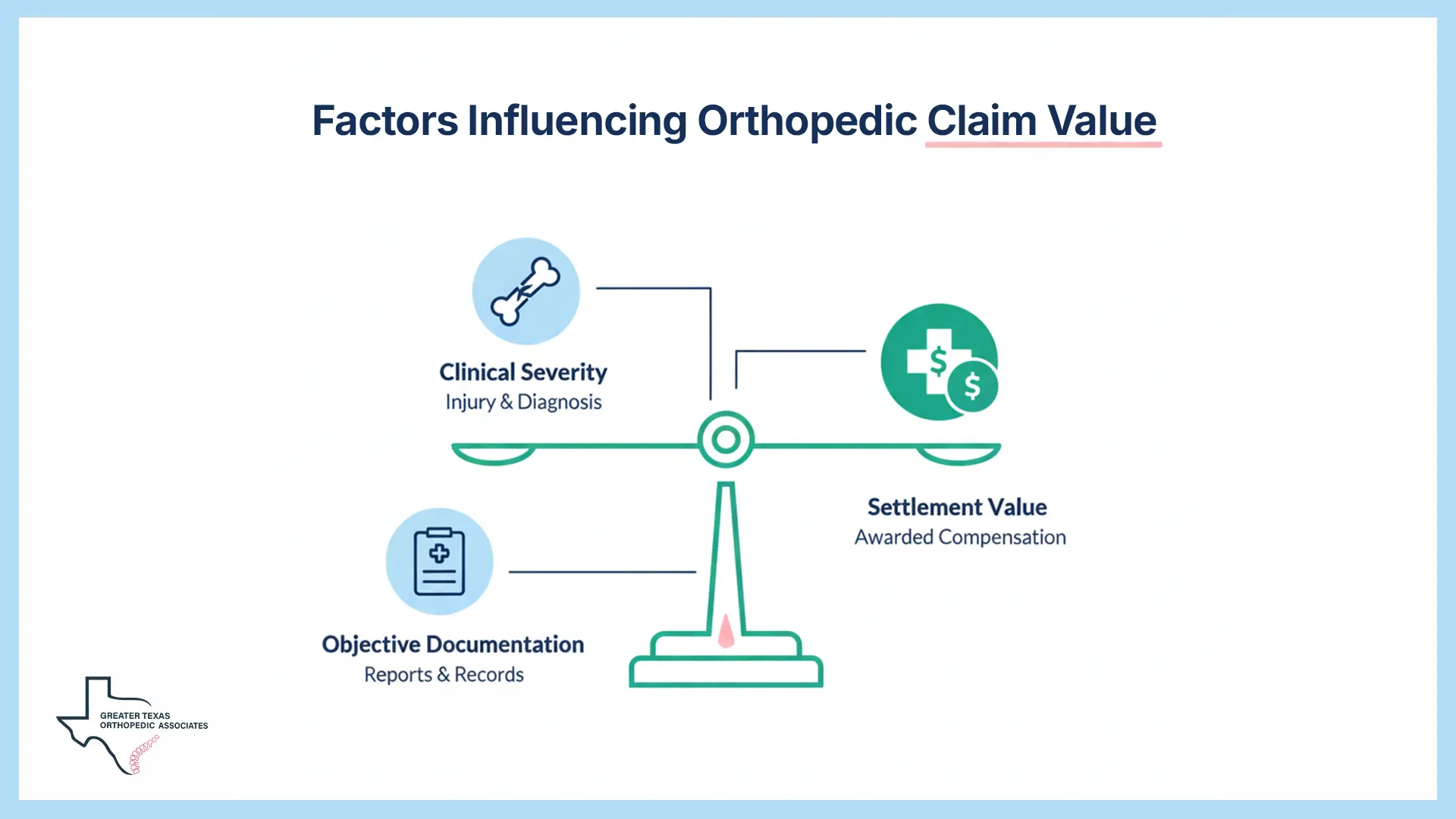
Medical bills alone do not determine the outcome of a personal injury claim involving musculoskeletal trauma. The orthopedic injury settlement value is primarily shaped by the injury’s clinical severity, the extent of functional loss, and the strength of the supporting medical documentation.
In Texas, where litigation standards can be strict, the severity of an orthopedic condition must be clearly defined and supported by objective medical evidence. Insurance carriers and legal professionals do not rely on diagnosis alone. They examine imaging results, documented physical limitations, treatment consistency, long-term impairment, and the injury’s impact on earning capacity and daily functioning.
The connection between medical severity and legal valuation is direct. When structural damage, measurable limitations, and ongoing treatment are clearly documented, the settlement value reflects that evidence. When documentation is incomplete or vague, even significant injuries may be undervalued.
Medical Classification of Injury Severity
The impact of orthopedic trauma is first assessed through standardized medical classification systems. In emergency and trauma settings, the severity of injury in personal injury cases is commonly described using tools such as the Abbreviated Injury Scale (AIS) and the Injury Severity Score (ISS). These systems provide a structured way to categorize injuries based on anatomical damage and overall trauma burden.
Rather than focusing on diagnosis alone, these scoring models evaluate the extent of structural disruption and the presence of multiple injuries across different body regions. Higher severity ratings generally indicate greater physiological stress, longer recovery periods, and a higher likelihood of permanent functional impairment.
In legal contexts, these classifications help establish an objective medical baseline. They create a measurable framework that distinguishes minor soft-tissue injuries from complex fractures, spinal trauma, or multi-system damage. This medical differentiation is essential because documented severity directly influences how an injury is interpreted during claim evaluation.
Documentation Quality and Impact
Objective evidence forms the backbone of any personal injury claim. Insurance carriers and courts rely on medical records to verify the necessity of treatment and the extent of functional limitation. Accurate documentation goes beyond listing a diagnosis; it explains the mechanism of injury, the progression of symptoms, and the measurable limitations that result from the condition.
In our clinical practice, we focus on producing structured, detailed reports supported by imaging studies and physical examination findings. Clear documentation is essential to substantiate the severity of injury in personal injury cases and to prevent misinterpretation or undervaluation during claim review.
Poor documentation is one of the most common factors that weaken a claim. When daily functional limitations, such as reduced range of motion, lifting restrictions, or difficulty maintaining prolonged positions, are not clearly recorded, insurers may argue that the injury is minor. Consistent treatment also plays a critical role. Gaps in care can create doubt about causation and allow adjusters to question whether the ongoing symptoms are truly related to the original trauma.
Impairment Ratings and Functional Loss
Once a patient reaches Maximum Medical Improvement (MMI), a physician may assign an impairment rating. This rating reflects the permanent loss of function caused by the injury and is commonly determined using the American Medical Association (AMA) Guides to the Evaluation of Permanent Impairment. Because it converts measurable physical damage into a defined percentage of permanent impairment, it plays a central role in determining the orthopedic injury settlement value.
Scheduled Loss of Use (SLU)
Scheduled loss of use ratings typically apply to extremities such as arms, legs, hands, and feet. Each body part is evaluated individually, and the percentage assigned reflects the degree of permanent functional limitation. For example, a 10% loss of use of an arm represents a different level of impairment than a 10% loss of use of a finger due to differences in overall functional impact.
Non-Scheduled or Whole-Body Impairment
Non-scheduled ratings apply to injuries involving the spine, neck, or other core structures. These assessments focus on the individual’s overall level of permanent disability rather than a single body part. In these cases, functional restrictions and long-term limitations often carry greater weight than isolated anatomical findings.
Loss of Earning Capacity (LWEC)
When permanent impairment affects a person’s ability to work, evaluators may also consider loss of wage-earning capacity. The vocational impact of an injury varies significantly. A herniated disc may have limited consequences for a sedentary worker but profound implications for someone whose occupation requires heavy physical labor. Targeted interventions, such as those found in our pain relief and neurological care services, are often necessary to define these functional boundaries and document long-term limitations.
Rehabilitation & Scientific Reasoning
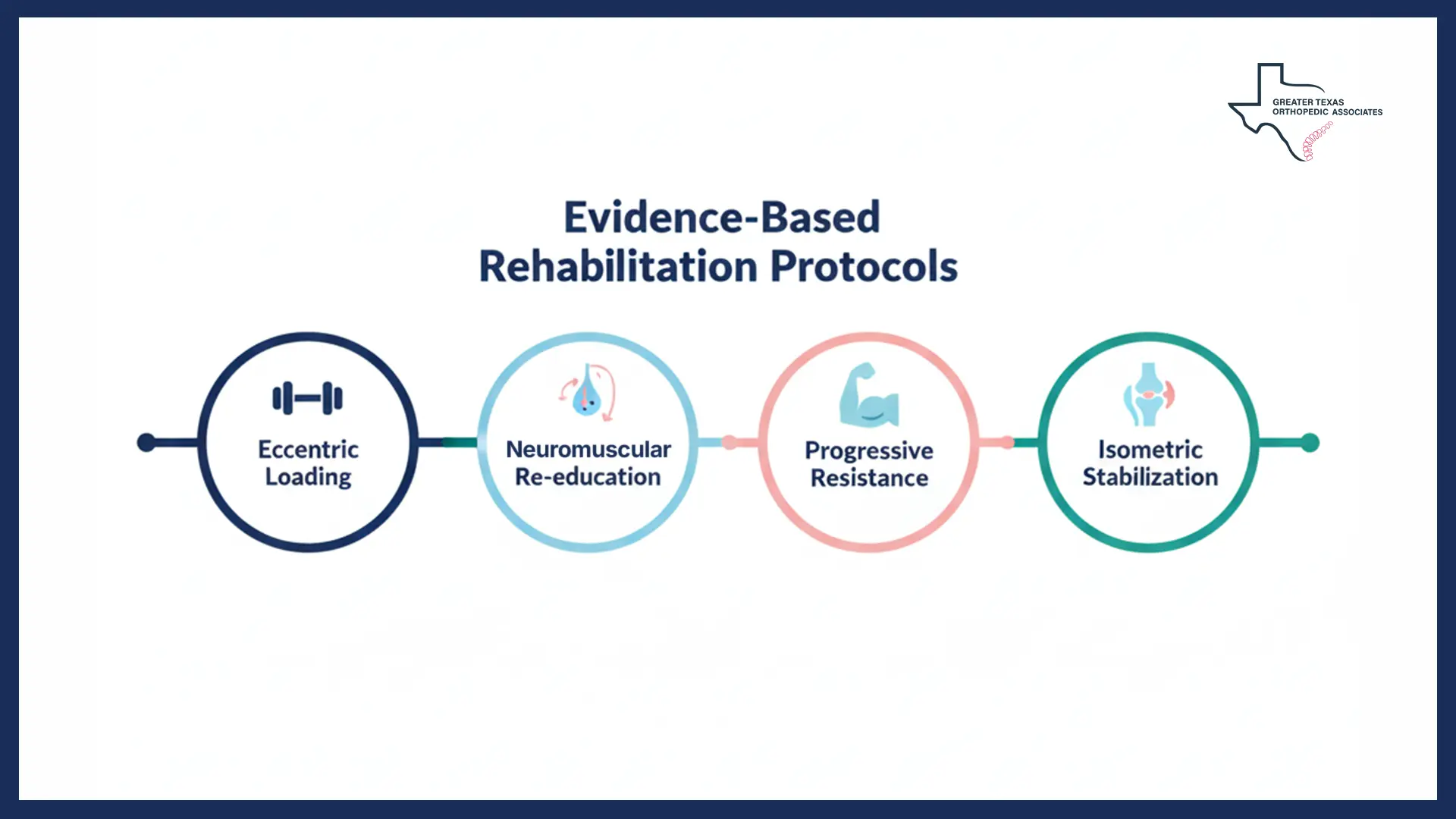
Rehabilitation plays a key role in recovery and contributes directly to personal injury settlement factors. At Greater Texas Orthopedic Associates, we use evidence-based protocols to restore function and document patient progress. These interventions are not just for comfort; they are clinical tools to reduce permanent impairment and help establish the orthopedic injury settlement value.
Key approaches we use include:
- Eccentric Loading for Tendon Repair: Slow, controlled muscle lengthening that improves tendon strength and helps prevent chronic degeneration.
- Neuromuscular Re-education: Specialized balance and proprioception exercises designed to reduce the risk of re-injury after ligament or joint trauma.
- Progressive Resistance Training: A method of gradual strength building to maintain muscle mass and bone density, particularly critical following fractures.
- Isometric Stabilization: Static muscle contractions that provide essential core stability during early spinal recovery without placing undue stress on injured tissue.
Documenting these interventions and tracking measurable improvements in function is essential. Proper rehabilitation ensures injuries heal with optimal tissue alignment and range of motion, which directly supports the orthopedic injury settlement value in personal injury cases.
Insurance Evaluation Methods and Tactics
Insurance adjusters use standardized approaches to translate physical and emotional trauma into a settlement. Understanding these methods is key when evaluating the severity of injury in personal injury cases.
Common approaches include:
- Multiplier Method: Medical expenses are adjusted to account for pain and suffering. More severe injuries, such as spinal trauma or complex fractures, typically receive higher consideration.
- Per Diem Method: Assigns a daily value to the claimant’s pain and suffering from the accident until Maximum Medical Improvement (MMI) is reached.
Insurance companies may attempt to reduce these values, offering early settlements or questioning the reported limitations. Consistent, detailed documentation is essential to prevent undervaluation and ensure the injury is properly represented.
Causation & Pre-Existing Conditions
A common tactic insurers use to minimize claims is arguing that symptoms stem from a pre-existing condition rather than the accident. Under the “Eggshell Skull” rule and similar legal doctrines in Texas, however, defendants remain responsible for any aggravation of a pre-existing condition.
To succeed in an “aggravation” claim, medical records must clearly differentiate baseline pain from the increased functional loss following trauma. For example, a patient with mild, asymptomatic degenerative disc disease may experience debilitating effects after a car accident. To understand how physicians make these distinctions, you can review our comprehensive guide on medical injury ratings for personal injury attorneys.
Future Costs and Long-Term Impact
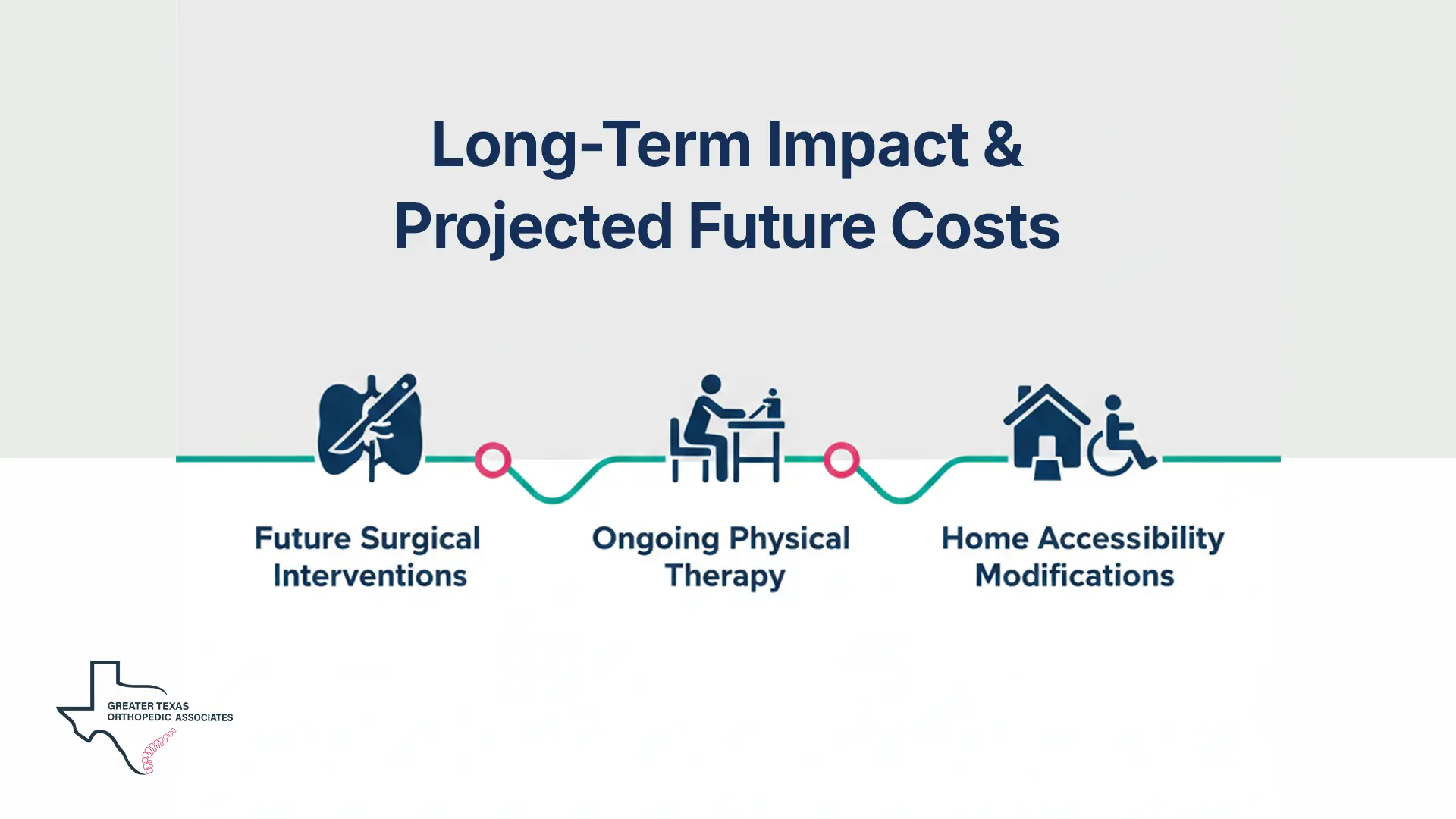
The total value of a settlement must account for more than just past medical bills; it must include projected future expenses. These are critical personal injury settlement factors that ensure a claimant is not left with a financial burden years after the legal case is closed.
- Anticipated Surgeries: Many orthopedic injuries, such as joint replacements or hardware removals, require subsequent procedures years down the line. For example, a knee replacement has a finite lifespan and may require revision surgery over time, depending on age, activity level, and implant durability.
- Ongoing Rehabilitation: Chronic conditions like facet joint syndrome may require lifetime pain management, including radiofrequency ablations or epidural steroid injections.
- Diminished Earning Capacity: If an injury prevents a person from returning to their previous career, the settlement must account for the lifetime loss of income. Vocational experts often analyze the difference between pre-injury earnings and potential future earnings.
- Home and Vehicle Modifications: For permanent disabilities, costs may include installing ramps, widening doorways, or modifying vehicles to accommodate mobility needs.
Identifying these future needs early helps build a comprehensive picture of the injury’s true lifetime cost. This ensures that the settlement fully reflects the long-term reality of living with a chronic orthopedic condition.
Conclusion
The orthopedic injury settlement value ultimately reflects the medical reality of the injury. By combining anatomical scoring systems, detailed functional assessments, and impairment ratings, legal and medical teams can create a clear picture of the damage incurred. These are critical personal injury settlement factors that ensure settlements fairly account for both current and future impacts of the injury.
A structured, evidence-based approach from initial evaluation to final impairment rating at MMI is essential for achieving an equitable resolution. Accurate documentation and objective clinical data remain the foundation for proving the severity of orthopedic trauma and securing a just outcome.