
When Is Orthopedic Treatment on a Medical Lien Appropriate in PI Cases?
The intersection of musculoskeletal medicine and personal injury (PI) litigation creates a complex financial and legal environment. For many accident victims, the primary obstacle to recovery is not just the physical trauma but the immediate cost of specialized medical care. At the center of this challenge is the medical lien.
This legal instrument allows patients to receive necessary care “on credit,” with the provider being reimbursed from the eventual settlement or judgment. Understanding when orthopedic treatment on a medical lien is appropriate is essential for both patients seeking recovery and attorneys building a robust legal claim.
For more on how detailed medical documentation can impact your case, see our article on [Medical Documentation in Injury Lawsuits].
When Is Orthopedic Treatment on a Medical Lien Appropriate?
In personal injury cases, orthopedic treatment on a medical lien may be appropriate when a patient has a significant musculoskeletal injury, cannot reasonably access timely specialty care due to limited funds or insurance restrictions, and there is a reasonable expectation of recovery from a liable third party.
It is a strategic mechanism used to bridge the gap between the time of injury and the time of legal resolution, ensuring that the clinical window for intervention is not missed due to financial constraints.
Our team at GTOA provides coordinated support throughout this process, combining expertise in orthopedic care and personal injury cases to help ensure timely treatment and proper medical documentation.
The decision to use this arrangement involves a multifaceted evaluation of the case’s legal merits, the patient’s clinical needs, and the available insurance landscape.
How Medical Liens Work in PI Cases
To evaluate appropriateness, one must first understand how medical liens work in PI cases. A medical lien is a legally binding agreement where a healthcare provider agrees to treat an injured party without upfront payment. In exchange, the patient and their attorney grant the provider a “secured interest” in the proceeds of the legal case.
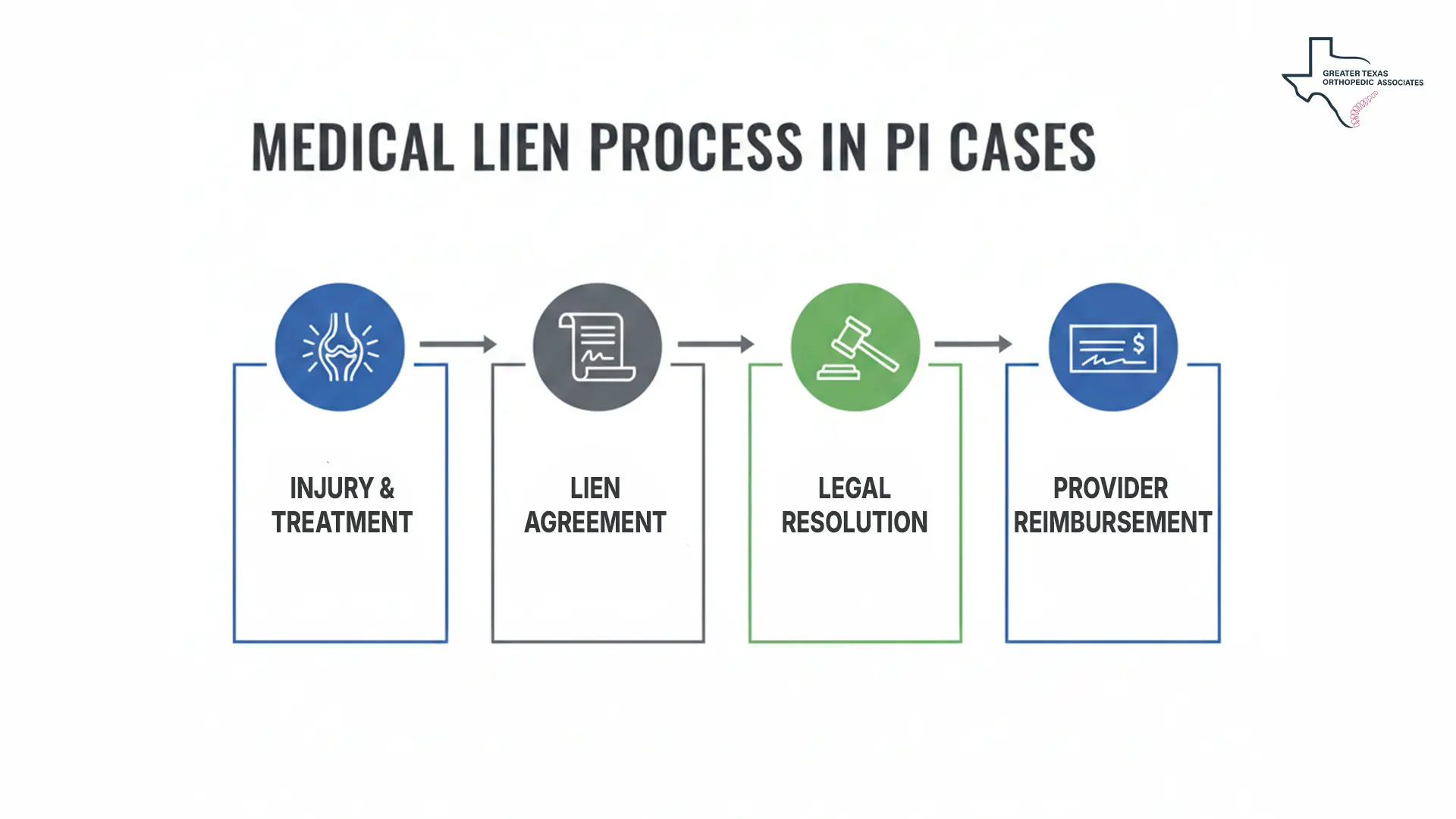
This process generally follows a structured timeline:
- Treatment Initiation: The patient receives diagnostic testing, specialist consultations, or surgical interventions.
- Lien Attachment: The provider files a formal notice (statutory lien) or signs a contractual agreement (such as a Letter of Protection) that “attaches” to the case.
- Case Resolution: Once a settlement or judgment is reached, lien resolution is typically addressed during the distribution of proceeds. Depending on the jurisdiction, lien type, and agreement terms, payment to the lienholder may be handled directly from the settlement before remaining funds are disbursed.
- Negotiation: Attorneys often negotiate with lienholders to reduce the final amount owed, maximizing the client’s net recovery.
This system is intended to reduce payment disputes and clarify reimbursement while helping providers manage the risk of delayed or uncertain payment
For more detailed information on orthopedic evaluations in personal injury cases, visit our page on [Comprehensive Orthopedic Evaluations in Texas]
A Decision Framework for Orthopedic Liens
Deciding whether to pursue a medical lien for orthopedic care requires a rigorous framework based on four primary pillars: liability clarity, injury severity, insurance status, and documentation requirements.
1. Liability Clarity
A medical lien is fundamentally a risk-sharing arrangement. Because the provider’s payment is contingent upon the success of the case, most lien-based orthopedic specialists prefer cases where liability is clear. If the at-fault party is definitively identified and there is sufficient insurance coverage (or assets) to satisfy a judgment, a lien is highly appropriate. Conversely, in cases of disputed liability or “comparative fault,” where the plaintiff may be found partially responsible, the risk of the settlement being insufficient to cover the medical debt increases, making a lien a riskier proposition.
2. Injury Severity and Clinical Urgency
Orthopedic trauma, such as comminuted fractures, spinal disc herniations, or traumatic ligament tears, often requires immediate, high-cost intervention. If a patient requires a high-cost procedure such as spinal surgery or a joint replacement to reach Maximum Medical Improvement (MMI), and they cannot afford the upfront costs, a lien is often the only viable clinical pathway. Waiting for a settlement to pay for surgery can lead to permanent functional loss or the worsening of soft tissue injuries.
3. Insurance Status and Coverage Limits
Lien-based care is most appropriate for:
- Uninsured Patients: Those with no access to traditional health coverage.
- Underinsured Patients: Individuals with high-deductible plans that they cannot afford to satisfy after an accident.
- Exhausted first-party benefits (where applicable): In some cases, once available first-party medical benefits are depleted, patients may consider lien-based treatment for ongoing orthopedic care subject to state rules and case specifics.
- HMO/PPO Restrictions: Some standard insurance plans may deny accident-related treatment or limit access to the specialized orthopedic surgeons needed for trauma recovery.
4. Forensic Documentation Needs
In PI cases, medical records are not just clinical tools; they are primary evidence. Doctors who regularly work on a lien basis understand the requirements of medical-legal documentation. They meticulously document causation, the timeline of treatment, and the long-term prognosis factors that are often overlooked by general practitioners but are vital for proving damages and maximizing settlement value.
The Clinical Reasoning: Why Orthopedics?
Orthopedic medicine is uniquely suited for the lien model due to the extreme disparity in procedural costs and the objective nature of the injuries.
High-Cost Interventions
Orthopedic surgeries often involve multiple billable components, including surgeon fees, anesthesiology, facility charges, and specialized hardware (plates, screws, or prosthetic joints).Reimbursement structures and billing models can vary significantly in lien-based cases due to administrative complexity and delayed payment risk. As a result, charges may differ from standard insurance reimbursement rates.
A medical lien for orthopedic care allows these high-value procedures to proceed when they would otherwise be financially impossible for the average American.
Establishing Maximum Medical Improvement (MMI)
Attorneys generally advise against settling a PI case until the client has reached MMI. This is the point where the patient has healed as much as possible, allowing experts to accurately predict future medical needs and permanent impairment. Orthopedic specialists are critical in this phase, as they can provide the objective testing (MRIs, CT scans, and nerve conduction studies) necessary to verify that a patient has truly reached their recovery ceiling.
Strategic Advantages of No Upfront Cost Orthopedic Treatment
Utilizing no upfront cost orthopedic treatment offers several tactical advantages that strengthen a personal injury case from both a clinical and legal perspective.
Immediate Access to Specialized Care
Primary care physicians are often hesitant to treat accident victims because they do not want to deal with third-party billing or provide expert testimony. Providers who routinely evaluate trauma-related orthopedic injuries under lien arrangements are often familiar with spine and joint injury assessment, as well as the documentation standards required in personal injury cases. They offer immediate access to specialized evaluations, which are vital for preventing the “treatment gaps” that insurance adjusters use to argue that an injury is not serious.
Comprehensive Diagnostic Protocols
In some cases, lien-based networks may coordinate advanced imaging and specialist consultations more efficiently, depending on plan restrictions, clinical indication, and case-specific factors. This includes high-resolution MRIs to identify occult fractures and specialized musculoskeletal reviews that determine the exact source of chronic pain, such as facet joint syndrome or rheumatological triggers exacerbated by trauma.

Risks and Potential Drawbacks
Despite the benefits, choosing no upfront cost orthopedic treatment is not without risk. It is a decision that must be managed carefully by the attorney and the client.
The “Lien Premium” and Inflated Billing
Medical procedures billed on a lien basis are often significantly more expensive than those billed to traditional insurance. Defense counsel frequently uses this “Lien Premium” to argue that the plaintiff’s damages are artificially inflated. Furthermore, if the medical bills consume a disproportionate share of the settlement, the patient may walk away with very little for their pain and suffering.
Personal Liability if the Case Fails
One of the most critical aspects of how medical liens work in PI cases is the issue of personal liability. If a case does not reach a settlement or judgment, the patient remains personally responsible for the medical debt. While many lienholders are willing to negotiate payment plans in these scenarios, the debt does not simply disappear.
Perceived Physician Bias
Defense attorneys often argue that lien doctors are “biased” because they have a direct financial stake in the outcome of the litigation. If the doctor only gets paid if the plaintiff wins, their credibility as an expert witness regarding the necessity of a surgery or the extent of a disability can be challenged.
Managing the Lien Resolution Process
The final phase of any case involving a medical lien for orthopedic care is the resolution and distribution of funds. This is where a skilled attorney becomes indispensable.
Negotiating Reductions
Most medical liens are negotiable. Attorneys use several legal doctrines to force reductions:
- The Made Whole Doctrine: This equitable defense argues that a lienholder should not be reimbursed until the patient has been “fully compensated” for all their losses, including non-economic damages like pain and suffering.
- The Common Fund Doctrine: This principle requires lienholders to contribute to the “procurement costs” (attorney fees and expenses) since they are benefiting from the “common fund” created by the lawyer’s work.
- Statutory Caps: Many states have laws that cap how much a provider can take.
Auditing for Accuracy
Before any payout, the attorney should perform a meticulous audit of itemized bills. This involves checking for “upcoding,” double-billing, or charges for treatment unrelated to the accident, ensuring that the patient is only paying for the care they actually received.
Conclusion
The use of orthopedic treatment on a medical lien is a fundamental pillar of the American civil justice system. It ensures that the strength of a legal claim is not compromised by a patient’s temporary financial instability. By facilitating no upfront cost orthopedic treatment, the lien model allows injured individuals to focus on their physiological healing while their legal representatives focus on securing justice.
While the model introduces complexities regarding billing transparency and potential bias, the alternatives, delayed treatment, long-term disability, and premature settlements, are far more damaging to the patient. When managed through a clear decision framework and a commitment to meticulous documentation, the medical lien serves as a vital clinical-legal synergy that empowers the injured to pursue the compensation they are legally owed.