

Peripheral Nerve Injuries After a Car Accident: Symptoms, Diagnosis, and Treatment
Not every injury caused by a car accident involves a broken bone. In some cases, the damage affects a nerve, and the symptoms may be subtle at first. A peripheral nerve injury after a car accident can cause tingling, numbness, burning pain, weakness, or difficulty using an arm or leg, even when X-rays appear normal.
For patients, the main concern is often whether these unusual sensations will improve. For attorneys, case managers, and legal teams, the question may be whether the medical record clearly identifies the injury and connects the symptoms to the accident.
This article explains how peripheral nerve injuries occur, the symptoms they may cause, how they are diagnosed, and which treatment options may support recovery.
What Is a Peripheral Nerve Injury?
The central nervous system includes the brain and spinal cord. The peripheral nervous system consists of the nerves that extend into the shoulders, arms, hands, hips, legs, and feet. These nerves carry signals responsible for movement and sensation.
An accident-related nerve injury occurs when a peripheral nerve is stretched, compressed, bruised, trapped, or torn. According to the AAOS overview of nerve injuries, pressure, stretching, and cutting can interfere with a nerve’s ability to transmit signals and may cause sensory loss, weakness, or both.
For example, a driver’s arm may strike the door during a side-impact collision. Shoulder pain may appear immediately, but several days later, the outer forearm may become numb and the wrist may feel weak. That combination of sensory loss and weakness can provide an important clue that a specific nerve may be involved.
How Do Peripheral Nerve Injuries Happen After a Crash?
Traumatic peripheral nerve damage can result from direct impact, sudden stretching, compression, or laceration.
- Stretching when a limb is pulled or twisted beyond its normal range
- Compression caused by swelling, a bone fragment, a disc injury, or another structure
- Bruising when a nerve is crushed against bone during impact
- Laceration caused by a sharp object or fracture
- Traction caused by forceful pulling of the neck, shoulder, arm, or leg
The severity of the injury varies. A mild injury may temporarily interrupt nerve signals, while a more serious injury can damage the internal nerve fibers or completely disrupt the nerve. Recovery varies and cannot be predicted from symptoms alone.
Symptoms of Nerve Damage After a Crash
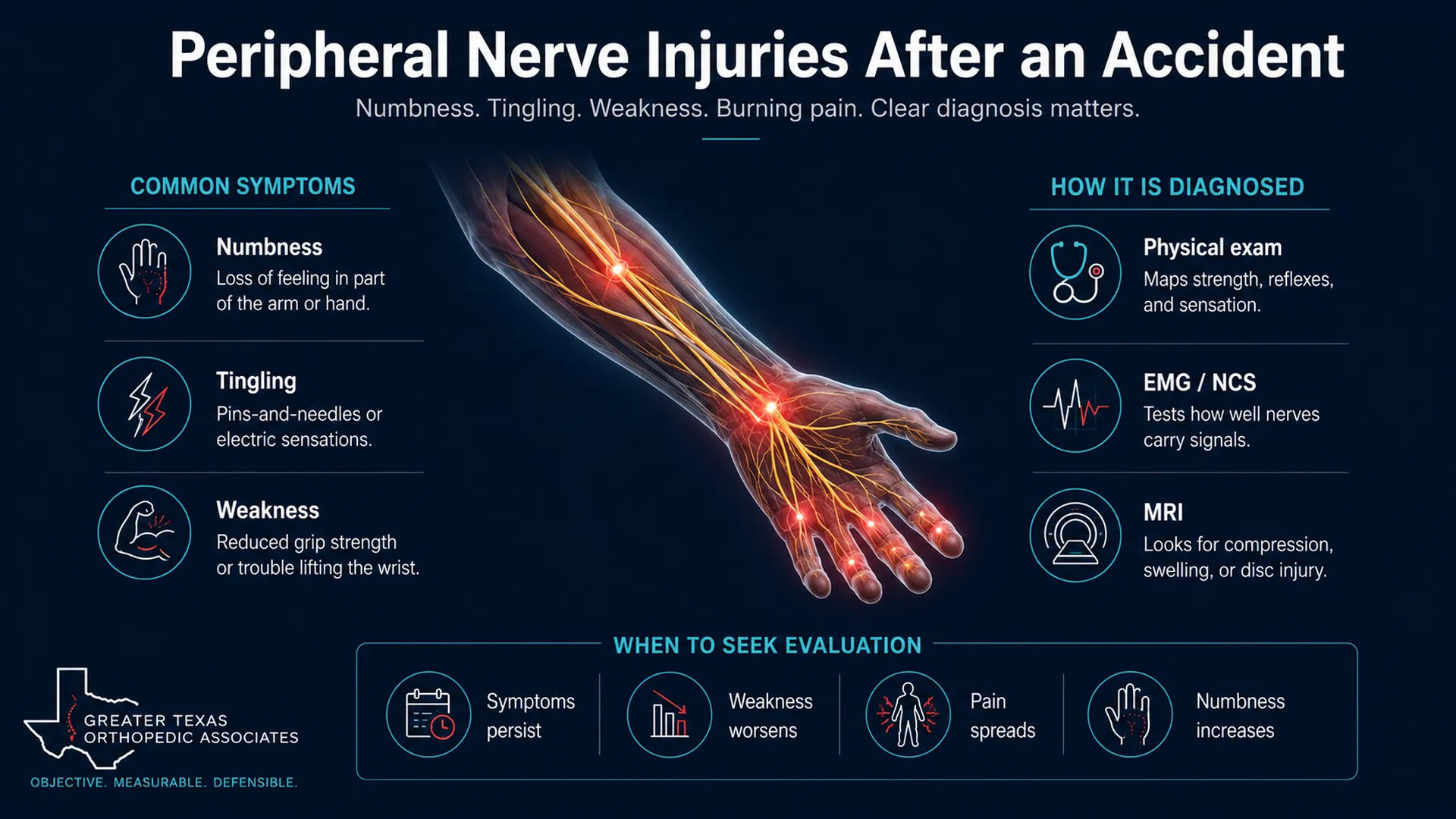
Common nerve damage symptoms after a crash include numbness, tingling, burning pain, electric-shock sensations, muscle weakness, reduced coordination, and difficulty using the affected limb.
Because each nerve generally serves a recognizable area of skin and group of muscles, the pattern of symptoms may help clinicians identify which nerve or level of the nervous system is involved.
These post-accident nerve symptoms may remain in one location or travel along the path of a nerve. Pain that begins in the lower back and travels into the leg, for example, may reflect irritation of a nerve root rather than an injury to a named peripheral nerve.
Red-Flag Symptoms That Need Prompt Care
- Weakness that is spreading or getting worse
- Numbness affecting an expanding area
- A limb that feels as though it is dragging or giving out
- Visible loss of muscle bulk
- Increasing difficulty walking or using the affected limb
New loss of bladder or bowel control, numbness in the groin or saddle area, rapidly worsening weakness, or significant difficulty walking may indicate spinal cord or cauda equina involvement rather than an isolated peripheral nerve injury. These symptoms require emergency evaluation.
Peripheral Nerve Injury vs. Radiculopathy
A peripheral nerve injury is not the same as radiculopathy, although the symptoms can overlap.
A peripheral nerve injury affects a nerve after it has left the spinal cord and nerve roots. Examples include injuries involving the radial, median, ulnar, sciatic, or peroneal nerves.
Radiculopathy occurs when a nerve root near the spine becomes irritated or compressed, often because of a herniated disc, inflammation, or narrowing around the nerve root. Both conditions can cause pain, numbness, tingling, and weakness, but their examination findings, diagnostic testing, and treatment may differ.
How Does Peripheral Nerve Injury Diagnosis Work?
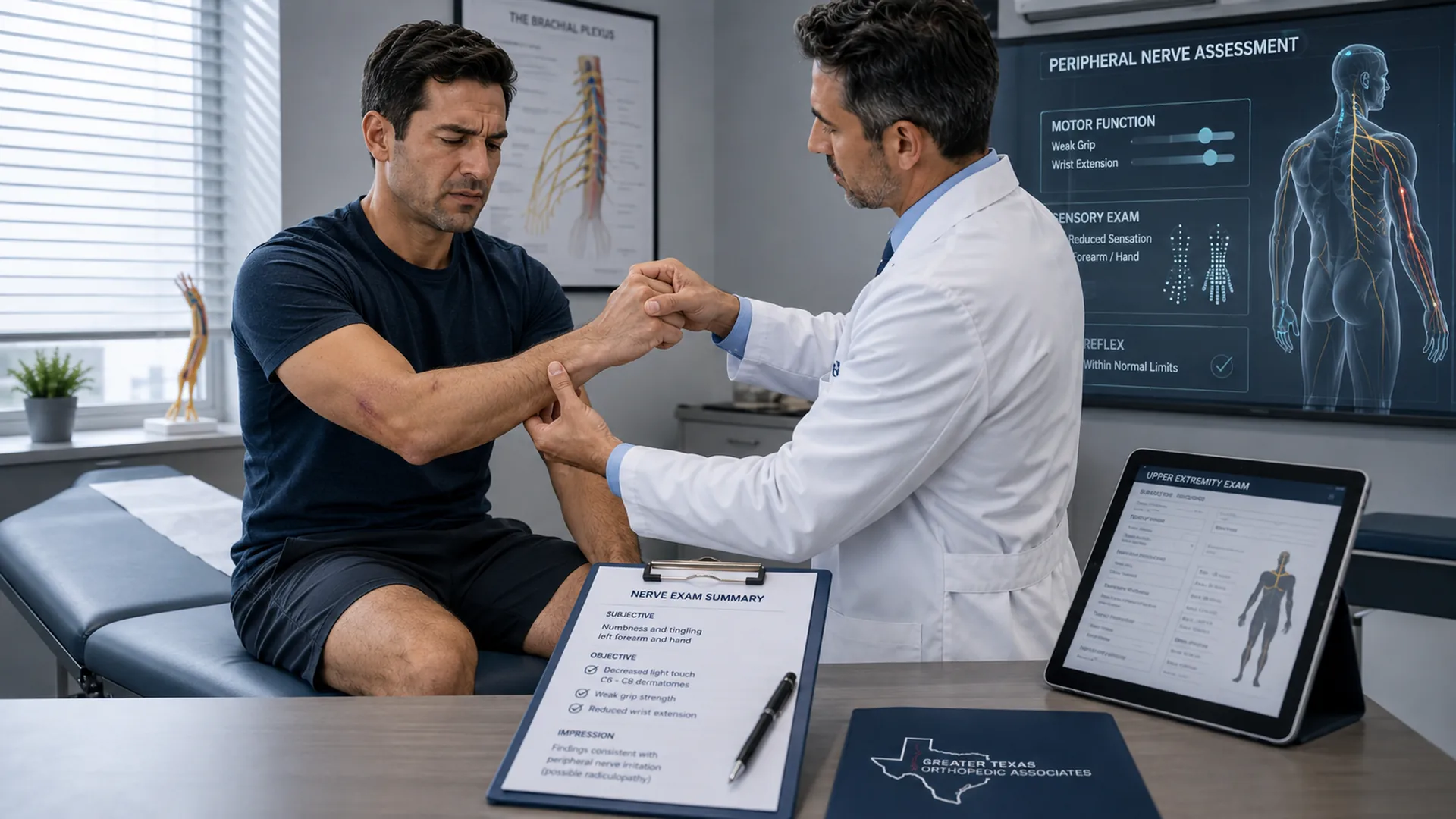
Peripheral nerve injury diagnosis begins with a detailed medical history and a focused neurologic examination.
The clinician evaluates muscle strength, reflexes, sensation, coordination, the distribution of pain or numbness, and movements that reproduce the symptoms. The timing of symptom onset is also important, especially when symptoms begin shortly after a crash or become noticeable over the following days.
EMG and Nerve Conduction Studies
When a peripheral nerve injury after a car accident requires further evaluation, EMG and nerve conduction testing after an accident may help assess nerve and muscle function.
A nerve conduction study measures how efficiently electrical signals travel through a nerve. Electromyography evaluates the electrical activity of selected muscles and may help determine whether weakness is related to nerve or muscle dysfunction.
The timing of these tests can affect the findings because certain abnormalities may not be apparent immediately after an injury. Depending on the examination and clinical history, a provider may recommend testing at a later stage or repeating a study when early results do not fully explain the symptoms.
MRI and Other Imaging
MRI may be appropriate when the clinician suspects a herniated disc, swelling, soft-tissue injury, or another structure pressing on a nerve. In selected cases, ultrasound or specialized nerve imaging may also be considered.
Imaging findings should be interpreted together with the medical history, physical examination, and electrodiagnostic results rather than treated as a diagnosis by themselves.
Types and Severity of Peripheral Nerve Injuries
Peripheral nerve injuries may be classified according to the depth and severity of the damage.
Neurapraxia is a relatively mild injury in which nerve conduction is temporarily interrupted while the nerve remains structurally intact. Recovery is often favorable.
Axonotmesis occurs when the internal nerve fibers are damaged but part of the supporting structure remains preserved. Recovery depends on gradual nerve regrowth and may take months.
Neurotmesis is the most severe form and involves major disruption or complete division of the nerve. Surgical evaluation is often necessary, and complete recovery may not always be possible.
When Does Nerve Pain Become Chronic?
In some patients, post-traumatic nerve pain continues after the surrounding tissues begin to heal. The pain may feel burning, shooting, stabbing, or electric and may spread beyond the original area.
Pain accompanied by swelling, stiffness, unusual sensitivity, or changes in skin color or temperature may indicate that the condition is becoming more complex.
One example is complex regional pain syndrome, or CRPS. This condition can occur after trauma, fracture, surgery, or nerve injury and may cause severe pain, swelling, skin changes, stiffness, and difficulty using the affected limb. Patients and case professionals can learn more about CRPS after a car accident and the symptoms that may require further evaluation.
Persistent neuropathic pain after an accident may require a more specialized treatment plan. Early evaluation may allow rehabilitation and pain management to begin sooner, although individual outcomes vary.
Nerve Injury Treatment Options
Nerve injury treatment options depend on the location, cause, severity, and progression of the condition.
- Activity modification and protection of the affected area
- Pain-relieving or anti-inflammatory medication when clinically appropriate
- Physical or occupational therapy
- Splints or braces when weakness affects movement or stability
- Medication intended to reduce neuropathic pain
- Image-guided injections in selected nerve-root or compression conditions
- Surgical decompression or repair for a severely compressed, trapped, or cut nerve
Image-guided injections may reduce inflammation and pain in selected conditions, but they do not repair a severed nerve.
Patients with reduced sensation may also need to protect the affected area from burns, cuts, pressure injuries, and other damage they may not immediately feel.
How Long Does a Peripheral Nerve Injury Take to Heal?
Recovery from an accident-related peripheral nerve injury may take weeks or months, depending on the location and severity of the damage.
Mild injuries may improve gradually with time and nonsurgical care. Injuries involving damage to the nerve fibers usually take longer because recovery depends on nerve regrowth.
Severe compression, complete nerve division, delayed treatment, and certain underlying medical conditions may reduce the likelihood of full recovery. Follow-up examinations help determine whether strength, sensation, and function are returning as expected.
Why Documentation Matters?
A useful medical record should describe when symptoms began, where numbness or tingling occurs, which muscles are weak, whether reflexes have changed, and how the condition affects walking, gripping, lifting, sleeping, or other daily activities.
The record should also include relevant EMG, nerve conduction, or imaging findings and explain whether the condition is improving, worsening, or remaining stable.
Clearly documenting an accident-related nerve deficit helps clinicians monitor recovery. When an injury claim is involved, the same record may help legal and insurance professionals understand the timing, severity, and functional effects of the condition.
When to Schedule an Evaluation?
Brief numbness or tingling may resolve without lasting injury, but duration alone does not determine how serious the condition is.
- Persist or return repeatedly
- Spread to a larger area
- Follow significant trauma
- Occur with weakness
- Affect walking, gripping, lifting, or normal daily activities
Persistent numbness, tingling, burning pain, or weakness may be signs of a peripheral nerve injury after a car accident and should be evaluated.
Greater Texas Orthopedic Associates can assess persistent nerve-related symptoms, determine whether additional diagnostic testing or referral is appropriate, and document the clinical findings.
When pain management is clinically appropriate, Dr. John Hall may provide interventional treatments based on the patient’s diagnosis and individual needs. His services include epidural steroid injections, joint injections, radiofrequency ablation, and spinal cord stimulation. Learn more about GTOA’s pain management services.
Final Thoughts
Peripheral nerve injuries can be subtle at first and more disruptive over time. Symptoms such as numbness, tingling, weakness, burning pain, or electric-shock sensations may follow patterns that a careful examination and appropriate testing can trace to a specific nerve or nerve root.
A peripheral nerve injury after a car accident deserves careful evaluation, even when X-rays or other bone imaging appear normal. Timely assessment can support appropriate treatment, provide a baseline for monitoring recovery, and create a clearer medical record.
Greater Texas Orthopedic Associates can perform a focused evaluation, determine whether additional testing or referral is appropriate, and recommend a treatment plan based on the clinical findings.
This article is for educational purposes and is not a substitute for an individual medical evaluation.
FAQs About Peripheral Nerve Injuries
Can a nerve injury show up days after a crash?
Yes. Nerve symptoms may become noticeable hours or days later as swelling increases, the initial stress response fades, or the patient resumes normal activities.
Do peripheral nerves heal on their own?
Some do. Mild injuries may improve over several weeks or months. More severe injuries involving major compression or complete nerve division may require surgery and may not recover fully.
How is a peripheral nerve injury diagnosed?
Diagnosis usually includes a medical history, physical examination, strength and sensation testing, and, when appropriate, EMG, nerve conduction studies, or imaging.