Loading article

After a car accident, the severity of a person’s symptoms does not always match what appears on an early X-ray. That gap can leave soft tissue injuries, nerve-related problems, or other possible causes of pain insufficiently evaluated.
For patients, the concern is understanding why symptoms persist when initial tests looked normal. For attorneys, case managers, and legal teams, the concern is whether the medical record connects the crash, the exam findings, and the imaging into a coherent picture of harm.
This article explains why MRI matters after a car accident, what the scan may reveal, how the results should be interpreted alongside the physical examination, and when an orthopedic evaluation may be appropriate.
A person rear-ended at a stoplight may walk away sore and assume nothing is seriously wrong. Days later, neck stiffness can turn into arm tingling, or lower back pain may begin to radiate into a leg. When early tests come back clean, the disconnect between real symptoms and normal results is confusing and, in a claim, easy to dismiss.
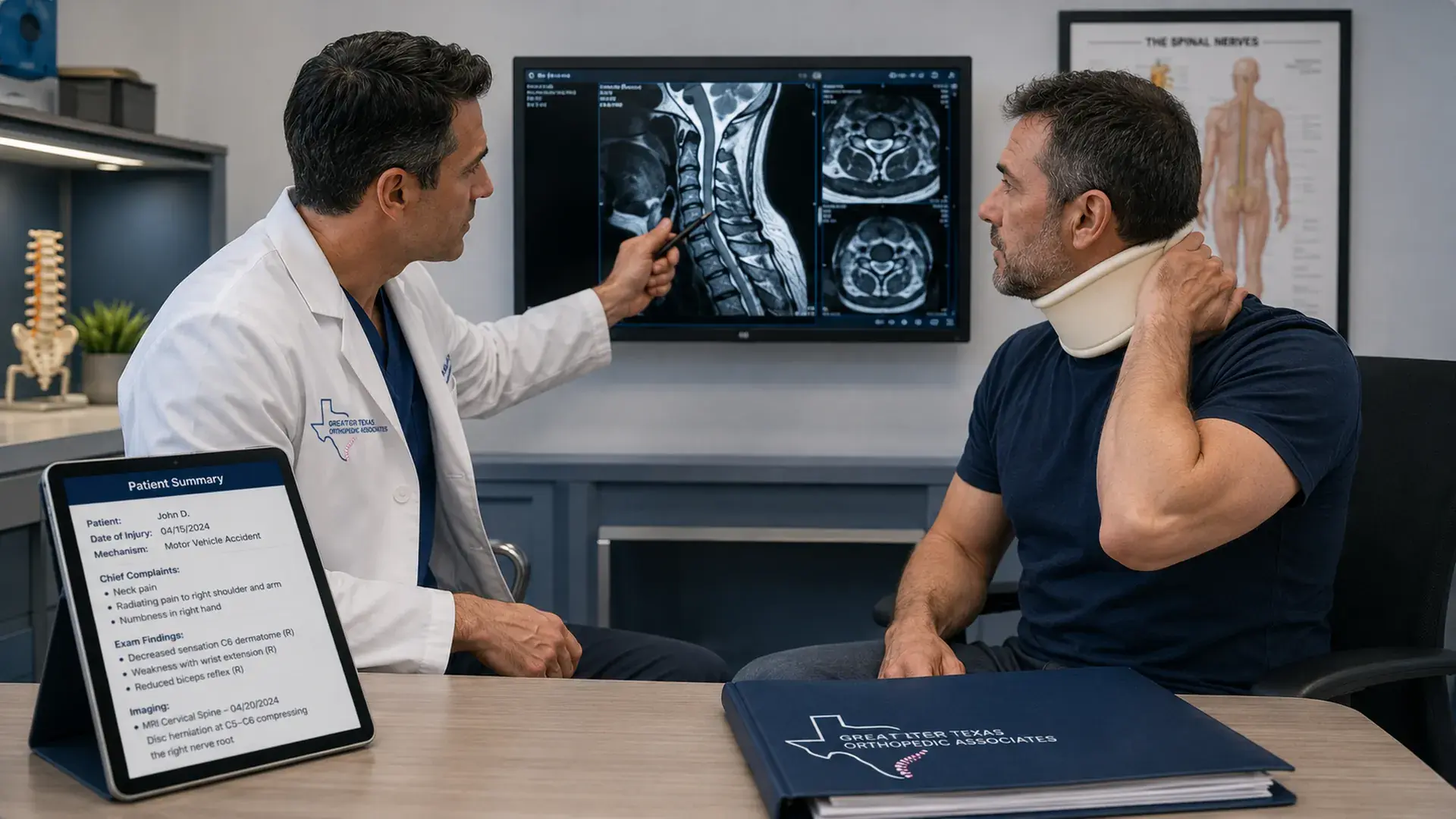
This is where imaging evidence in injury claims becomes useful. An MRI can show disc, nerve, ligament, and soft tissue changes that help explain ongoing pain. For anyone dealing with symptoms that outlast an X-ray, our overview of why pain can continue after a normal X-ray offers a helpful starting point.
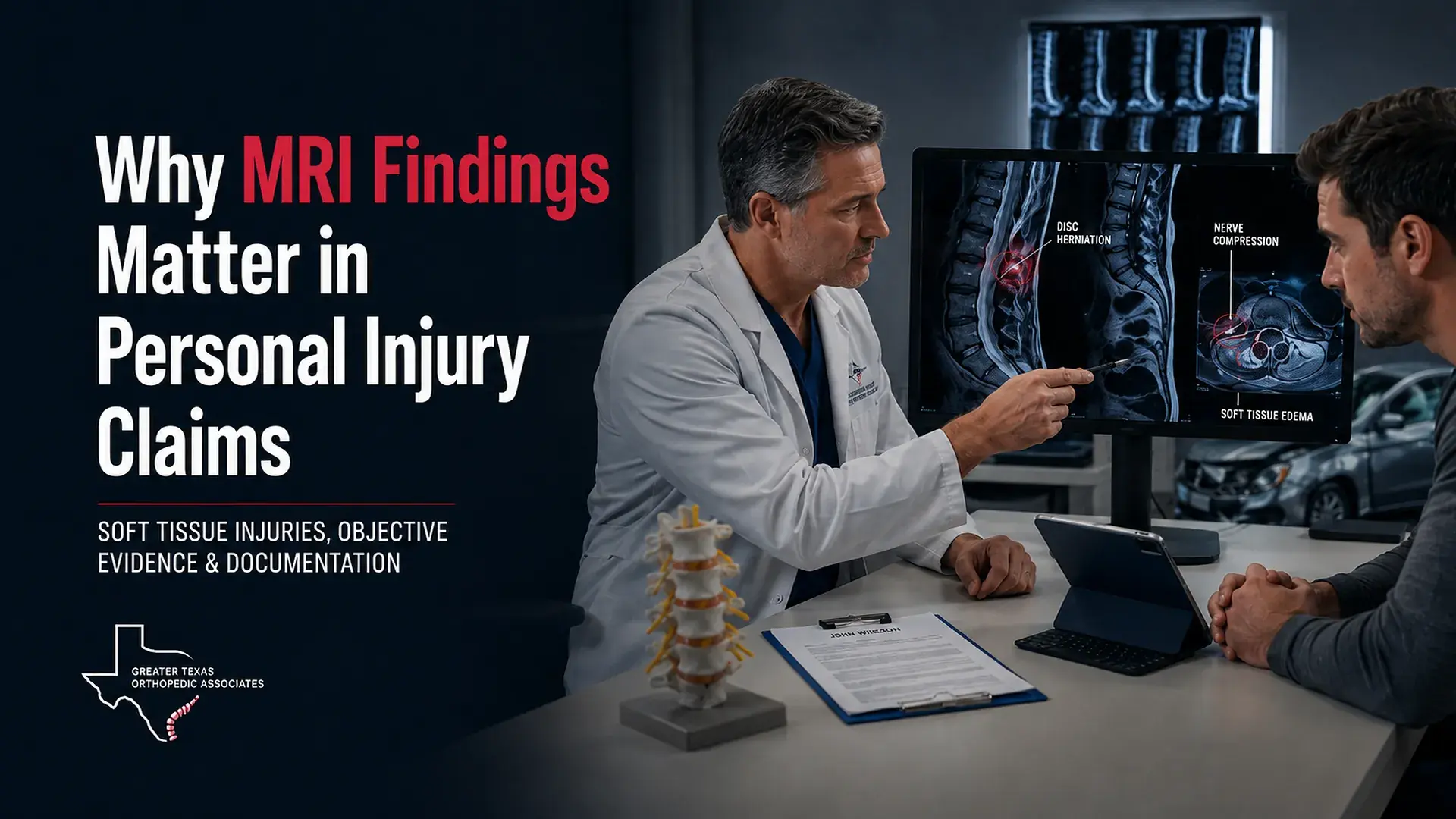
Based on Cleveland Clinic’s explanation, magnetic resonance imaging uses a strong magnetic field and radio waves to create detailed images of soft tissues inside the body. Unlike tests built to view bone, an MRI is well suited to showing discs, nerves, muscles, tendons, and ligaments.
That distinction matters after an accident. Many injury-related problems involve soft tissue rather than a broken bone, and those are exactly the structures an MRI is designed to capture.
An X-ray is excellent for detecting fractures and checking bone alignment, but it does not capture soft tissue well. A disc herniation, a nerve compressed by swelling, or a torn ligament can be invisible on X-ray while still causing significant pain.
The American Academy of Orthopaedic Surgeons (AAOS) notes that imaging choice depends on the suspected injury. When symptoms point to nerve or disc involvement, an MRI often provides the clearest view.
The forces in a collision can strain and tear structures that never fracture. A whiplash injury to the neck, for example, stretches the ligaments and discs. Understanding these common mechanisms helps explain why MRI evidence in an injury claim can matter even when a person appears uninjured.
Not every ache needs a scan, but certain symptoms suggest deeper involvement. Persistent pain that radiates, along with weakness or numbness, often points to nerve or disc problems that imaging can clarify.
Some symptoms warrant prompt evaluation rather than watchful waiting. Anyone experiencing the following after an accident may need timely imaging and an exam:
Loss of bladder or bowel control can signal a medical emergency and warrants immediate care.
An MRI does not stand alone. Its value grows when the imaging matches the exam and the reported symptoms. This is the heart of why MRI findings in personal injury claims carry weight: they can turn a subjective pain complaint into an objective finding that others can verify.
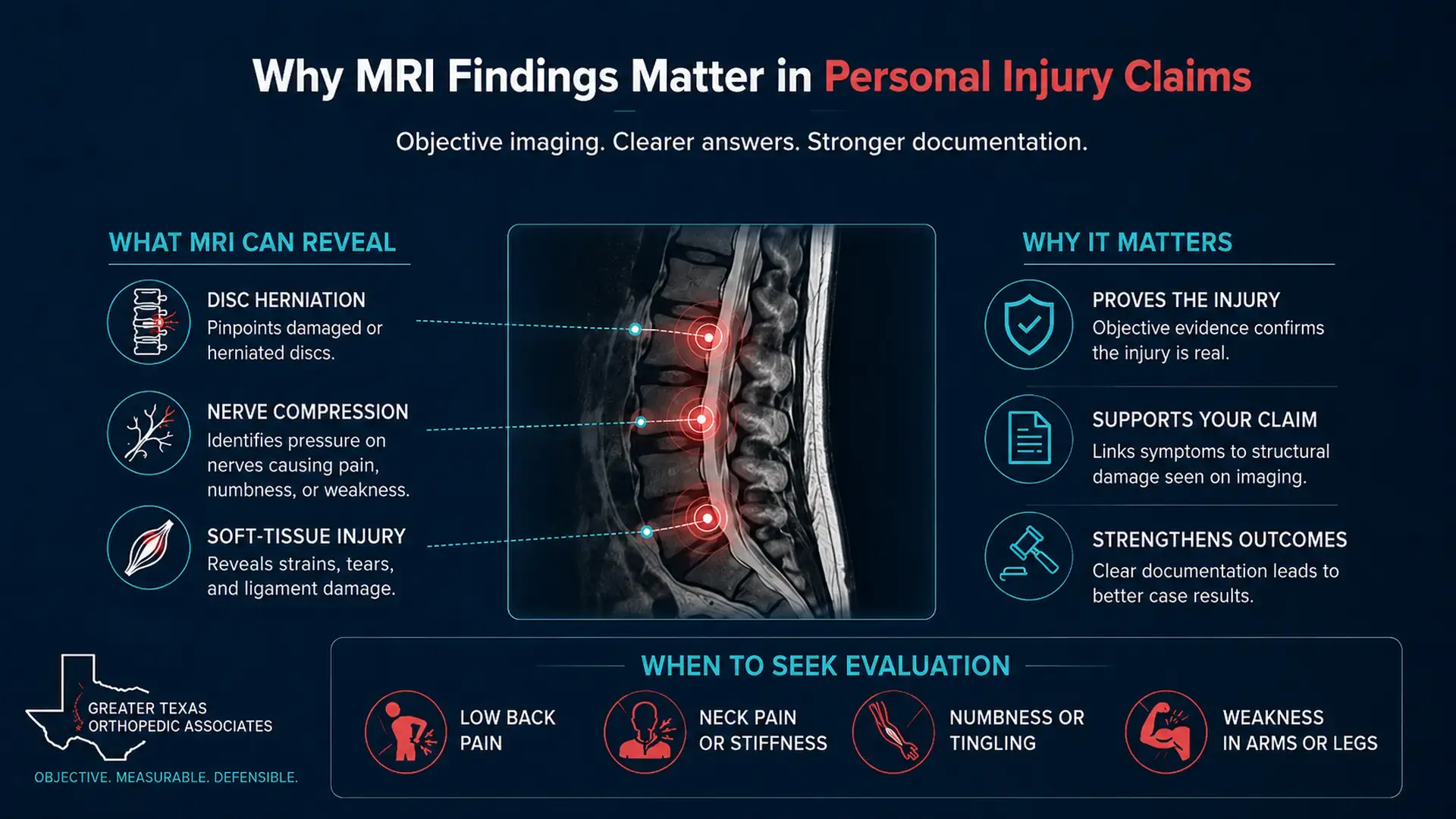
A thorough exam checks range of motion, strength, reflexes, and sensation, along with provocative tests such as the Spurling test for nerve root irritation. When those results line up with what the scan shows, the clinical picture becomes coherent. Our discussion of how objective medical findings support injury cases explains why this alignment matters.
For attorneys and case managers, that alignment is what separates a strong record from a weak one. Imaging that matches the exam is far more persuasive than a scan reviewed in isolation.
One of the most contested questions in any claim is whether an injury came from the accident or existed before it. MRIs frequently show degeneration, and disc changes are common even in people who have no symptoms.
Because of this, imaging must be read alongside a person’s history and exam. A change that was silent before a crash but becomes symptomatic afterward can reflect an aggravation of a pre-existing condition, a distinction our article on orthopedic causation in personal injury cases examines in more detail.
Imaging evidence in injury claims is interpreted, not just reported. The goal is to connect the finding to the mechanism, the timeline, and the symptoms.
Beyond the claim itself, MRI findings in personal injury claims can also guide treatment decisions when the imaging matches the patient’s symptoms and examination. A confirmed disc herniation may point toward targeted injections, physical therapy, or a surgical consultation. Clear imaging helps a provider choose a direction rather than guessing.
Treatment options that imaging may inform include:
For patients, this means a plan built on evidence. For attorneys, case managers, and legal teams, it means the record reflects why each step of care was medically necessary, which supports both the treatment timeline and any discussion of future medical costs in an injury claim.
If pain, numbness, or weakness continues after a collision, an orthopedic evaluation can determine whether imaging is appropriate and what it should target. Timing matters, because gaps in the record can raise questions later and delayed care can allow some injuries to worsen.
An evaluation also clarifies whether an MRI is even needed. Not every injury requires one, and a careful exam helps decide when imaging will add value.
Final Thoughts
MRI findings in personal injury claims can help providers document soft tissue injuries that may not appear clearly on standard X-rays and use those findings to guide treatment.
For patients, that clarity guides recovery. For attorneys, case managers, and legal teams, it supports a record that connects the injury to the accident. These imaging findings are most useful when they form part of a complete clinical picture rather than being interpreted as a standalone result.
If symptoms continue after a collision, Greater Texas Orthopedic Associates can evaluate the injury, coordinate the appropriate imaging, document the findings, and help guide the next step in care.
This article is for educational purposes and is not a substitute for individual medical evaluation.
No. Many injuries improve with conservative care and never require advanced imaging. An MRI is typically considered when symptoms suggest nerve, disc, or soft tissue involvement, or when pain persists despite initial treatment.
There is no single answer, but timing can matter. If red-flag symptoms appear, prompt evaluation is appropriate. For milder symptoms, a provider may recommend a short period of conservative care first, then imaging if the problem continues.
An MRI can show an injury, but establishing causation depends on connecting the finding to the crash, the timeline, and the exam. Imaging is one piece of that picture rather than the whole answer.
Disc and joint degeneration is common and often silent. A change that caused no symptoms before an accident can become painful afterward, which a provider may evaluate as an aggravation of a pre-existing condition.
Every comment is reviewed before publication. Do not include medical details, personal identifiers, or information about an active claim. This form is not monitored for medical questions or emergencies.
Three more from the same thread.
Showing the first 3 of 3 articles
Comments are reviewed before they appear. For appointments, records, or medical questions, use the contact page.
No comments have been published on this article yet.