
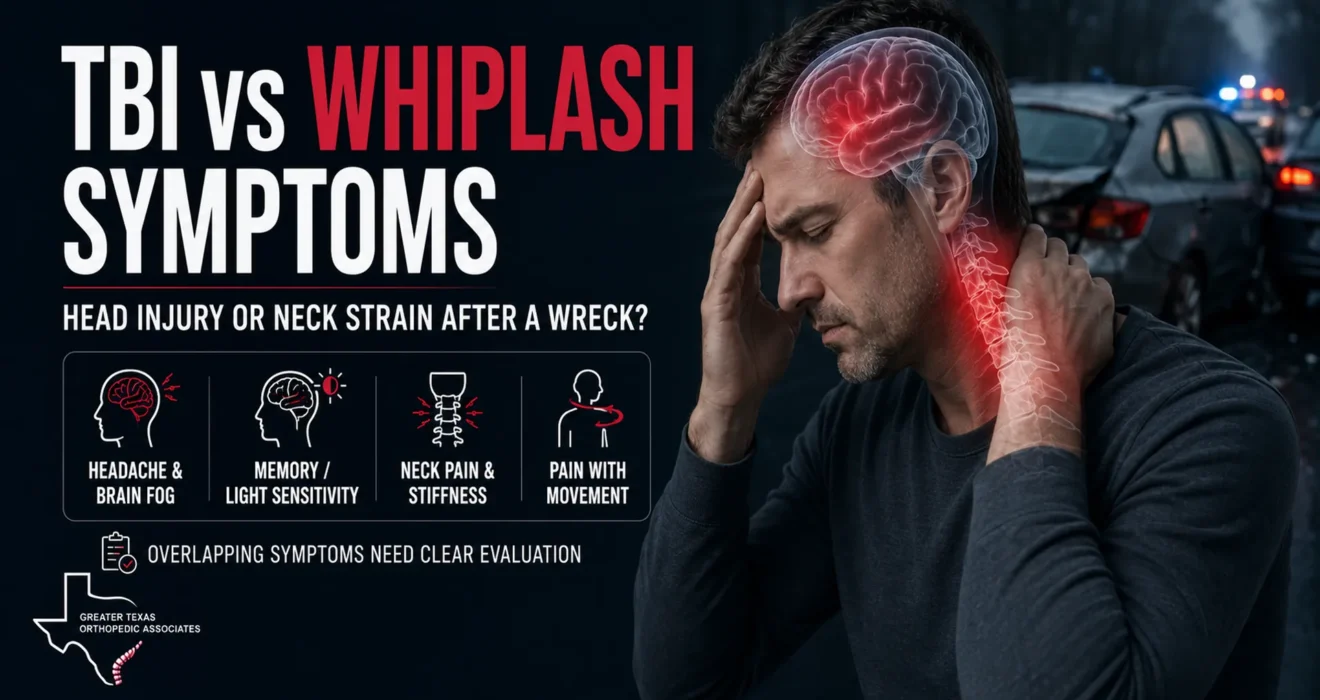
TBI vs. Whiplash Symptoms: How to Tell the Difference After a Crash
A rear-end collision can shake the brain and strain the neck at the same time. Headache, dizziness, difficulty concentrating, stiffness, and fatigue may follow either injury, making TBI vs. whiplash symptoms hard to separate after a crash.
Here, TBI primarily means mild traumatic brain injury, or concussion. Moderate or severe brain injuries can involve more serious findings and require urgent care.
Patients need to know whether symptoms come from the brain, the neck, or both. Medical and legal teams need records that distinguish neurological findings from cervical findings and document functional effects.
A useful evaluation considers the crash mechanism, symptom timeline, focused examinations, appropriate testing, and the possibility that both injuries occurred together.
Mild TBI and Whiplash Can Happen in the Same Collision
Rapid acceleration and deceleration can affect the brain and cervical spine together. The brain moves within the skull while neck muscles, ligaments, joints, and discs absorb force. A direct head strike is not required for concussion, and vehicle damage alone cannot establish whether an injury occurred.
A driver struck from behind may notice neck tightness at the scene, then develop painful head movement, a screen-triggered headache, or difficulty concentrating the next day. That pattern may reflect whiplash, mild TBI, or both.
Early notes that say only “headache and neck pain” may miss important distinctions in diagnosis, treatment, and recovery.
What Is a Mild Traumatic Brain Injury After a Car Accident?
According to the Centers for Disease Control and Prevention (CDC), mild TBI or concussion can result from a bump or jolt to the head or a hit to the body that rapidly moves the head and brain. It can disrupt brain function without a visible wound or loss of consciousness.
Common mild TBI symptoms may include:
- Headache or pressure in the head
- Dizziness, balance problems, or nausea
- Brain fog, slowed thinking, or poor concentration
- Short-term memory problems or gaps around the crash
- Sensitivity to light or noise
- Fatigue, sleep changes, irritability, or mood changes
- Symptoms worsened by screens or mental effort
Symptoms may appear immediately or over the following hours or days as work, driving, and screen use expose limitations. See GTOA’s guide to concussion after a car accident for more detail.
What Are Common Whiplash Symptoms After a Crash?
Whiplash is a neck injury caused by rapid back-and-forth cervical motion. MedlinePlus notes that pain may be delayed and may involve the neck, head, shoulders, jaw, or arms.
Common whiplash symptoms after a crash may include:
- Neck pain and stiffness worsened by movement
- Painful or limited neck rotation and extension
- Headache beginning near the base of the skull
- Pain across the shoulders or shoulder blades
- Localized muscle or joint tenderness
- Pain affected by posture or sustained neck position
- Arm symptoms when cervical nerves are involved
Symptoms may develop after the scene. Severe, worsening, neurological, or function-limiting symptoms deserve medical evaluation rather than an assumption of simple strain.
GTOA’s guide to whiplash injury symptoms, diagnosis, and treatment explains what a focused cervical examination may include.
TBI vs. Whiplash Symptoms: Key Differences
No single symptom confirms the diagnosis. Headache, dizziness, fatigue, sleep disturbance, and neck discomfort overlap, so the overall pattern and examination findings matter.
| Feature | Mild TBI / Concussion | Whiplash |
| Headache | May be diffuse or worsen with concentration, screens, light, or noise. | Often begins near the base of the skull and may change with neck movement or posture. |
| Neck pain | May occur but is not required for a mild TBI. | Usually a central symptom and often worsens with movement. |
| Memory and attention | Brain fog, slowed thinking, forgetfulness, or concentration problems may occur. | Not typical of an isolated cervical strain. |
| Light or noise sensitivity | More suggestive of concussion when part of the overall pattern. | Less typical when whiplash occurs alone. |
| Primary trigger | Mental, visual, or physical effort may worsen symptoms. | Neck rotation, extension, prolonged posture, or lifting may worsen pain. |
| Range of motion | May remain normal unless another injury is present. | Frequently reduced or painful. |
| Dizziness | May reflect brain, vestibular, or visual involvement. | Can occur and may reflect cervical or overlapping causes. |
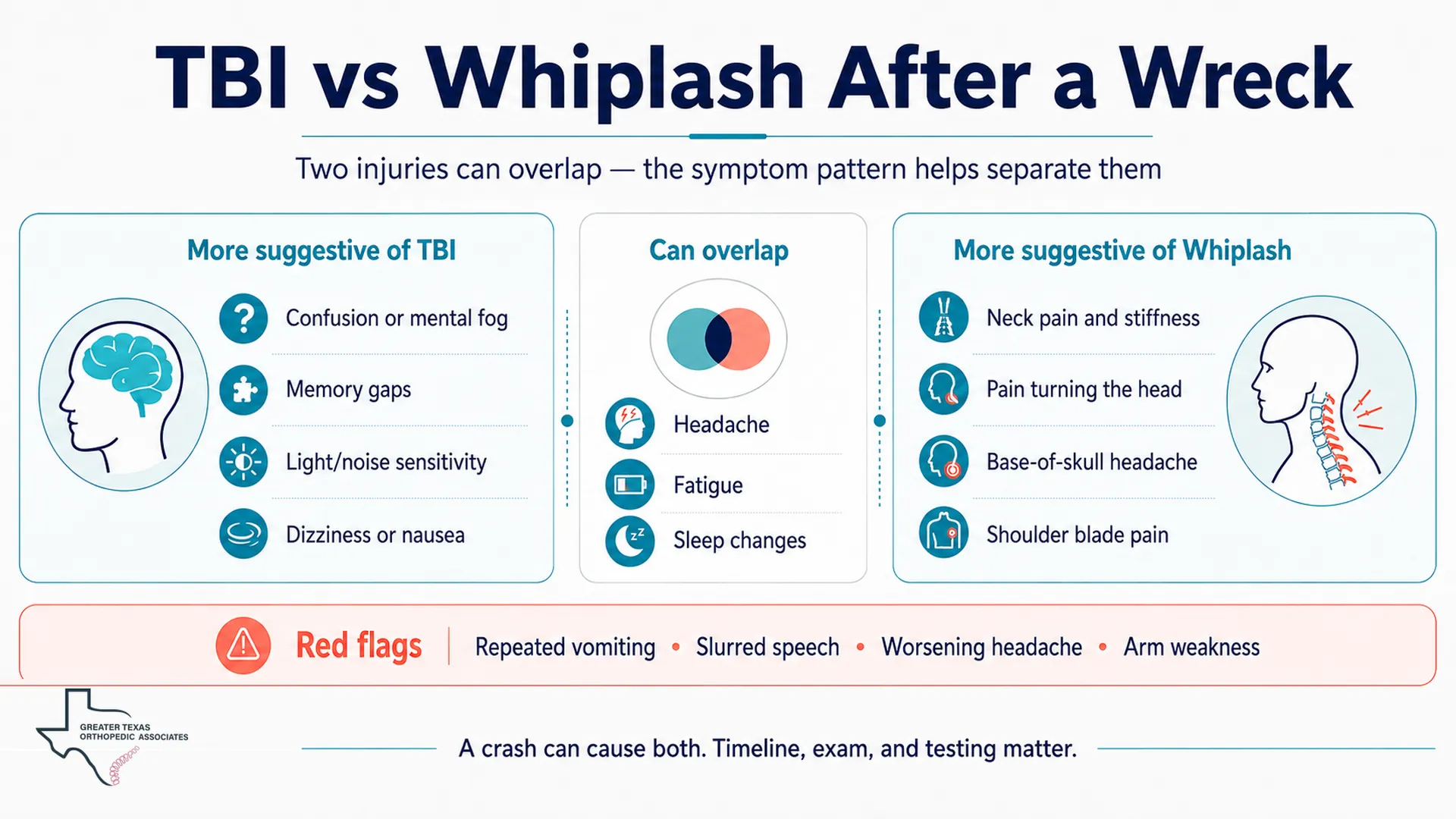
These patterns guide evaluation but do not confirm a diagnosis; both conditions can occur together.
Red Flags That Need Immediate Medical Attention
Call 911 or seek emergency care for signs of a serious brain, neck, or spinal injury. Do not wait for a routine appointment.
Possible Brain Injury Warning Signs
CDC danger-sign guidance recommends emergency evaluation for:
- A worsening headache that will not resolve
- Repeated vomiting
- Seizure activity
- Slurred speech or unusual behavior
- Increasing confusion or failure to recognize people or places
- One pupil larger than the other
- Difficulty waking or loss of consciousness
- New weakness, numbness, or poor coordination
Possible Neck or Spinal Warning Signs
MedlinePlus spinal injury guidance lists urgent warning signs such as:
- Severe neck pain or an unusual neck position
- New or worsening arm or leg weakness
- Progressive numbness, tingling, or loss of sensation
- Difficulty walking, balancing, or coordinating movement
- Loss of bladder or bowel control
- Difficulty breathing or paralysis
What Imaging and Testing Can and Cannot Show
A head CT may be ordered when the history, examination, or decision rules suggest bleeding, fracture, or another acute intracranial injury. CT does not diagnose concussion by itself, and a normal scan does not rule out mild TBI.
Cervical X-ray, CT, or MRI may be selected according to the crash mechanism, examination, neurological symptoms, and clinical decision rules. MRI may help evaluate persistent pain, disc, spinal cord, or nerve concerns.
Other testing may include neurological examination, cognitive screening, balance or vestibular assessment, visual testing, cervical motion, strength, reflexes, and sensation. The plan should match the individual findings.
Why Clear Medical Documentation Matters
Records should separate neurological symptoms from cervical findings so each condition can be tracked, treated, and reassessed.
Useful notes describe the collision mechanism, head or body movement, head impact, altered awareness, memory gaps, symptom onset, and changes over time.
The examination record may include measured cervical range of motion, tenderness, strength, sensation, reflexes, balance, coordination, and relevant cognitive, visual, vestibular, or sensory complaints. Specific functional limits involving work, driving, screens, sleep, lifting, and neck movement add practical context to the clinical findings.
Serial notes show changes in symptoms, examination findings, treatment response, and function. Consistent follow-up supports continuity without guaranteeing an insurance or legal result.

How Treatment May Differ
Treatment may follow two related tracks because the brain and neck can require different forms of care. Recommendations depend on the diagnosis, symptom severity, examination findings, other injuries, and the patient’s medical history.
A mild TBI care plan may begin with a short period of relative rest followed by a gradual return to cognitive and physical activity. Symptom-guided adjustments to work, driving, screen use, and exercise may help prevent excessive symptom flare-ups during recovery.
Treatment may also address headache, sleep, nausea, mood, or sensory sensitivity. Vestibular, visual, cognitive, or other rehabilitation therapies may be recommended when specific deficits persist.
A whiplash care plan may emphasize activity guidance and a gradual restoration of comfortable neck movement. Physical therapy may focus on cervical mobility, posture, strength, and the functional activities affected by the injury.
Medication or other pain-management options may be considered when clinically appropriate. Persistent symptoms, progressive limitations, or neurological findings may warrant additional spine, neurological, or interventional evaluation.
When both conditions are present, treatment should be coordinated so that activity progression does not aggravate either the neurological or cervical symptoms.
When to Schedule an Evaluation
Schedule an evaluation when headache, neck pain, dizziness, memory problems, light sensitivity, or restricted movement persists, worsens with activity, or interferes with work, driving, sleep, or daily tasks. Severe or rapidly worsening symptoms require urgent assessment.
Greater Texas Orthopedic Associates evaluates accident-related neck and neurological concerns. Learn more about Traumatic Brain Injury Care in Texas when symptoms overlap after a collision.
Final Thoughts
Distinguishing TBI vs whiplash symptoms is less about labeling a single complaint and more about reading a pattern across time. Cognitive change, sensory sensitivity, and headache behavior point one way. Movement-related neck pain and restricted rotation point another. Many patients show elements of both, and that combination deserves to be written down rather than simplified.
If headaches, neck pain, memory trouble, or dizziness continue after a collision, Greater Texas Orthopedic Associates can evaluate both the neck and the neurological picture, document findings in measurable terms, clarify what is driving each symptom, and guide the next step in care.
FAQs About TBI and Whiplash Symptoms
Can a Person Have a Concussion and Whiplash at the Same Time?
Yes. A collision can affect both the brain and cervical spine, so concussion and whiplash symptoms may occur together. A clinical evaluation helps determine which findings relate to each condition and whether another injury is present.
How Soon Do Symptoms Usually Appear?
Some symptoms appear immediately, while others may become noticeable over the following hours or days. New, worsening, severe, or function-limiting symptoms should be evaluated.
Does a Normal CT Scan Mean There Is No Brain Injury?
No. A CT scan is mainly used to identify acute problems such as bleeding or fracture when imaging is clinically indicated. A concussion may not appear on routine imaging, so diagnosis also depends on symptoms, neurological examination, clinical history, and other assessments when appropriate.
Why Does a Neck Injury Sometimes Cause Headaches?
Injured muscles, joints, ligaments, and other structures in the upper cervical spine can refer pain toward the back or front of the head. Headache after a crash may also have more than one contributing cause, including both cervical and neurological factors.
Medical Disclaimer
This article is for general educational purposes only and is not a substitute for medical evaluation, diagnosis, treatment, emergency care, or legal advice. Seek emergency care for severe or worsening neurological symptoms.