Spondylolisthesis Treatment: Symptoms, Causes, and When Surgery Is Needed
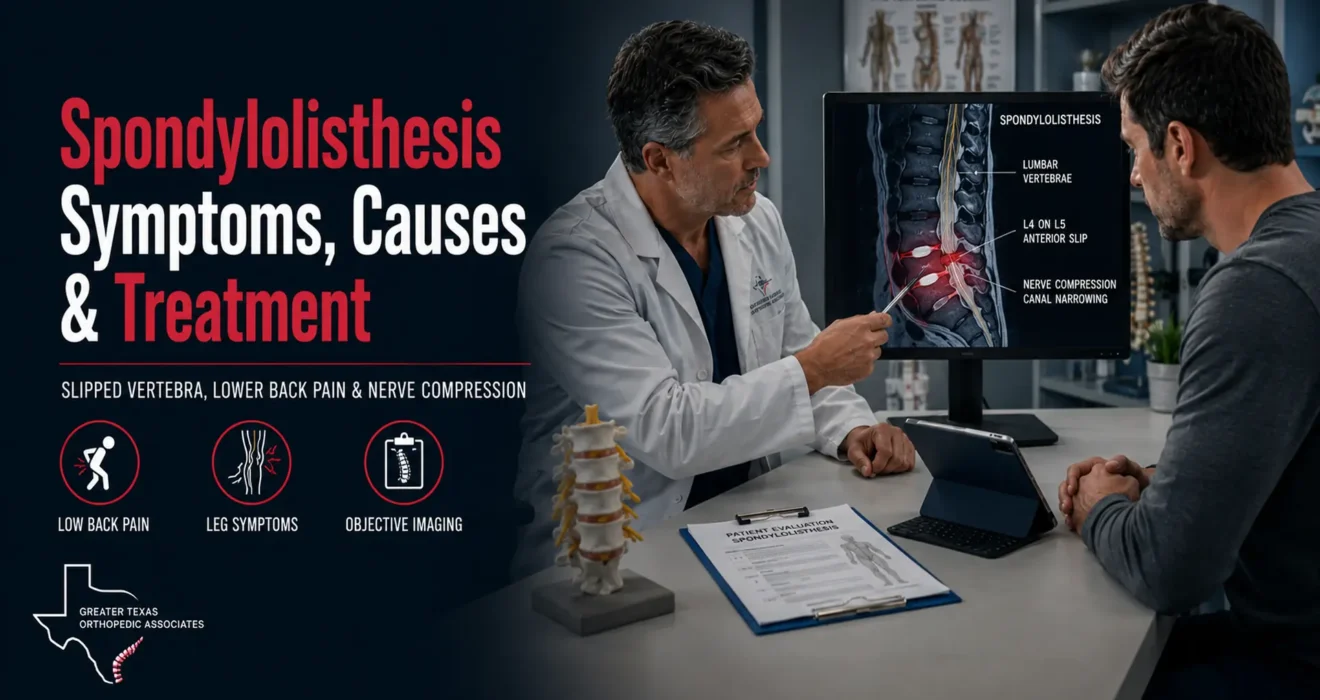
Spondylolisthesis occurs when one vertebra shifts forward over the bone beneath it. Some people have no significant symptoms, while others develop lower back pain, radiating leg pain, walking difficulty, numbness, or weakness. Spondylolisthesis treatment depends on the symptoms, neurological findings, spinal stability, type of slip, and effect on daily function, not imaging alone.
What Spondylolisthesis Means in Plain English
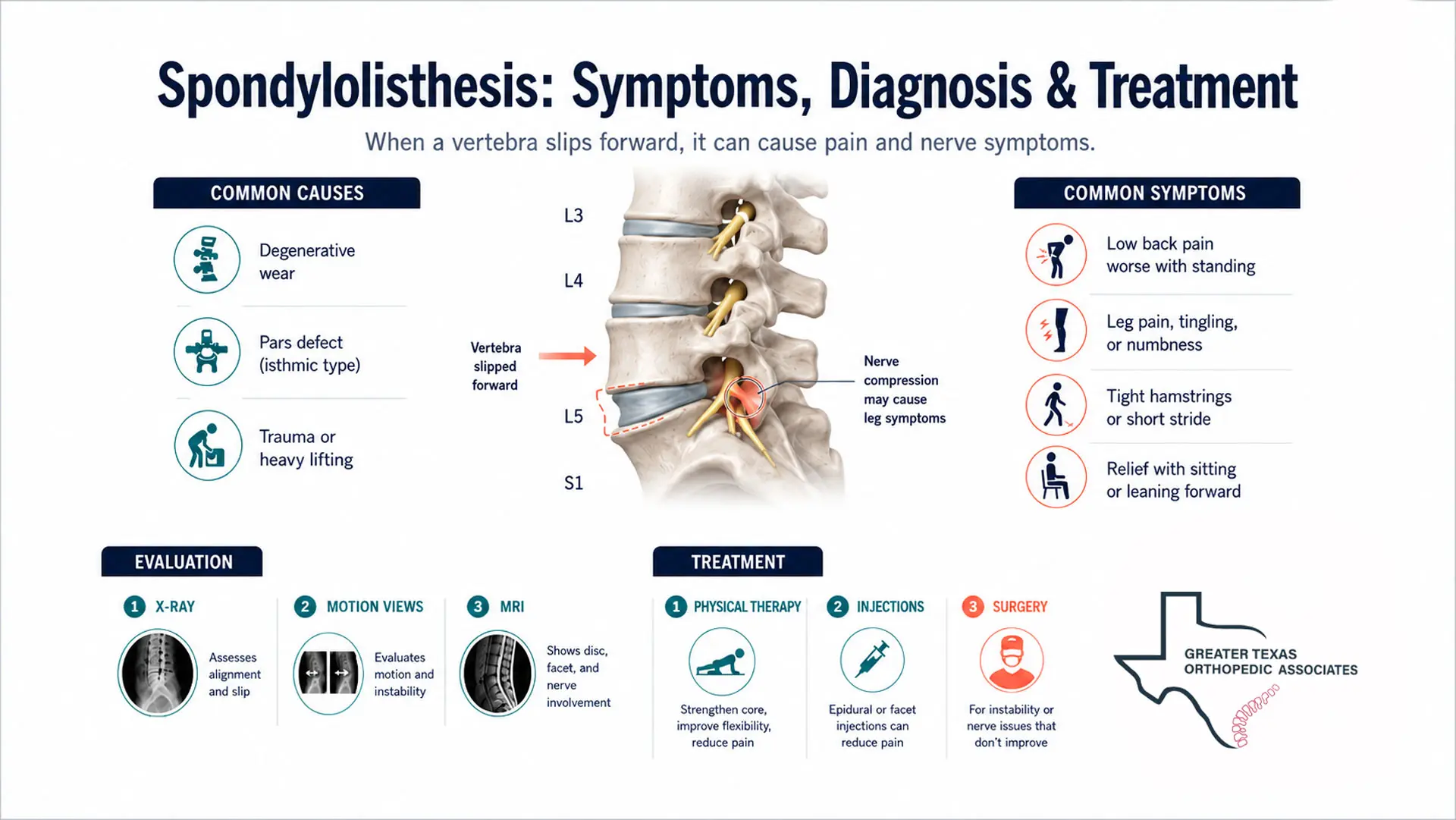
The lower spine consists of vertebrae supported by discs, facet joints, ligaments, and surrounding muscles. When these structures no longer provide adequate stability, one vertebra may move forward over the vertebra below it. Lumbar spondylolisthesis commonly affects the L4-L5 or L5-S1 level.
In degenerative cases, age-related changes in the discs, facet joints, and supporting tissues may gradually reduce stability. Clinicians grade the condition according to the percentage of forward movement, but the grade alone does not determine treatment. Patients with similar imaging findings may have very different symptoms and functional limitations.
Spondylolisthesis Causes and How a Vertebra Slips
Causes fall into a few recognizable categories, and the category shapes both the outlook and the plan. AAOS describes degenerative and isthmic spondylolisthesis as common forms seen in adults
- Degenerative: Age-related changes reduce stability in the discs, facet joints, and supporting tissues.
- Isthmic: A defect or stress injury in the pars interarticularis permits forward movement.
- Congenital or dysplastic: Differences in spinal development make the affected level less stable.
- Traumatic: A significant injury damages stabilizing spinal structures.
- Pathological: A disease process weakens the vertebra or surrounding structures.
- Postsurgical: Instability develops after a previous spinal procedure.
Imaging findings do not always cause symptoms and must be considered alongside the examination and functional limitations.
Recognizing Slipped Vertebra Symptoms
Slipped vertebra symptoms vary. Some people have no noticeable symptoms, while others develop lower back pain that worsens with prolonged standing, walking, lifting, or spinal extension.
Common patterns include:
- Lower back pain that worsens with standing, walking, or arching backward
- Pain, tingling, or numbness traveling into the buttock, thigh, or calf
- Hamstring tightness, a shortened stride, or a sense that the back may give way
- Relief with sitting or leaning forward, especially when spinal stenosis is also present
Red flags that need prompt evaluation
Some findings call for same-day assessment rather than watchful waiting:
- New or progressive weakness in the foot, ankle, or leg
- Numbness in the groin or inner thighs
- Loss of bladder or bowel control
- Severe pain that does not ease in any position
- Fever, unexplained weight loss, or a cancer history with new back pain
How it differs from a herniated disc
A herniated disc, lumbar spinal stenosis, facet joint pain, nerve compression, and lumbar spondylolisthesis can produce similar lower back and leg symptoms. Some patients with degenerative spondylolisthesis and spinal stenosis feel worse while standing or walking and better while sitting or leaning forward. However, symptoms alone cannot reliably identify the cause. A physical examination and appropriate imaging help distinguish these conditions.
Why Diagnosis Requires More Than a Pain Complaint
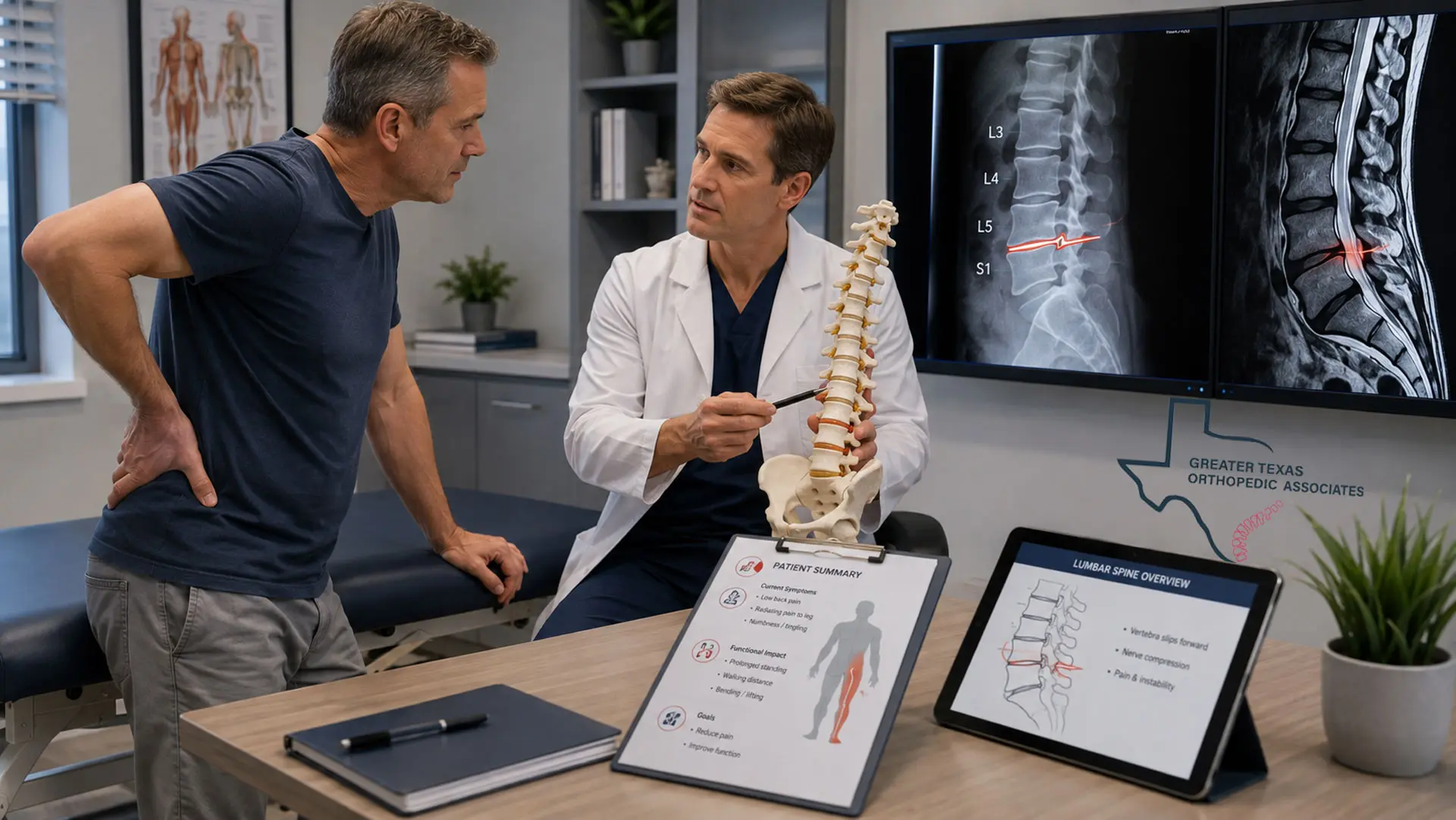
Diagnosis requires more than a description of pain. A documented physical and neurological examination helps compare the patient’s symptoms with reproducible findings and determine whether additional imaging or testing is appropriate.
Objective Findings That May Support the Diagnosis
A thorough spine exam typically records:
- Range of motion in flexion and extension, noting positions that reproduce symptoms
- Motor strength testing by muscle group, graded consistently
- Deep tendon reflexes at the knee and ankle
- Sensory testing mapped to dermatomes
- Straight leg raise and other provocative maneuvers
- Gait, stride length, and ability to heel or toe walk
What imaging and nerve testing may show
Standing X-rays evaluate spinal alignment under weight-bearing conditions. Flexion-extension views may help assess movement at the affected level, although no single view identifies instability in every patient. MRI can show nerve compression, canal or foraminal narrowing, disc degeneration, and other soft-tissue changes. When the source of persistent neurological symptoms remains unclear, EMG and nerve conduction studies may provide additional information.
Spondylolisthesis Treatment Options From Therapy to Surgery
Spondylolisthesis treatment depends on symptoms, neurological findings, slip type and grade, spinal stability, functional limitations, and overall health. Many patients begin with nonsurgical care and are reassessed before additional treatment is considered.
Conservative Treatment
Initial care may include temporary activity modification, physical therapy, and medication when appropriate. Rather than prolonged bed rest, patients may be advised to reduce movements that repeatedly worsen symptoms.
Physical therapy may include core and hip strengthening, flexibility work, posture training, movement education, and a gradual return to activity. Pain-relieving or anti-inflammatory medication may also be considered based on the patient’s health history. Bracing is generally reserved for selected cases, including some younger patients with a pars stress injury.
When Injections Are Considered
An epidural steroid injection may be considered when nerve irritation causes persistent radiating leg pain. It may temporarily reduce inflammation and help the patient participate in therapy, but it does not correct vertebral slippage or structural instability. The response should be interpreted alongside the examination and imaging findings.
When Surgery May Be Considered
A surgical consultation may be appropriate when disabling symptoms persist despite nonsurgical care, neurological weakness progresses, significant nerve compression is present, or clinically important instability is identified. Decompression creates space for compressed nerves, while spinal fusion stabilizes the affected level. Some patients require both procedures, but a vertebral slip does not automatically require surgery or fusion.
Recovery and Follow-Up
Recovery depends on the treatment, condition severity, general health, and demands of work and daily activity. Follow-up evaluates pain, strength, walking tolerance, function, and neurological symptoms. Additional imaging may be recommended when symptoms change or progression is suspected.
Spondylolisthesis After an Accident
Degenerative slippage usually develops over time, so imaging obtained after an accident may show changes that existed before the event. However, trauma can make a previously asymptomatic condition painful or functionally limiting. GTOA’s article on pre-existing injuries aggravated by trauma explains how an accident may affect a condition that was already present.
Evaluation should distinguish among imaging findings, examination findings, symptom onset, prior function, and any earlier treatment or imaging. Clear records help document the relationship among the event, symptoms, objective findings, treatment response, and functional limitations.
Gaps in treatment may complicate this assessment, although access to care, insurance authorization, transportation, work demands, and other circumstances should also be considered.
When to Schedule an Orthopedic Evaluation
Back pain that persists beyond a few weeks, changes character, or begins traveling into the leg deserves a spine-focused evaluation. The same applies when symptoms follow a fall, a lifting injury, or a collision, even when an emergency department X-ray was read as unremarkable.
A useful evaluation should produce a working diagnosis, imaging that matches the clinical picture, and a plan with defined checkpoints. Depending on those findings, the plan may involve therapy, targeted spinal injections for persistent nerve pain, or a surgical opinion.
Final Thoughts
The appropriate spondylolisthesis treatment depends on more than the amount of vertebral slippage shown on an image. Symptoms, neurological findings, spinal stability, walking tolerance, daily function, and response to nonsurgical care all influence the treatment plan.
Many patients begin with conservative treatment, while injections or surgery may be considered when symptoms remain disabling or neurological problems progress. Greater Texas Orthopedic Associates can evaluate persistent lower back or leg symptoms, review relevant imaging, and discuss treatment options based on the individual clinical findings.
FAQs About Spondylolisthesis
Can a car accident cause a vertebra to slip?
High-energy trauma can fracture a stabilizing structure and produce a slip directly, though that is uncommon. More often, a collision makes a previously silent slip symptomatic, which is why prior imaging and prior function matter.
Is spondylolisthesis the same as spondylolysis?
No. Spondylolysis is a defect or stress fracture in the pars interarticularis without displacement. When that defect allows the vertebra to move forward, the condition becomes spondylolisthesis.
Does a slipped vertebra require surgery?
No. Many patients can be managed without surgery. A surgical consultation may be considered when disabling symptoms persist despite nonsurgical care, neurological weakness progresses, significant nerve compression is present, or clinically important instability is identified.
Can the slip get worse over time?
It can progress in some patients, but progression is not inevitable. The likelihood depends on the type and grade of the slip, age, spinal degeneration, symptoms, and stability. Follow-up imaging may be recommended when symptoms change or progression is suspected.
What is the first treatment for lumbar spondylolisthesis?
Initial treatment often includes activity modification, individualized physical therapy, and medication when appropriate. Injections or a surgical consultation may be considered when symptoms persist or neurological problems develop.