
Independent Medical Exams in Orthopedic Injury Claims
An independent medical exam, or IME, can have a major impact on how an injury claim is reviewed. In orthopedic personal injury cases, an IME is often used to evaluate whether the patient’s injuries, treatment, physical limitations, and future care recommendations are supported by the medical records and accident history.
Because orthopedic injuries can involve imaging findings, pain complaints, functional limitations, and pre-existing conditions, consistency in the medical record is critical. An IME report may influence opinions about causation, treatment necessity, work restrictions, impairment, and future medical needs.
In many personal injury disputes, the main question is not simply whether the patient has symptoms. The key issue is whether the documentation clearly connects those symptoms to the accident and supports the treatment being provided.
What Is an Independent Medical Exam Injury Claim?
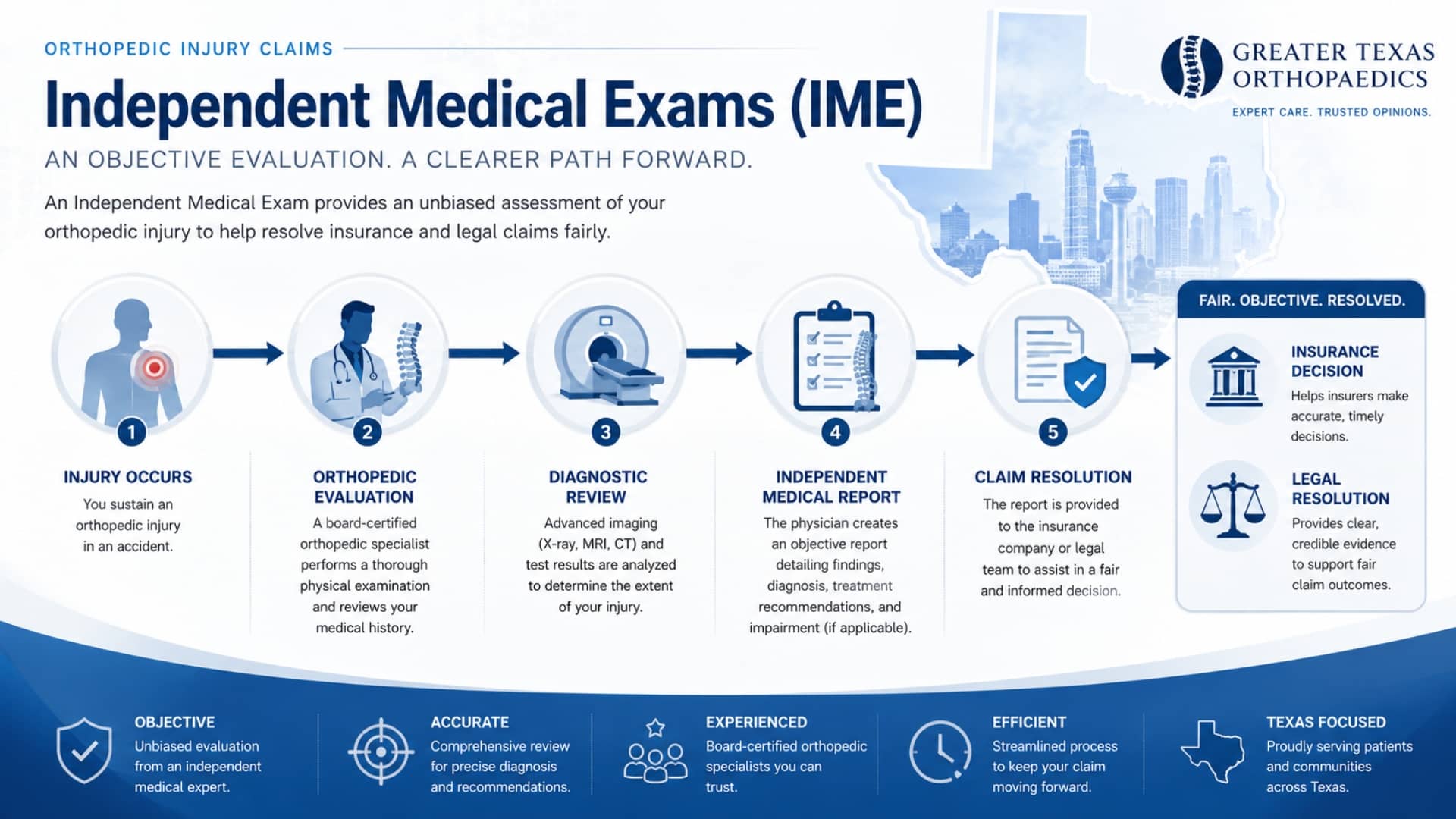
An independent medical exam is usually performed by a physician who is not the treating doctor. The examiner does not manage recovery; the examiner answers medical questions related to the claim.
In an IME in a personal injury case, those questions may involve orthopedic causation in personal injury claims, treatment necessity, work restrictions, impairment, maximum medical improvement, or future care. The process may include a physical exam, record review, imaging, and symptom history. In an independent medical examination PI setting, the report may support the treating record, question it, or identify gaps.
The IME Doctor Is Not Usually Your Treating Doctor
The American Medical Association Code of Medical Ethics explains that independent medical examiners have a limited patient physician relationship tied to the exam itself, not ongoing treatment or monitoring.
That distinction matters because an IME doctor may form opinions after one exam, while the treating doctor has followed the recovery over time.
Why IMEs Are More Complex in Orthopedic Injury Claims
Orthopedic claims are not always straightforward. MRI findings still have to match the symptoms, physical findings, and accident mechanism being claimed. A disc bulge may be old but symptomatic after trauma, while knee or shoulder injuries are easier to defend when swelling, weakness, gait changes, or functional loss support the record.
Imaging Alone Does Not Tell the Whole Story
Imaging matters, but it does not decide the whole case by itself. A disc bulge may be old, or it may become symptomatic after trauma. Arthritis may predate an accident and still become painful afterward.
A meniscus tear may appear on MRI, but the record still has to explain the mechanism, symptoms, and functional impact.

How IME Doctors Evaluate Causation
IME doctors evaluate causation by reviewing accident details, symptom timing, imaging findings, treatment history, and functional limitations. The goal is to determine whether the medical records consistently connect the injury to the accident being claimed.
When an IME doctor evaluates causation, the focus is usually on timing, symptom consistency, and whether the records, exam findings, and injury pattern reasonably connect the condition to the accident.
Timing, Prior Records, and Symptom Consistency
A well reasoned medical exam for an injury claim usually looks at several categories together:
- Medical records, imaging reports, therapy notes, injection history, and surgical recommendations
- Symptoms, range of motion, strength, gait, neurological findings, and functional limitations.
- Prior injuries, pre existing conditions, treatment gaps, and whether the symptoms match the accident mechanism.
A patient may develop symptoms days after an accident or already have degenerative findings on imaging. That alone does not automatically rule out an accident related injury.
In many orthopedic IMEs, the dispute is less about whether the patient has pain and more about whether the records consistently connect those symptoms to the accident being claimed.
How an IME Affects Treatment and Claim Value
An IME may influence whether treatment, work restrictions, future care, and impairment claims are considered medically necessary. In many orthopedic injury cases, the IME report can affect how the overall claim value is evaluated.
An IME in a personal injury case may influence how treatment is viewed. Therapy is easier to support when it improves function and follows a clear diagnosis. Lumbar injections become harder to support when the symptoms and findings do not point to the same pain source.
An independent medical examination PI report may also argue that treatment was excessive, unrelated, or no longer necessary. That opinion can affect claim value because orthopedic claims are often judged through treatment history, objective findings, future care needs, and future medical costs in injury claims.
Reasonable Treatment Has to Match the Clinical Picture
Simply listing a treatment in the chart does not automatically make it medically reasonable. Physical therapy carries more weight when notes show measurable improvement or ongoing functional deficits.
Surgery is easier to justify when conservative care failed for documented reasons. In an independent medical exam injury claim, the treatment history should still make clinical sense as recovery progresses.
Future Care Should Be Documented, Not Assumed
Future care is easier to defend in an independent medical exam injury claim when the records explain why additional treatment may still be necessary. Repeat injections, surgery, work restrictions, or follow-up care should be supported by the record, especially when long-term recovery or future medical costs may become disputed later in the claim.
Legal Standards Behind IME Reports
IME reports exist within a legal and medical framework. In Texas civil litigation, Texas Rule of Civil Procedure 204.1 allows a party to request a court-ordered physical or mental examination when required conditions are met. In federal litigation, Federal Rule of Civil Procedure 35 applies when the person’s physical or mental condition is in controversy and good cause is shown.
For impairment, the American Medical Association’s Guides to the Evaluation of Permanent Impairment are commonly relied on for impairment rating guidance. These standards help place an independent medical examination PI opinion in context when orthopedic or nerve injury creates lasting functional loss.
How Patients Can Prepare for a Medical Exam for an Injury Claim
Preparation does not mean rehearsing answers or trying to influence the examiner. In a medical exam for an injury claim, accuracy and consistency usually matter more than long explanations.
Before the exam, patients should understand the basic timeline of the injury and treatment:
- Know when symptoms began and whether imaging, therapy, injections, or surgery were recommended.
- Be honest about functional limits involving walking, lifting, sitting, working, driving, or sleeping.
- Be honest about prior injuries, earlier pain, or treatment before the accident.
The examiner may compare the patient’s statements with the records, imaging, and exam findings. Even small differences between the records and later complaints may raise questions during the IME.
Why Medical Documentation Matters in IME Claims
Consistent medical documentation helps support causation, treatment necessity, and functional limitations in an independent medical exam injury claim. Gaps or inconsistencies in the records may weaken the credibility of the claim.
A strong independent medical exam injury claim is not built on diagnosis alone. MRI findings still need to match the patient’s symptoms and physical exam. Pain complaints are harder to support when the records never clearly show how the injury affected normal function. Even a treatment gap does not defeat a claim if there is a reasonable explanation.
The records should continue making sense as treatment progresses. If important details are missing or unexplained, an IME report may question the injury, treatment, or functional limits.
Why Treating Records Still Matter After an IME
An IME is usually just a snapshot. Treating records often become more important afterward because they show how symptoms, treatment decisions, and functional limitations changed over time.
For cases that need clearer medical support, GTOA provides orthopedic evaluations for legal cases focused on objective findings, treatment history, and injury-related function.
Clinical Consistency Often Shapes Claim Credibility
Credibility is not only about honesty; the records also need to stay consistent over time. If a neck injury claim includes early neck complaints, radiating arm symptoms, neurological findings, and treatment records that continue to support the diagnosis, the claim becomes easier to defend.
In many IMEs in a personal injury case, the disagreement is less about whether the patient has pain and more about whether the records consistently connect those symptoms to the accident being claimed.
Common Problems in IME Injury Claims
No independent medical exam injury claim has to be perfect. Real patients have delayed symptoms, scheduling problems, insurance barriers, and prior medical histories. These issues become problems when the records leave unanswered questions about the injury or treatment.
Common weaknesses include:
- Long treatment gaps without a clear medical or practical explanation.
- Missing imaging reports, incomplete ER notes, or vague symptom descriptions.
- Inconsistent statements about pain, function, prior injuries, or accident-related limitations.
The goal is not a perfect record. It is a record that can still be explained and defended when questions are raised later.
The GTOA Perspective on Orthopedic IMEs and Injury Documentation
At GTOA, orthopedic injury evaluations focus on explaining how the records, imaging, symptoms, and functional findings fit together over time. A useful report should explain why the records and findings support the claim being evaluated. It should explain why the injury, treatment decisions, and functional limitations make medical sense together.
In an independent medical examination PI dispute, strong documentation should help attorneys, insurers, and claim reviewers understand the condition clearly outside the exam room. That usually matters more later when treatment, causation, or long-term limitations start getting questioned.
Final Thoughts
In an independent medical exam injury claim, a diagnosis or MRI finding alone usually does not settle the dispute. In many IMEs, the real issue is whether the records continued to make sense as treatment progressed.
An IME in a personal injury case may question causation, treatment necessity, future care, or long-term limitations when the records do not clearly explain the injury or treatment history. That is why a medical exam for an injury claim depends heavily on documentation showing how symptoms changed, why certain treatments were recommended, and how the injury affected normal function over time.
When the records stay consistent from the first visit forward, the orthopedic claim becomes much easier to defend when questions are raised later.