Loading article


You have an injection scheduled for pain traveling down your leg, but your glucose readings are already difficult to predict. Will the steroid push them higher? Should you change your insulin? Decisions about epidural steroid injections and diabetes need a plan that covers both pain treatment and blood sugar management before procedure day.
Diabetes does not automatically rule out an injection. The decision depends on likely pain benefit, your health, and whether glucose changes can be managed afterward. The injection clinician and your diabetes clinician should agree who handles medication instructions, abnormal readings, and follow-up.
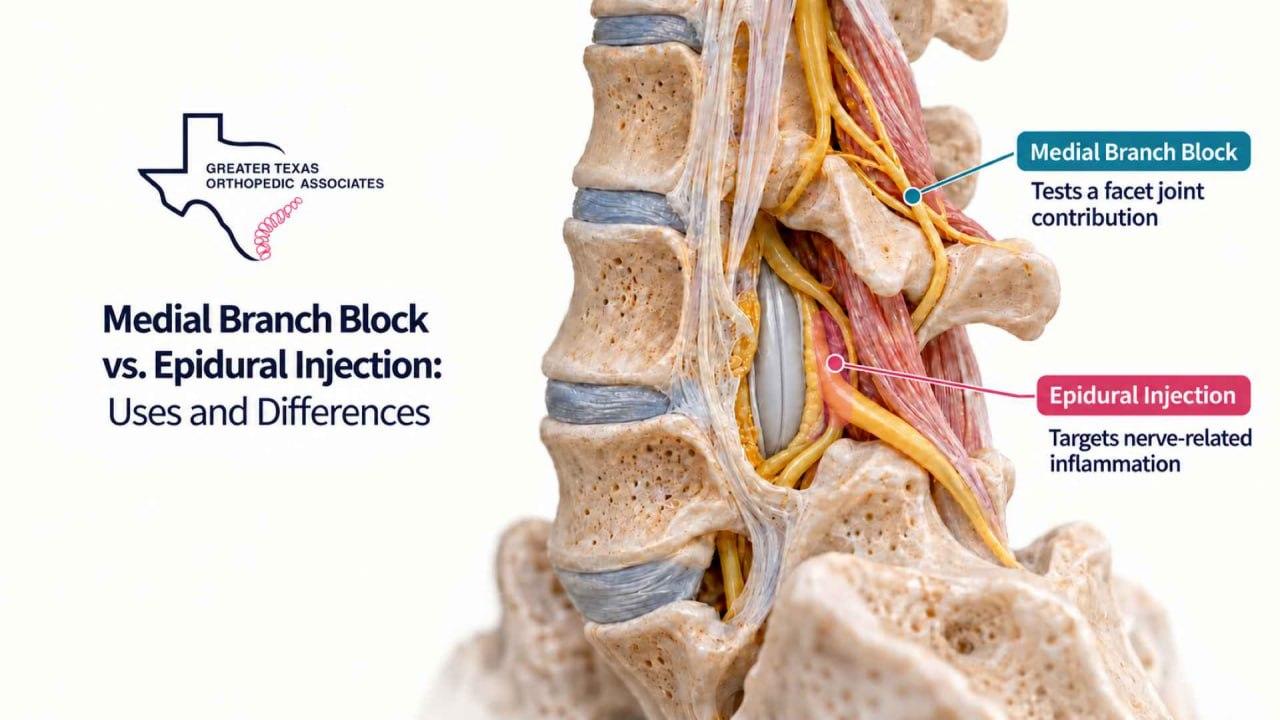
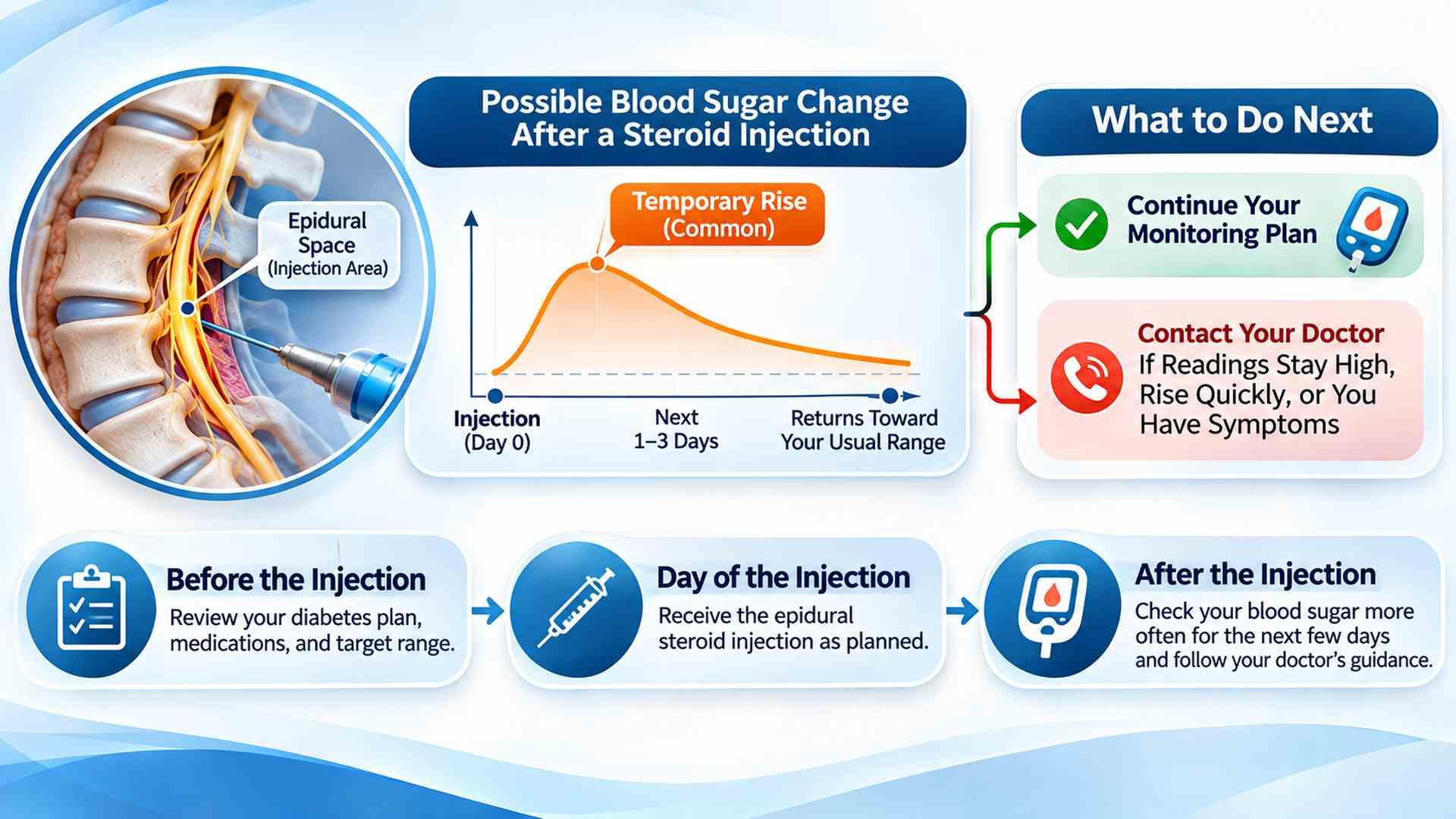
An epidural injection places corticosteroid medication near irritated spinal nerves to reduce inflammation. Some enters the bloodstream and can increase insulin resistance and raise glucose. The steroid, dose, and individual response affect the size and duration of that rise.
The size of an epidural steroid injection blood sugar rise varies considerably. In Even and colleagues’ 2012 study, readings increased after treatment and generally moved back toward participants’ usual range within about two days. Kim and colleagues’ 2013 triamcinolone study found elevations after meals lasting up to four days. Neither result predicts your personal peak or recovery time. These studies used different methods and treatments, so their findings cannot provide a personal timetable for stopping glucose checks.
A reassuring A1C does not guarantee a small rise; it reflects longer-term control, not one steroid response. Report previous reactions to steroid tablets or joint injections, while recognizing that a different treatment may produce a different response.
Every comment is reviewed before publication. Do not include medical details, personal identifiers, or information about an active claim. This form is not monitored for medical questions or emergencies.
Three more from the same thread.
Showing the first 3 of 3 articles
Before discussing medication adjustments, ask which symptoms the injection is intended to improve. Pain from an irritated spinal nerve may respond differently from diabetic neuropathy. Burning or tingling in both feet can have several causes, and an injection does not treat every source of nerve symptoms. Your history, examination, and imaging need to fit together.
Set a treatment goal, such as walking farther or sleeping with less radiating pain. GTOA’s guide to epidural steroid injections explains the procedure; your visit should establish why it is proposed for you.
Kim and colleagues compared 20 mg and 40 mg of triamcinolone. The higher dose caused greater glucose increases without better pain outcomes during the study. This supports discussing the lowest effective dose, not choosing your own prescription. Findings for one steroid do not automatically apply to another.
Discuss alternatives when glucose is unstable or benefit is uncertain, including physical therapy, selected medicines, or further evaluation. Ask about bleeding, infection, and rare serious neurological complications. Corticosteroids are not FDA approved for epidural administration; this off-label use requires an informed discussion of benefits and risks.
Give both teams your diabetes type, medicines, recent glucose record, available A1C, and history of severe lows or ketoacidosis. Mention kidney disease, illness, antibiotics, and other steroids. A stable A1C may not capture a recent infection or several days of unusually high readings.
Bring this information to check-in. GTOA’s epidural injection service information describes the treatment setting and evaluation process. Confirm personal medication and fasting instructions directly with your team.
Ask whether sedation is planned and whether food or fluids must be restricted. Fasting with certain diabetes medicines can cause low glucose, while the steroid may later raise it. Do not skip medicines or add extra doses without instructions.
For diabetes preparation for an epidural injection, obtain written directions covering insulin, pumps, SGLT2 medicines such as empagliflozin, and GLP-1 medicines such as semaglutide. Sedation, fasting, and medical history affect instructions. Confirm when to take, hold, and restart medicines. Do not stop basal insulin independently, particularly with type 1 diabetes. If you use a pump or sensor, ask whether it can stay in place and who will manage it during the procedure.
If glucose falls during fasting, follow your agreed low-glucose treatment plan and notify the clinic immediately. Do not leave a low untreated to preserve the appointment. Tell the team what you consumed and when; sedation or the procedure may need rescheduling.
There is no universally accepted safe glucose or A1C cutoff for proceeding. A clinic may check glucose on arrival or postpone an elective injection for illness or concerning readings. A local threshold does not guarantee that readings below it eliminate risk.
Get written answers before traveling, including an after-hours number and who manages abnormal readings. Obtain medication and procedure instructions directly from your treating team.
Plan glucose monitoring after an epidural injection before leaving. The International Pain and Spine Intervention Society (IPSIS) recommends frequent checks for 72 hours or until baseline in type 2 diabetes. Your clinician should set the schedule and decide whether longer monitoring or closer supervision is needed, especially with type 1 diabetes or insulin treatment. If readings remain elevated after 72 hours, contact your diabetes team about continued monitoring and the next step.
Ask whether to check before meals, after meals, at bedtime, or at other times. After-meal checks can reveal a rise that fasting readings miss. Record time, meals, symptoms, and medication taken under your plan. With continuous glucose monitoring, clarify alerts and how to confirm unexpected results. Ask the team to write down your target range and call thresholds in the units your meter displays. Clarify the response to a single unexpected reading versus repeated high readings.
Have working meter supplies, your usual low-glucose treatment, and prescribed ketone equipment available. Arrange help if you become unwell or receive sedation. Follow your eating plan as tolerated; skipping meals to lower a high reading can create further problems.
Review readings before temporary medication changes. Any temporary prescription should explain when to reduce or stop extra treatment: additional insulin can cause lows as the steroid effect fades. Follow individualized fluid advice if kidney or heart disease limits drinking.
Call promptly for repeated readings above your agreed limit, persistent thirst, frequent urination, or a rise despite your plan. Without a threshold, request advice rather than waiting for symptoms. If unavailable, use the covering service or seek urgent assessment. Do not invent an insulin correction dose. Report fever or increasing injection-site redness, swelling, or drainage to the procedure team.
Seek emergency care for vomiting that prevents drinking, deep or rapid breathing, confusion, or marked drowsiness. CDC guidance also advises emergency care when glucose stays at 300 mg/dL (16.7 mmol/L) or above. Ketoacidosis can occur without very high glucose, especially with SGLT2 medicines; follow your ketone plan. New substantial weakness or loss of bladder or bowel control after injection needs emergency assessment. Call emergency services for unconsciousness or seizures with suspected low glucose.
Keep your pain and glucose records together. Weigh improvements in walking, sleep, and daily activities against glucose disturbance and extra treatment required. Temporary numbness from local anesthetic does not establish sustained steroid benefit.
Before another injection, explain what improved, for how long, and how difficult glucose changes were to manage. Your clinician can reassess the steroid, dose, timing, or alternatives rather than repeating treatment automatically.
This article provides general education and does not replace medical advice tailored to your condition.
Leave with a clear reason for the procedure, written medication and monitoring instructions, and contact details for help. If each team assumes the other has provided the plan, resolve that gap before procedure day.
Possibly. Your clinician should assess expected benefit, current glucose control, and your ability to manage temporary changes.
Studies report different durations. Monitor as directed until your team is satisfied readings have settled; your response may differ from published averages.
Follow written, individualized instructions from your diabetes clinician. Do not improvise insulin doses or stop basal insulin independently.
Seek emergency care for confusion, breathing difficulty, vomiting that prevents drinking, or new substantial weakness. Do not wait for a particular glucose reading when serious symptoms occur.
Comments are reviewed before they appear. For appointments, records, or medical questions, use the contact page.
No comments have been published on this article yet.