Loading article


A sudden knee injury often brings pain and swelling. Trouble actively straightening the leg is different and deserves attention. A quadriceps tendon tear damages the strong tissue connecting the front thigh muscles to the kneecap. When that connection fails, the knee may buckle during walking or climbing stairs.
The injury may be partial or complete. That distinction helps determine whether bracing and rehabilitation are reasonable or surgery is more likely. A bruise, fracture, and tendon injury can look similar at first, so an examination matters. This guide covers warning signs, diagnosis, treatment, and recovery based on function.
The four quadriceps muscles at the front of the thigh merge into a tendon above the patella. Below it, the patellar tendon connects the kneecap to the tibia. Together, these structures form the extensor mechanism that straightens and controls the knee.
The injury usually occurs near the top of the kneecap. It differs from a quadriceps muscle strain higher in the thigh and a patellar tendon rupture below the kneecap. Pain location and active knee extension help distinguish them.
Both ruptures disrupt the extensor mechanism, so location alone cannot confirm the diagnosis.
A partial tear leaves some fibers intact. The knee may still straighten, although movement can be painful or weak. Preserved movement does not automatically mean the damage is minor.
A complete rupture separates the tendon or detaches it from the patella. An active straight leg raise may become difficult or impossible. A gap may be felt above the kneecap, although swelling can conceal it.
Every comment is reviewed before publication. Do not include medical details, personal identifiers, or information about an active claim. This form is not monitored for medical questions or emergencies.
Three more from the same thread.
Showing the first 3 of 3 articles
The classic injury occurs when the quadriceps contracts forcefully while the bent knee supports body weight. This often happens during a stumble, fall, awkward landing, or sudden change of direction. Direct trauma and deep cuts can damage the tendon as well.
Tissue quality affects how much force causes a tear. The American Academy of Orthopaedic Surgeons lists diabetes, chronic kidney disease, inflammatory or metabolic disorders, corticosteroid exposure, and fluoroquinolone antibiotics among factors linked to tendon weakness. Previous knee surgery, inactivity, and chronic tendon irritation matter. Medical and medication history belongs in the evaluation.
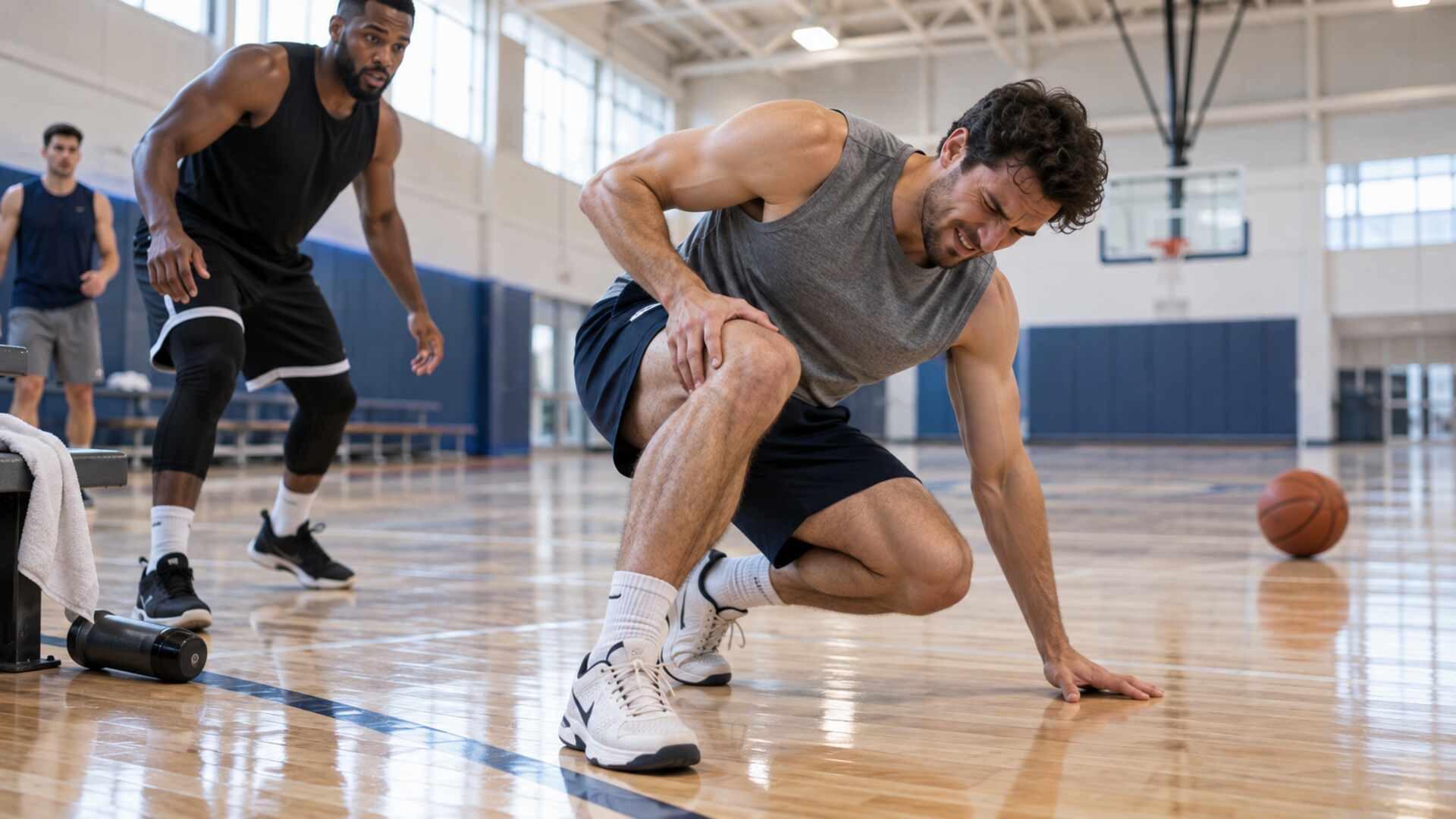
Quadriceps tendon rupture symptoms make more sense when pain is considered alongside lost function. Some people feel a pop or tearing sensation at the moment of injury. Pain above the kneecap and rapid swelling often follow, and the knee may feel unreliable when weight shifts onto the injured leg.
Partial tears may permit extension but cause weakness under resistance. Inability to straighten the leg can also result from pain, swelling, fracture, or another extensor mechanism injury, so the pattern requires evaluation.
Pain, bruising, and swelling occur with many knee injuries. Some people manage a few steps by holding the knee stiff, which can be falsely reassuring. Swelling may hide the depression above the kneecap. Testing the extensor mechanism tells the clinician more than walking ability alone.
A kneecap fracture after a car accident can also impair active extension. Finding a fracture does not rule out tendon damage, so the examination needs to account for the whole injury.
Arrange a prompt orthopedic evaluation if the knee cannot be actively straightened, walking feels unsafe, or a gap develops above the patella. An open wound, severe deformity, numbness, a cold or pale foot, uncontrolled bleeding, or rapidly increasing swelling requires emergency assessment.
Diagnosis begins with the event. The clinician asks about knee position, a possible pop, and the ability to walk or straighten the leg afterward. Previous symptoms, operations, conditions, and medications help explain tendon quality.
The examination covers swelling, bruising, tenderness, patellar position, and any tendon defect. Active extension and the straight leg raise are central tests. Some movement may remain even after a complete injury because tissues beside the kneecap can still transmit force.
During an orthopedic evaluation, the clinician also checks ligament stability, sensation, circulation, and nearby structures.
Radiographs do not clearly display the tendon, but they can identify fractures and changes in patellar position. With a complete rupture, the intact patellar tendon may pull the kneecap lower.
MRI shows the location and extent of damage and helps distinguish a partial injury from a complete one. It is usually unnecessary when the examination is clear. Clinicians use imaging to resolve uncertainty, not as a substitute for examining the knee.
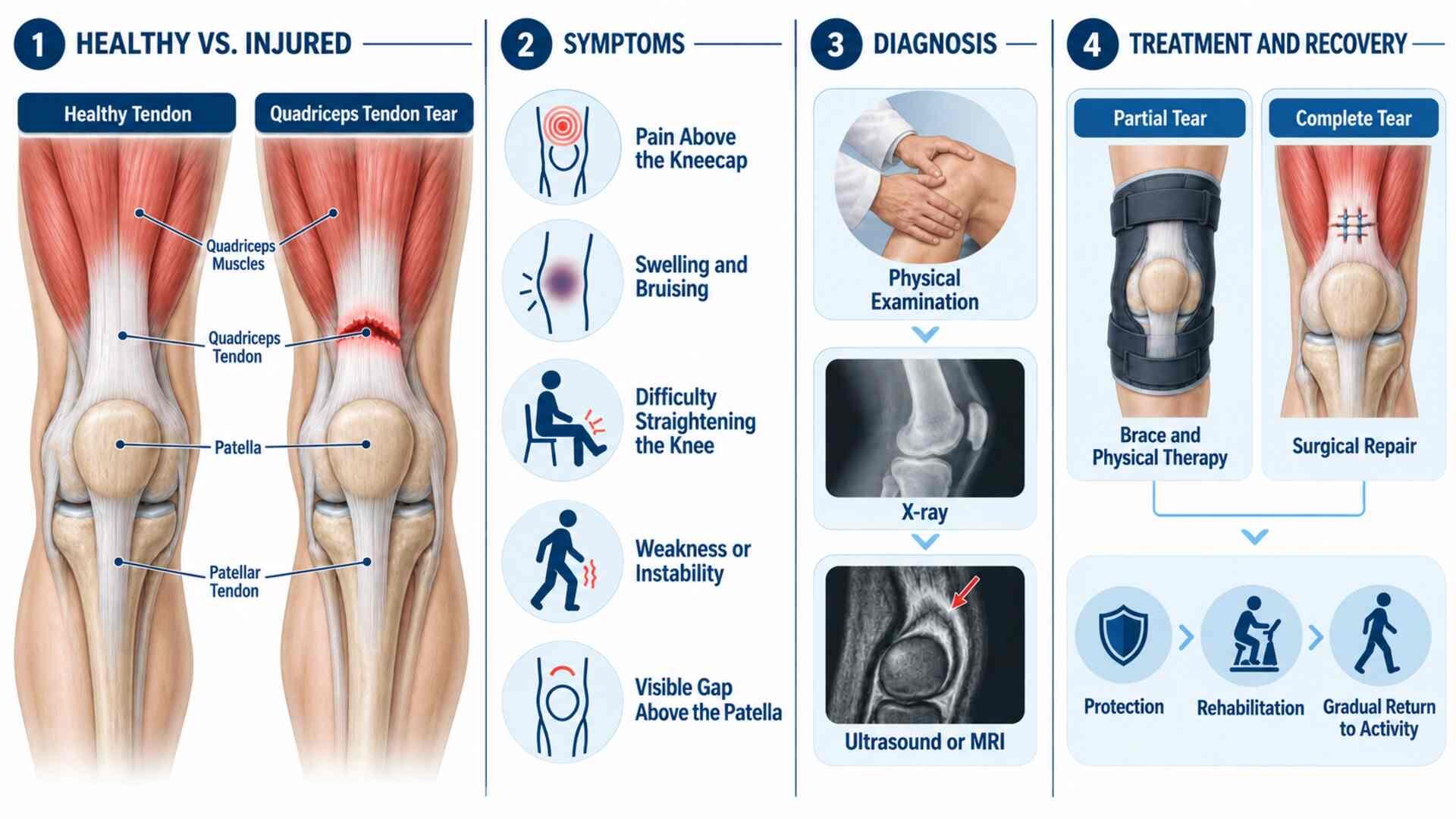
Torn quadriceps tendon treatment depends on tear extent, remaining active extension, tissue quality, associated injuries, activity needs, and health conditions that may affect healing or rehabilitation.
The goal of treatment is to restore active knee extension while protecting the tendon as strength gradually returns.
Many small partial tears with preserved extension heal without surgery. A brace holds the knee straight, while crutches or a walker assist with the prescribed amount of weight on the leg. The clinician sets the protection period for the injury.
As symptoms settle, physical therapy restores motion and rebuilds strength. If weakness persists, the extension deficit worsens, or progress stalls, the treatment plan may need to change. Rehabilitation must protect the healing tendon without causing avoidable stiffness and muscle loss.
Most complete tears require repair because the separated tendon cannot transmit normal force. Surgery may also be considered for a large partial tear that causes substantial weakness. Sutures secure the tendon to the patella through bone tunnels or with anchors.
With delayed treatment, the tendon may retract and scar, making later repair more difficult. Skin condition, medical stability, the injury pattern, and the surgeon’s findings all influence timing. A secure repair gives rehabilitation a safer starting point.
Quadriceps tendon tear recovery does not move at the same pace for everyone. Early care protects the tendon, controls swelling, and helps the patient move safely without an accidental knee bend or fall. Brace settings change as healing and muscle control improve.
Rehabilitation works on knee flexion, quadriceps activation, walking, and strength. Moving too quickly can overload the healing tissue. Too much immobilization creates a different problem by increasing stiffness and muscle loss.
After a repair, many patients need four to six months before routine activity feels more normal. Strength, endurance, and readiness for sport often take longer. Tissue quality, the complexity of the repair, and progress in therapy all affect the timeline.
There is no single return date during quadriceps tendon tear recovery. The knee must have enough control for the activity to be safe. Driving requires reliable leg control and no restrictions that impair safety. Desk duties often resume before work involving ladders, lifting, kneeling, or repeated stairs.
Strength, balance, and confidence continue to improve for months. Athletes and people with physical jobs may need functional testing before they return. The date on a calendar cannot show whether the knee is ready for work or sport.
Complications include persistent weakness, stiffness, pain, limited knee motion, recurrent rupture, and difficulty returning to previous activities. Surgery adds risks such as infection, wound problems, blood clots, and anesthesia complications. Individual risk varies.
Follow-up visits assess active extension, knee motion, swelling, gait, wound healing, and rehabilitation progress. New calf swelling, chest pain, shortness of breath, wound drainage, fever, or sudden loss of extension should be reported promptly.
This tendon injury should be considered when trauma is followed by pain above the kneecap, buckling, a palpable gap, or difficulty actively straightening the knee. Waiting for swelling to disappear can delay recognition of an injury that affects the entire extensor mechanism.
GTOA evaluates knee pain and loss of function after a fall, collision, sports injury, or other trauma.
Pain intensity alone does not define quadriceps tendon rupture symptoms. Loss of function often tells the clinician more. An inability to actively straighten the knee, unsafe walking, or a gap above the kneecap deserves timely evaluation.
Selected partial injuries sometimes heal with protection and rehabilitation. Complete tears usually need surgical repair. Whatever the approach, recovery matters most when the knee can safely support walking, work, stairs, and the activities the patient wants to resume.
Still Having Knee Weakness or Difficulty Straightening Your Leg?
Greater Texas Orthopedic Associates can evaluate persistent knee pain, weakness, swelling, and loss of active extension after an injury and help determine whether additional imaging, bracing, rehabilitation, or surgical evaluation may be appropriate.
Some people may still take steps, especially with a partial tear or by keeping the knee stiff. Being able to walk does not rule out a serious quadriceps tendon injury. Difficulty actively straightening the knee or performing a straight-leg raise deserves prompt evaluation.
Some partial quadriceps tendon tears can be treated without surgery when the tendon remains sufficiently intact and the knee’s extensor mechanism is functional. Treatment may include bracing, activity modification, and rehabilitation, with follow-up to confirm recovery.
Recovery usually takes several months. After surgical repair, many patients regain day-to-day function over roughly four to six months, while return to demanding work, sports, or higher-level activity may take longer. Recovery varies with tear severity, treatment, rehabilitation, and individual health factors.
Delayed treatment of a complete quadriceps tendon tear can allow the tendon to retract and scar, which may make later repair more complex. Loss of active knee extension or inability to perform a straight-leg raise should be evaluated promptly.
This article is intended for general educational purposes and is not a substitute for an individual medical evaluation.
Comments are reviewed before they appear. For appointments, records, or medical questions, use the contact page.
No comments have been published on this article yet.