
Concussion After a Car Accident: Symptoms & When to Get Care
Most people do not realize they may have a concussion right away. They usually miss it because the early signs feel easy to explain away. After a crash, the body sends multiple signals at once, including pain, stiffness, fatigue, and stress. In that moment, a mild headache or brief dizziness can feel like something temporary rather than a warning sign.
A concussion after a car accident does not always appear immediately, and symptoms often become more noticeable once a person returns to work, driving, screens, or other normal activities. The CDC explains that concussion symptoms can affect how a person feels, thinks, acts, and sleeps, and that some symptoms may appear right away while others develop hours or days later.
Symptoms that seem minor at first can become much harder to ignore once normal routines, concentration, or daily activities start feeling different.
Signs of a Concussion After a Car Accident You Should Not Ignore
The challenge is knowing which symptoms are normal after a crash and which ones may point to a concussion. Not every headache after a crash is a concussion, but certain patterns become clear once you know what to look for.
When to Seek Urgent Medical Care
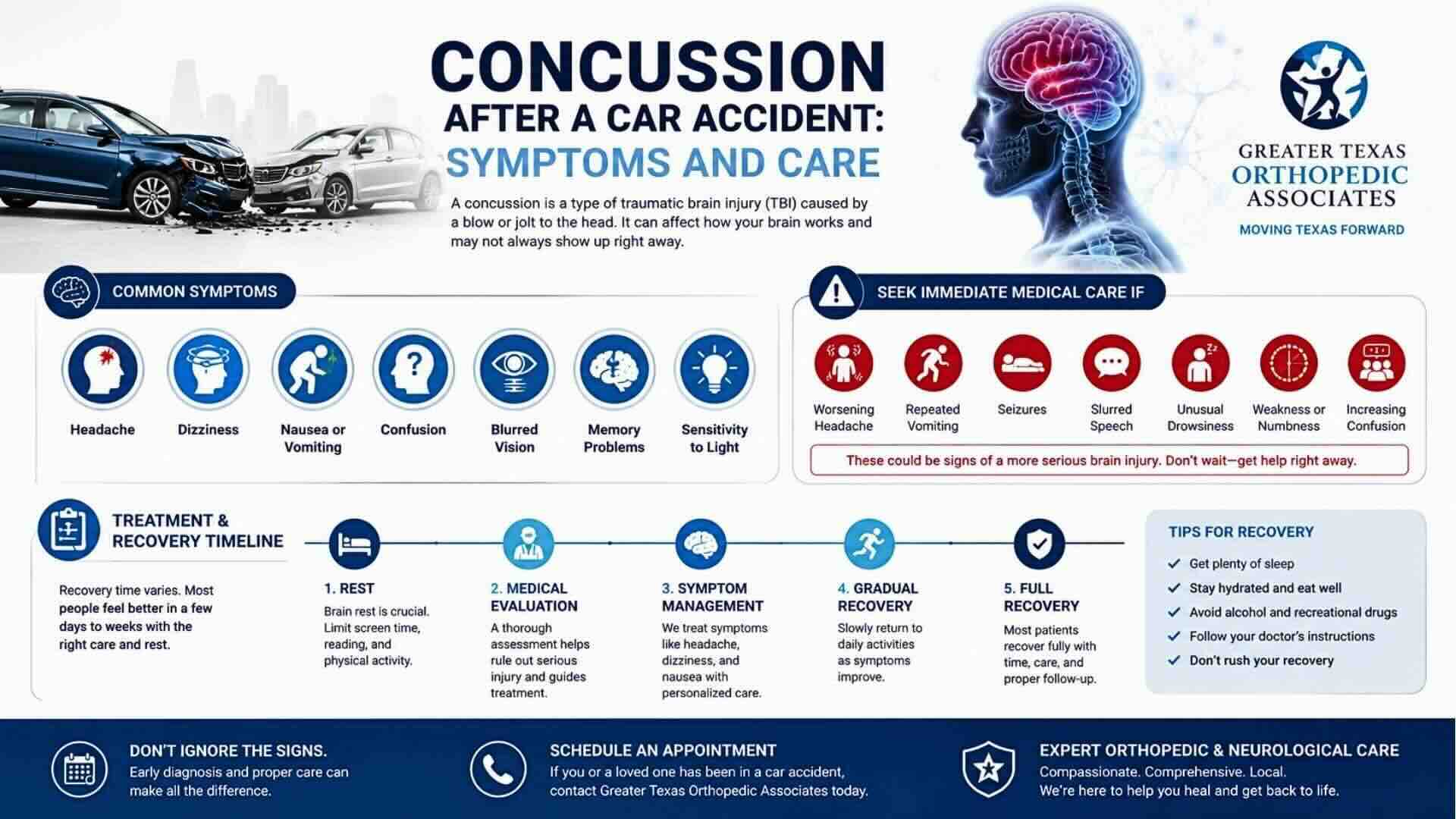
Seek urgent medical care after a car accident if you experience a severe or worsening headache, repeated vomiting, seizure, worsening confusion, unusual drowsiness, weakness, numbness, trouble speaking, trouble staying awake, or loss of consciousness.
These symptoms may indicate a more serious head injury and should not be delayed.
Common Concussion Symptoms After a Car Accident
In clinical settings, patients rarely say, “I have a concussion.” Instead, they describe subtle changes. They feel slower, conversations take more effort, or driving feels different. According to the CDC, concussion symptoms after a car accident may appear immediately or develop hours later, which is one reason patients often mistake early symptoms for stress or fatigue after the crash.
Common patterns patients notice include:
- Headache that worsens with concentration or screen use.
- Dizziness during movement or position changes.
- Increased sensitivity to light or noise.
These symptoms become more significant when they appear together or worsen with normal activity. If you are unsure whether these symptoms are related to a concussion after a car accident, a full orthopedic evaluation after an accident can help determine whether the symptoms are related to concussion, neck strain, vestibular dysfunction, or a combination of issues.
Can You Get a Concussion Without Hitting Your Head?
Yes. A concussion after a car accident can happen even without a direct blow to the head. The sudden force of a crash can cause the head and neck to move rapidly, which may affect the brain and surrounding structures.
This is one reason concussion symptoms can overlap with whiplash, neck strain, dizziness, headache, and balance problems after an accident. Some patients do not remember hitting their head at all, but later notice brain fog, light sensitivity, dizziness, or trouble concentrating.
Because these symptoms can come from more than one source, a medical evaluation can help determine whether the problem may be related to concussion, neck injury, vestibular dysfunction, or a combination of accident-related issues.
Why Concussion Symptoms May Appear Later
Many people expect concussion symptoms to appear immediately after a car accident, but that is not always how these injuries feel in real life. After a crash, adrenaline, pain, stress, and other injuries can make early warning signs easy to dismiss.
Symptoms often become more noticeable once a person returns to normal activities such as work, driving, screen use, reading, or multitasking. A headache that seemed mild at first may become stronger with concentration, dizziness may return with movement, and fatigue or brain fog may become harder to ignore.
This delay is one reason many patients wait to seek care. At first, symptoms may feel manageable. Over time, however, worsening headaches, dizziness, trouble focusing, or sensitivity to light and noise may make daily routines more difficult. When symptoms increase with normal activity instead of improving, a medical evaluation can help determine whether they may be related to concussion, neck strain, vestibular dysfunction, or a combination of accident-related issues.
How Serious Is a Concussion After a Car Accident?
A concussion is often described as “mild” because it is usually not life-threatening, but that term refers to the category of the injury, not its impact on daily life. A mild head injury after a car accident can still affect work, driving, sleep, mood, and recovery.
Why Mild Symptoms Should Not Be Ignored
Most patients improve with proper care, but problems often start once people try to return to normal routines before symptoms have actually settled. Trying to push through headaches, dizziness, or brain fog can sometimes make recovery harder to manage.
Mayo Clinic notes that concussion symptoms can be subtle, may not occur right away, and may last for days, weeks, or longer. Common symptoms can include headache, confusion, memory problems, dizziness, fatigue, and sensitivity to light or noise.
When to See a Doctor After a Head Injury
If symptoms continue after a crash or begin to change depending on activity, it may indicate a concussion after a car accident that should be evaluated to understand the cause.
You should seek medical evaluation if headache does not improve, dizziness returns with movement, concentration feels unusually difficult, or symptoms worsen with screens, driving, or work.
The main concern is not only the headache, but whether symptoms are beginning to interfere with normal function. Early evaluation helps determine whether symptoms are related to concussion, neck injury, vestibular dysfunction, or a combination of issues.
What Changes After Proper Evaluation
Many patients improve once they understand what is driving their symptoms and how to adjust activity appropriately.
Recovery is often easier when patients recognize symptoms early and avoid pushing through activities that consistently make them worse. For patients dealing with ongoing symptoms, structured support through post-accident pain relief can help guide recovery and prevent unnecessary setbacks.
How Doctors Evaluate a Concussion After a Car Accident
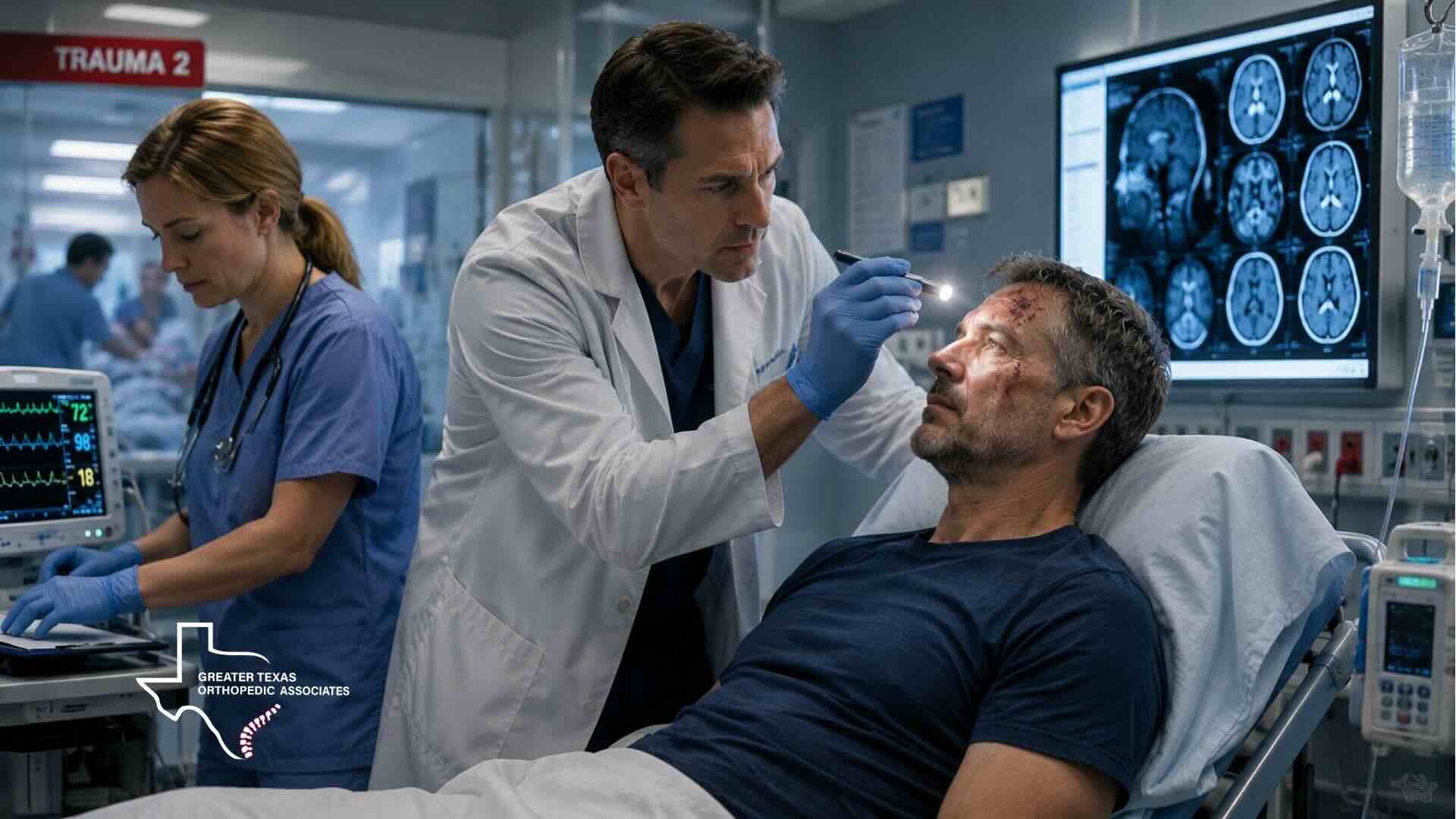
A proper evaluation of a concussion after a car accident focuses on how symptoms affect normal function, not only whether the head was directly impacted. Symptoms may come from more than one source, including concussion, neck strain, vestibular dysfunction, or other accident-related injuries.
Doctors usually review when symptoms started, what makes them worse, and how they affect daily activities such as work, driving, screen use, balance, memory, and concentration. Subtle changes in focus, reaction time, coordination, visual tolerance, or mental fatigue can sometimes reveal more than imaging alone.
The CDC explains that neurocognitive testing may evaluate learning, memory, concentration, and problem solving. Mayo Clinic also notes that concussion evaluation may include symptom review, neurological exams, cognitive testing, and imaging when needed.
In many cases, the most important question is not only what appears on a scan, but how the brain and body respond during normal activity after the accident.
What to Do After Concussion Symptoms Appear
Patients often recover more comfortably when they scale back activities that repeatedly trigger headaches, dizziness, or mental fatigue instead of trying to push through them. For example, difficulty with screens, reading, or multitasking often reflects cognitive strain, while dizziness triggered by movement or position changes may point to involvement of the balance system.
- Reduce activities that clearly trigger headache, dizziness, or fogginess.
- Avoid driving if reaction time, balance, or visual tolerance feels off.
- Schedule an evaluation if symptoms persist, change, or affect daily function.
Ignoring these patterns or continuing normal routines too quickly after a concussion after a car accident can make symptoms harder to settle over time.
If you are experiencing concussion symptoms after a car accident, especially persistent post accident headache and dizziness, early evaluation can help identify what is driving the symptoms before recovery becomes more frustrating or prolonged.
Why Early Evaluation Makes a Difference
Accident-related symptoms may occur alongside neck strain, joint injury, nerve irritation, or vestibular dysfunction. Focusing on one symptom alone can leave other issues unaddressed and slow overall recovery.
Why Medical Documentation Matters After an Accident
Early evaluation helps doctors understand how symptoms are affecting daily function before recovery becomes more complicated. It also establishes a consistent record of symptoms, clinical findings, and treatment recommendations from the beginning.
That clarity becomes especially important when an accident involves insurance or legal considerations. Delayed care can make symptoms harder to connect to the original event. For patients who need detailed medical documentation after an injury, GTOA provides orthopedic evaluations for legal cases.
Conclusion
A concussion after a car accident is not always obvious right away. For many people, the symptoms become noticeable only after returning to normal routines like work, driving, screen time, or daily responsibilities.
What starts as a mild headache, dizziness, or mental fatigue can gradually become more disruptive when the brain has not fully recovered. Because concussion symptoms may overlap with neck injuries, vestibular problems, or stress-related symptoms after an accident, a proper medical evaluation is often the best way to understand what is actually causing the problem.
Early evaluation not only helps guide recovery, but also creates clear medical documentation when symptoms are connected to a car accident. Recognizing the signs early and avoiding activities that consistently worsen symptoms can help prevent a longer and more frustrating recovery process.