Corrective Exercises and Best Workouts for Knee Pain Relief
November 16, 20259 min read
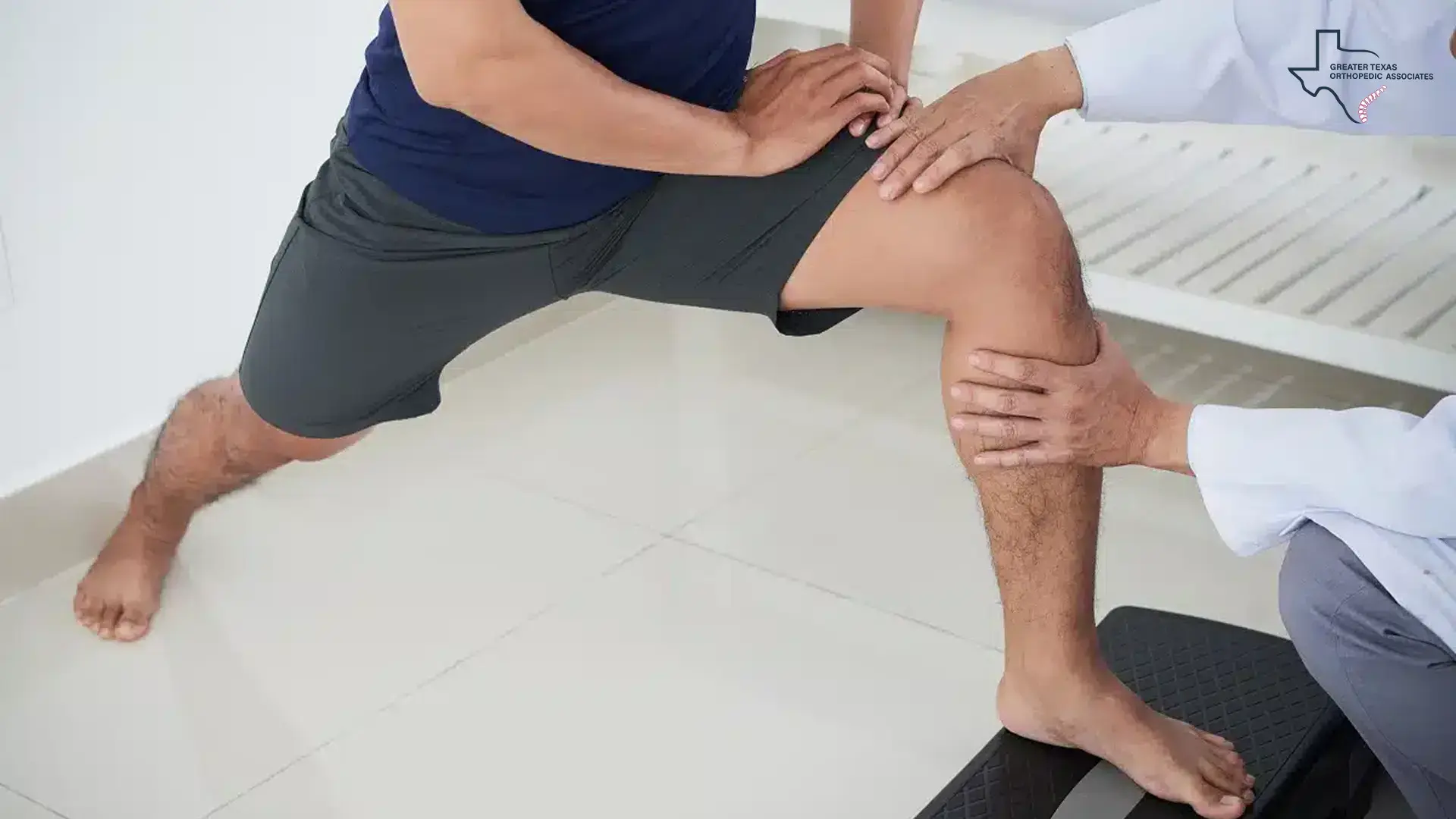
Knee pain affects nearly one in four adults and is a leading cause of reduced mobility and daily function. Rates of knee-related symptoms have risen over the past two decades, largely due to sedentary habits, muscular imbalances, and repetitive strain. For patients navigating these limitations, corrective exercises for knee pain relief remain one of the most reliable nonsurgical approaches. Regular preventive training helps reduce knee pain risk while improving joint function and overall mobility.
A key principle in modern rehabilitation is understanding that the knee often absorbs problems originating elsewhere. Weak hips, limited ankle mobility, or a poorly coordinated gait can shift excessive force to the knee. Correcting these imbalances through targeted strengthening and mobility work restores natural mechanics, reduces strain, and prevents recurring pain.
Understanding the Root Cause of Knee Pain
Most knee pain doesn’t start in the knee itself. The joint acts as a force-transfer station, receiving load from the ground up to the hip and pelvis. When muscles along this chain are weak or tight, the knee compensates, resulting in overloading, inflammation, and mechanical irritation.
The Kinetic Chain: Why Knee Pain is a Full-Body Issue
High-quality rehabilitation focuses on restoring coordinated motion among the tibia, femur, and pelvis and then gradually reintroducing load. Skipping this process allows biomechanical faults to persist, often bringing the patient back into pain during heavier activity. Research consistently shows that strengthening the hip abductors and external rotators can dramatically improve knee alignment and reduce joint stress. Proper posture, hip stability, and core control form the backbone of effective lower-limb rehabilitation.
Common Diagnoses Addressed by Exercise
Patellofemoral Pain Syndrome (PFPS): Often called “Runner’s Knee,” PFPS causes pain around or behind the kneecap. It commonly affects active individuals but also appears in people who sit for long hours or descend stairs frequently. Pain typically increases with squatting, kneeling, running, or prolonged sitting. Early treatment emphasizes strengthening the quadriceps, hamstrings, and especially the hip musculature. Many patients improve when hip strength is prioritized before direct knee loading, as this helps restore proper patellar tracking.
Knee Osteoarthritis (OA): Osteoarthritis is a progressive joint disorder characterized by the deterioration of cartilage, leading to pain, stiffness, and loss of function. It is a major cause of functional limitation in adults. Exercise therapy is strongly recommended as a conservative, non-pharmacological intervention for knee OA, consistently showing efficacy in reducing pain and improving function, muscle strength, and joint stability.
The Role of Expert Guidance in Knee Rehabilitation
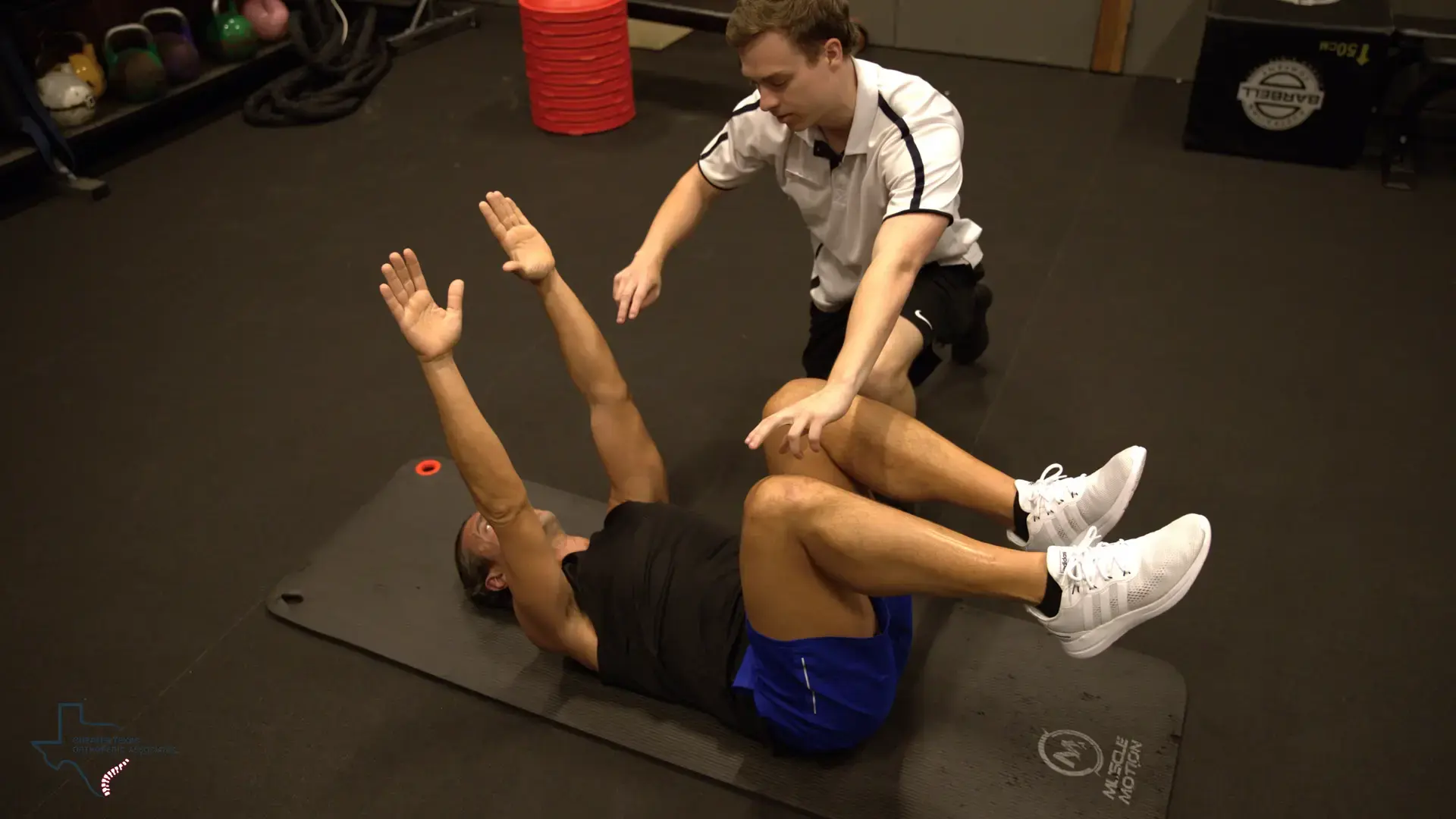
The cornerstone of successful rehabilitation from knee pain is a meticulously designed, individualized plan. It takes into account each patient’s unique biomechanics, medical history, and functional goals. This tailored approach requires professional oversight from experienced clinicians to maximize benefits and ensure proper technique. It also helps prevent injury progression and allows continuous adaptation as the patient improves.
The Importance of Professional Supervision
Successful long-term improvement requires a personalized plan. While home exercise programs support progress, results depend heavily on correct technique and consistency. Studies show that many patients perform workouts incorrectly within a week of instruction, which slows recovery and increases the risk of flare-ups.
Pushing through significant pain, especially without clearance, can worsen injuries like meniscal tears. For individuals seeking corrective exercises for knee pain relief, professional supervision, ideally by an orthopedic specialist or physical therapist, is crucial for safety and effectiveness.
A Multidisciplinary Approach to Knee Pain Management
Effective management of complex knee conditions often requires a spectrum of medical expertise. At GTOA, a diverse team of specialists in Texas brings expertise across multiple disciplines, providing patients with comprehensive evaluations and personalized treatment plans for knee-related conditions.
This holistic approach leverages the knowledge of orthopedic-recommended knee exercises specialists for precise diagnosis and surgical/non-surgical management of structural issues, neurologists for evaluating potential nerve involvement, such as neuropathic pain characterized by tingling or burning sensations often seen in chronic osteoarthritis; and pain management experts who can offer targeted relief through interventional procedures like joint injections or denervation therapies when conservative measures plateau.
Foundational Exercises for Knee Pain Relief
Beneficial exercise programs target strengthening, range of motion, and stability to achieve corrective exercises for knee pain relief. A typical conditioning program lasts four to six weeks. Afterward, the exercises can be performed two to three days per week as part of a maintenance routine.
Key Strength Targets: Hips, Core, and Quadriceps
Strengthening the muscles that support the knee directly reduces stress on the joint, helping to absorb shock during activity. Orthopedic-recommended knee exercises target the core muscle groups: quadriceps, hamstrings, abductors (outer thigh), adductors (inner thigh), and gluteal muscles. Hip strength is particularly crucial for patellofemoral stability. The following effective workouts target essential supporting musculature:
1. Hip Abduction (Side Leg Raise)
Target Muscles: Hip Abductors, Gluteus Medius.
Directions: Lie on your side with your legs straight.
Slowly lift your top leg toward the ceiling, keeping the leg straight (but not locked) and avoiding rotation.
Lead the movement with your heel, pulling slightly up and back behind you.
Hold the top position for 5 seconds, then slowly lower the leg.
2. Straight Leg Raise (SLR)
Target Muscles: Quadriceps, Hip Flexors.
Directions (Focusing on Terminal Extension): Lie on your back, placing a rolled towel underneath the knee of the exercising leg.
Contract the quadriceps muscle, pushing the knee down into the towel and lifting the heel off the floor, achieving terminal extension.
Maintain knee extension and lift the leg until the ankle is at the same height as the opposite knee (which can be bent for stability).
3. Hamstring Curls (Standing or Prone)
Target Muscles: Hamstrings.
Rationale: Strengthening the knee flexor musculature is just as important as strengthening the quadriceps for dynamic knee joint stability.
Dosage: 2–3 sets of 10–20 repetitions. For home programs, 3 sets of 25 repetitions, 4–5 days per week, may be prescribed for conditions like meniscal tears.
Range of Motion and Flexibility Protocols
Stretching the muscles that are strengthened is crucial for restoring the full range of motion (ROM) and preventing muscular soreness. Maintaining ROM is particularly important in managing knee OA, as function often diminishes otherwise. Range of motion exercises should ideally be performed multiple times a day (3–5 times).
1. Supine Hamstring Stretch
Target Muscles: Hamstrings (back of the thigh).
Directions: Lie on the floor with both legs bent.
Lift one leg toward your chest, clasping your hands behind the thigh below the knee (or using a towel if needed).
Straighten the leg and gently pull it toward your head until a stretch is felt behind the thigh/knee.
2. Patella Mobilization
Rationale: To maintain or restore joint mobility, particularly important for patellofemoral function and in conditions like ACL injury.
Directions: Perform gentle glides of the patella: medial/lateral, and superior/inferior.
Dosage: 2 sets of 20 repetitions.
Best Workouts for Knee Pain: Choosing the Right Modality
Determining the most effective workouts involves selecting the appropriate type of exercise based on the injury, phase of recovery, and patient toleration. Engaging in any structured exercise program is beneficial for OA. However, the way the exercise is performed the modality determines functional outcomes
Open vs. Closed Kinetic Chain Exercises
The debate regarding whether Open Kinetic Chain (OKC) or Closed Kinetic Chain (CKC) exercises are superior often centers on safety and mechanical loading:
Closed Kinetic Chain (CKC) Exercises: In CKC, the distal segment (like the foot) is fixed or stationary against resistance (e.g., squats, leg press, step-ups/downs, single leg stance). CKC exercises are associated with co-contractions of the thigh muscles, which increase knee strength and stability. Evidence: For knee osteoarthritis, low-certainty evidence suggests that CKC exercises are superior to OKC exercises in the short term for improving pain and self-reported physical function. International experts generally recommend CKC exercises as the preferred type for enhancing functional outcomes.
Caution: For severe ligament injuries, such as an ACL tear managed non-operatively, OKC knee extension must be limited in range (from 100° to 30° of flexion) to protect the knee joint from anterior shearing forces.
Low-Impact Aerobic Options
Aerobic exercise, such as walking, cycling, and swimming, is vital and is recommended as a first-line intervention for knee OA management, especially for improving functional capacity and reducing pain. Cycling: Using a stationary cycle with minimal resistance is a recommended exercise, often used daily for 10–15 minutes, particularly in the initial phases of rehabilitation following an injury like an ACL tear.
Aquatic Exercise (Hydrotherapy): Aquatic exercise, or swimming training, is a beneficial alternative if land-based exercise is limited by pain or mobility issues. Studies comparing aquatic exercise to land-based exercise show comparable improvements in pain and function for knee OA patients. The continuous integration of these orthopedic-recommended knee exercises is critical for sustaining long-term knee health.
Advanced Considerations and Injury-Specific Precautions
Movements to Avoid with Knee Injuries
Specific structural injuries, such as a torn meniscus, require strict adherence to precautions set by the orthopedic surgeon or physical therapist. Ignoring these precautions can worsen knee instability and prolong the recovery process.
Exercises to Avoid with Meniscus Tears:
Deep squats.
High-impact activities.
Heavy weightlifting.
Lunges.
Activities involving significant pivoting or twisting motions.
Leg extensions (especially if performed through a wide range of motion or with high resistance).
It is imperative that patients consult their orthopedic specialist or physical therapist before starting or modifying any exercise routine, particularly if experiencing pain or swelling.
Managing Chronic and Neuropathic Knee Pain
For patients with chronic knee pain, particularly due to conditions like knee OA, there is a recognized link to neuropathic symptoms, described as numbness, tingling, or burning. This complexity requires that corrective exercises for knee pain relief are paired with specialized therapies.
Neuromuscular Training: Programs combining traditional strength and joint mobility workouts with neuromuscular training (focused on balance, agility, and coordination) can improve performance-based function and walking speed in OA patients.
Corrective Exercise Protocols for Neuropathic Pain: A supervised 12-week protocol utilizing comprehensive corrective exercises, alongside physical modalities such as Transcutaneous Electrical Nerve Stimulation (TENS) and heat packs, has been shown to significantly reduce neuropathic pain and improve functional capacity in knee OA patients. TENS units are small, portable devices that can provide pain relief as an adjunct therapy.
Advanced Pain Management: If chronic pain persists despite adherence to these specialized programs and medications, orthopedic teams may utilize advanced, minimally invasive treatments available through specialized pain management services. These may include denervation techniques (such as cryoneurolysis or thermal ablation) that have demonstrated efficacy in reducing pain and improving function in symptomatic knee OA.
Manual therapy, when combined with a specific exercise program and periodic follow-up, can also enhance short-term pain relief and function in OA cases. 📌To learn more about one of these cutting-edge procedures, review our detailed article on Radiofrequency Ablations (RFA).
Conclusion: Achieving Long-Term Knee Health
Achieving sustained freedom from knee pain depends on a consistent, evidence-based strategy. The effective treatment of knee conditions, from PFPS to chronic OA, relies on personalized physical therapy programs that incorporate corrective exercises for knee pain relief as a core component. Integrating the best workouts for knee pain, especially those that prioritize hip and core strength alongside targeted knee ROM and stabilization drills, builds the biomechanical foundation needed for long-term recovery.
If you are experiencing knee pain, the specialists at GTOA are dedicated to restoring your mobility. Our multidisciplinary orthopedic team offers expert diagnosis and personalized treatment plans, including both conservative and interventional options. We proudly serve patients across multiple convenient locations, including Houston, Austin, San Antonio, El Paso, and more. Don’t let knee pain hold you back any longer! Schedule your personalized consultation with our experts today and take the first step toward lasting mobility and comfort.
Comments
Loading comments
Leave a comment
Every comment is reviewed before publication. Do not include medical details, personal identifiers, or information about an active claim. This form is not monitored for medical questions or emergencies.
Comments are reviewed before they appear. For appointments, records, or medical questions, use the contact page.
kelly
I’ve struggled with knee pain for years, and I’ve found that incorporating some of these corrective exercises really made a difference for me especially those focusing on muscular balance 🏃♂️.
It’s encouraging to see how preventive training can actually improve mobility long-term.
Have you noticed certain exercises work better for specific knee issues?