Loading article
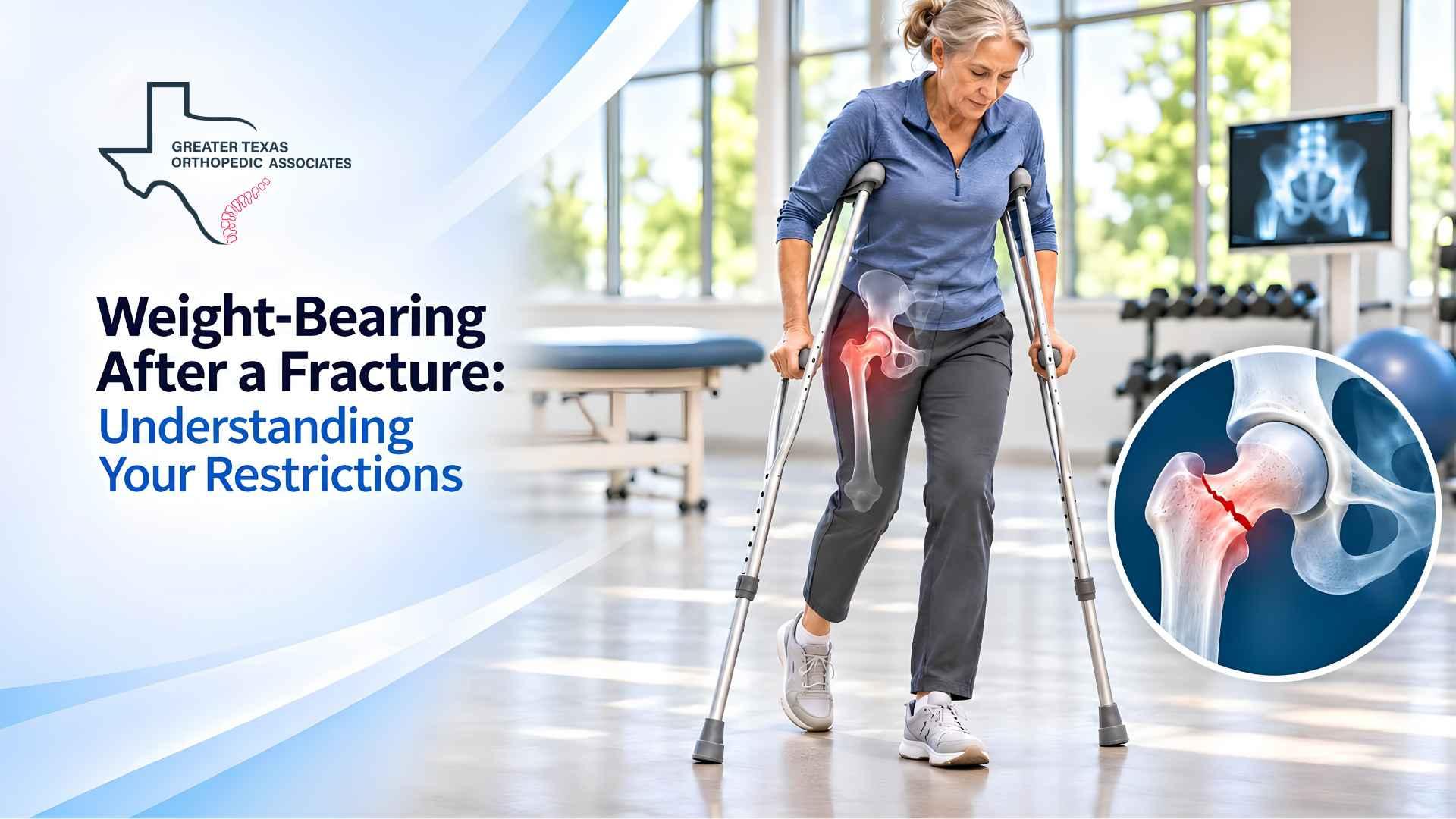
Your discharge paperwork says to keep weight off your leg, but getting from a chair to the bathroom still requires a plan. Does touching the floor count? Does a walking boot mean you can walk? Understanding weight bearing restrictions after fracture starts with your treating team’s written order, including which limb it covers and when it will be reviewed. Feeling better does not automatically change that order.
This guide focuses on lower-limb fractures and everyday movement during recovery. Restrictions involving an injured arm also matter because crutches and walkers transfer load through your hands and arms. General information cannot replace an individual assessment or the instructions issued for your fracture.
Two people with broken ankles may receive different walking instructions. The fracture’s location, alignment, stability, treatment, and surrounding tissue injuries affect appropriate loading. Some injuries allow early supported walking; others need protection. Follow the plan for your injury rather than someone else’s recovery timetable.
A boot, cast, plate, or screws can protect or stabilize an injury without allowing unrestricted walking. Ask when your device must be worn and whether removal is allowed for washing or exercises. Permission to exercise does not necessarily include permission to load the limb. Loading some fractures too soon may displace fragments or interfere with healing. Pain relief cannot establish whether the injury is ready for more load.
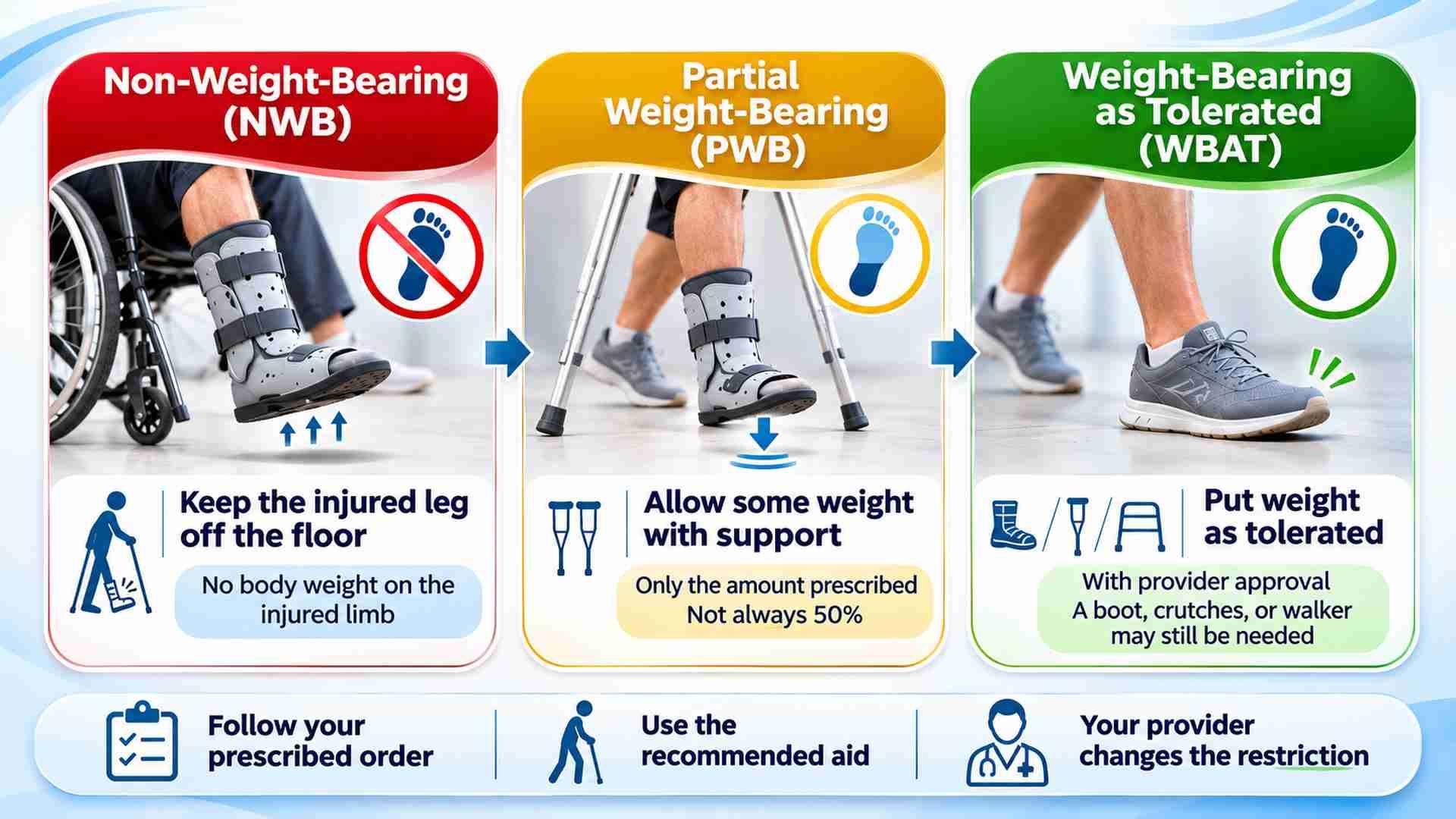
Non weight bearing, often abbreviated NWB, means the injured leg must not support body weight. Keep the foot off the floor while standing or moving. This applies even during a short trip to the bathroom. Toe touch and touch down loading are separate orders that usually permit light floor contact for balance. Have your team demonstrate the permitted contact rather than substituting one instruction for another. The wording on your own order takes priority over general definitions.
Every comment is reviewed before publication. Do not include medical details, personal identifiers, or information about an active claim. This form is not monitored for medical questions or emergencies.
Three more from the same thread.
Showing the first 3 of 3 articles
Knowing what NWB means is different from being able to maintain it. Rising from a low toilet may tempt you to push through both feet. Rehearse standing, turning, and sitting with a therapist. Use your prescribed equipment and a seat height similar to the one at home, with the assistance you will actually have. A technique that works beside a hospital bed may be harder in a small bathroom.
Crutches require strength, coordination, and balance. If you cannot maintain the restriction safely, tell the team rather than hopping unsupported. A walker, wheelchair, or additional assistance may be needed after assessment. Discuss narrow doorways, stairs, and bathroom access. If a wrist, elbow, or shoulder is also injured, ask whether pushing through that arm is permitted; standard crutches may be unsuitable.
Partial weight bearing, often abbreviated PWB, permits some weight through the injured leg while a prescribed aid supports the remainder. Your partial weight bearing instructions should explain the permitted loading and activities, together with the equipment to use. “Partial” does not automatically mean half your body weight. Terminology varies between services; ask your team to explain your own order.
Practice the permitted pressure and walking pattern with your therapist. If your team prescribes a numerical load, a supervised scale exercise may help you recognize it, but does not prove you reproduce it while walking. Report difficulty controlling the load so equipment or assistance can be reassessed.
Keep one current order with your therapy paperwork. If discharge and surgical instructions disagree, ask the treating team to resolve the conflict. Confirm how the restriction applies to transfers and when reassessment is due. An appointment date alone is not permission to increase loading.
Weight bearing as tolerated, usually written WBAT, allows loading through the injured leg up to the amount you can tolerate, potentially including full body weight. Your clinician must authorize it first. This describes how much load is allowed, rather than clearing you for every activity. Running, jumping, removing a boot, and giving up a walking aid need separate consideration within your treatment plan.
Agree on which walking aid to use, initial walking distance, and how to increase activity. A few comfortable steps do not establish that you can stand through a work shift. Reduce activity and contact your team for a marked limp or worsening symptoms. With reduced sensation, pain may be unreliable, so your clinician needs to set appropriate limits.
For a planned return to a physical job or sport, list the tasks involved rather than asking only whether you can walk. GTOA’s guidance on returning to sports or work after an orthopedic injury can help frame that discussion. Lifting a box, turning quickly, or working on uneven ground adds demands that an ordinary walk across the room does not test.
Before going home, explain where you sleep, which steps you face, and who can help. Remove loose rugs and clutter, keep essentials within reach, and arrange to carry small belongings with hands available for equipment. Ask about bathing and toilet aids. Rehearse the bathroom route, including doorways and turning space, before you need it at night.
Have a therapist assess stairs and demonstrate a suitable method. If you cannot manage safely, discuss living temporarily on one level or help with access. Do not substitute furniture for a fitted aid. Prepare three questions for your next appointment:
Work and driving need their own discussion. A job involving standing, carrying, or ladders may require modified duties even when some walking is allowed. Permission to bear weight does not establish that you can brake safely or drive while wearing a boot. Ask your clinician about these tasks and follow any medication warnings about driving.
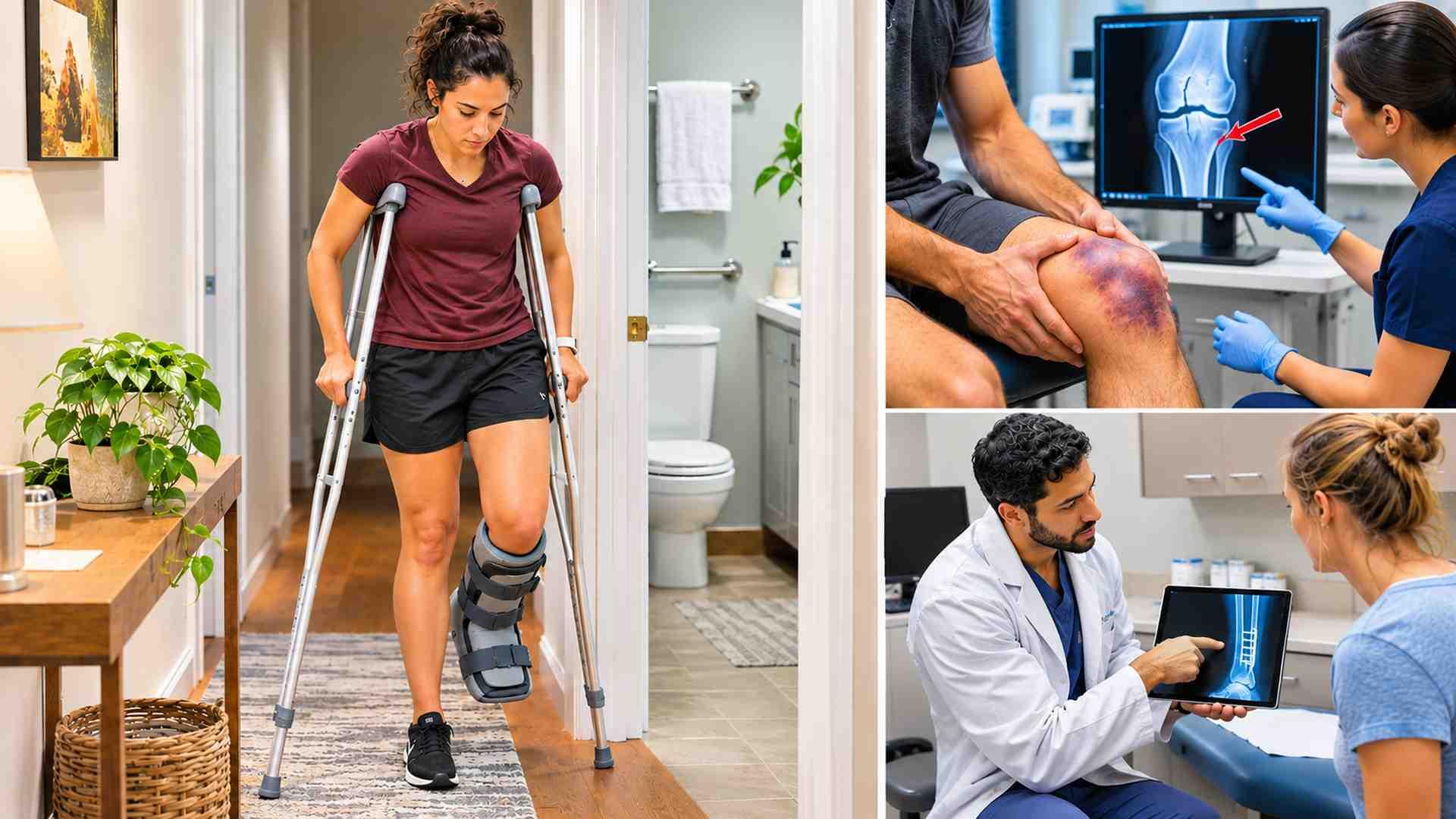
Your clinician may adjust loading after reviewing symptoms, examination findings, fracture alignment, and follow-up imaging. An X-ray contributes to that decision; it cannot show whether you manage stairs safely or maintain a prescribed limit. There is no universal week for full weight bearing.
At reassessment, ask for the revised order in writing, including any limits on the boot, brace, or exercises. An orthopedic evaluation can combine examination and imaging review to clarify the next step. Bring previous imaging and instructions so the clinician can interpret your recovery in context, especially when more than one service has been involved in your care.
If you accidentally step on the injured leg, stop and return to prescribed support. A brief step does not prove damage or permission to load. Contact your treating team promptly for new pain or reduced function; use emergency care for the warning signs below. Do not repeat the step to test the injury.
Seek emergency care for severe escalating pain with a tight cast, a cold or blue foot, or new inability to move the toes. Sudden breathlessness or chest pain requires emergency help, particularly with new leg pain or swelling. These symptoms can signal problems that should not wait for a routine fracture appointment.
New numbness or tingling under a cast needs immediate advice. New calf pain or swelling warrants urgent medical assessment for a possible blood clot. Increasing wound redness, drainage, fever, or a damaged cast also needs prompt advice from your treating team. For routine follow-up, the GTOA clinic directory can help with planning travel to an appointment; emergency symptoms require emergency services rather than a scheduled clinic visit.
Know what load is permitted, what support to use, and when the plan will be reviewed. If an answer is missing, ask your treating team. A useful recovery plan protects healing while helping you move safely through daily life.
Your injured leg must not support body weight while standing or moving. Keep the foot off the floor during these activities and use your prescribed support.
A boot does not change your loading order. Ask your team whether walking is allowed and when the boot must be worn.
Not necessarily. Ask your team to explain the permitted loading, activities, and walking aid, and to demonstrate how to follow the order.
Only within your authorized plan. Feeling better does not change a restriction or establish that a fracture has healed.
Seek emergency care for a cold or blue foot, severe escalating pain with a tight cast, or new inability to move the toes. Sudden breathlessness or chest pain also needs emergency help.
Comments are reviewed before they appear. For appointments, records, or medical questions, use the contact page.
No comments have been published on this article yet.