Loading article

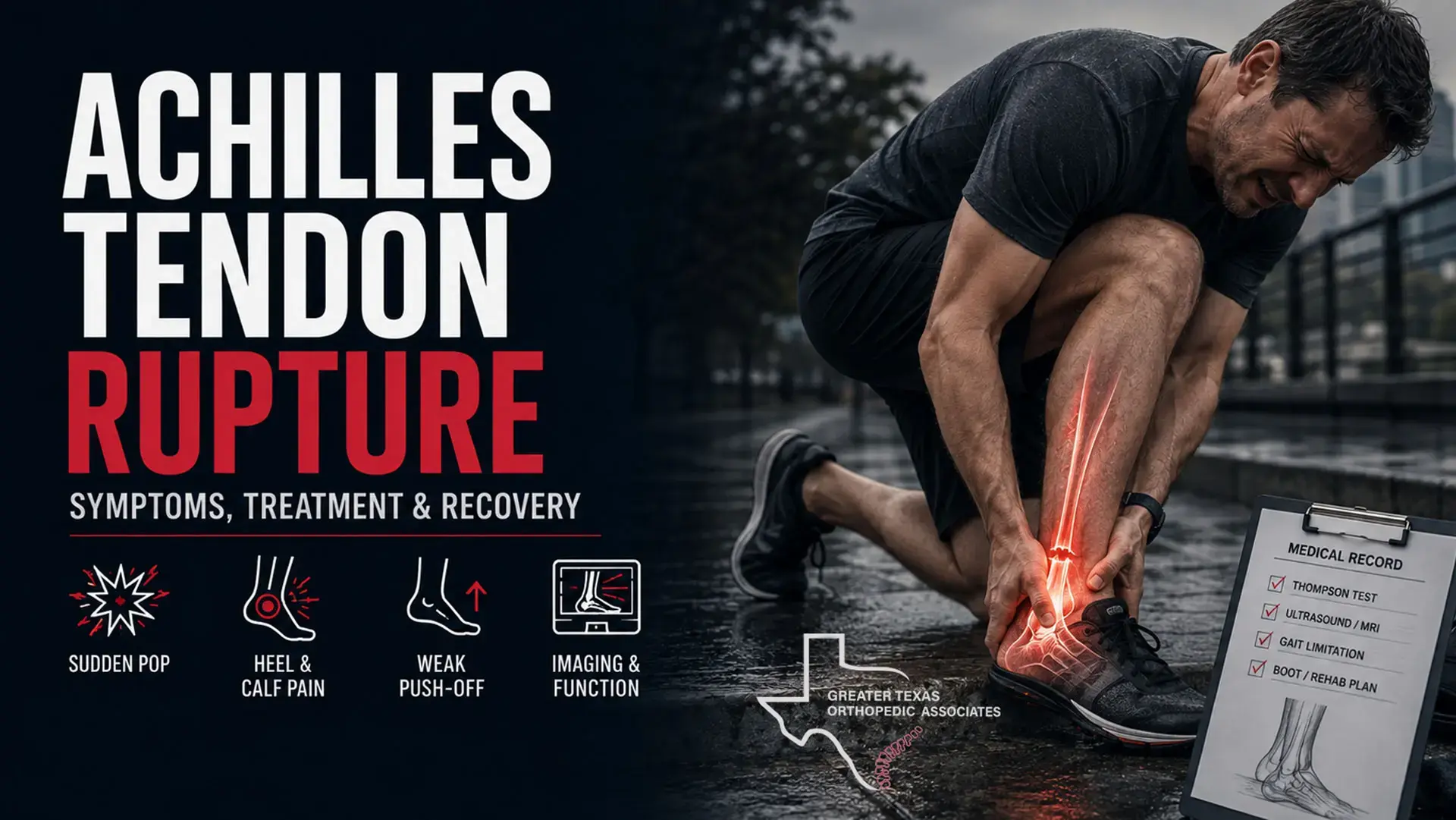
An Achilles tendon rupture occurs when the thick tendon connecting the calf muscles to the heel tears partially or completely. It often happens during a sudden push-off, awkward landing, fall, or rapid change in direction. A rupture can cause a pop behind the ankle, difficulty pushing off the foot, swelling, and an altered walking pattern. Treatment may be surgical or nonsurgical depending on the injury and the patient’s individual needs.
The Achilles is the largest and strongest tendon in the body, and it carries load with every step, stair, and push-off. Based on Cleveland Clinic’s explanation, it connects the calf muscles to the calcaneus, or heel bone, and transmits the force that lifts the heel off the ground.
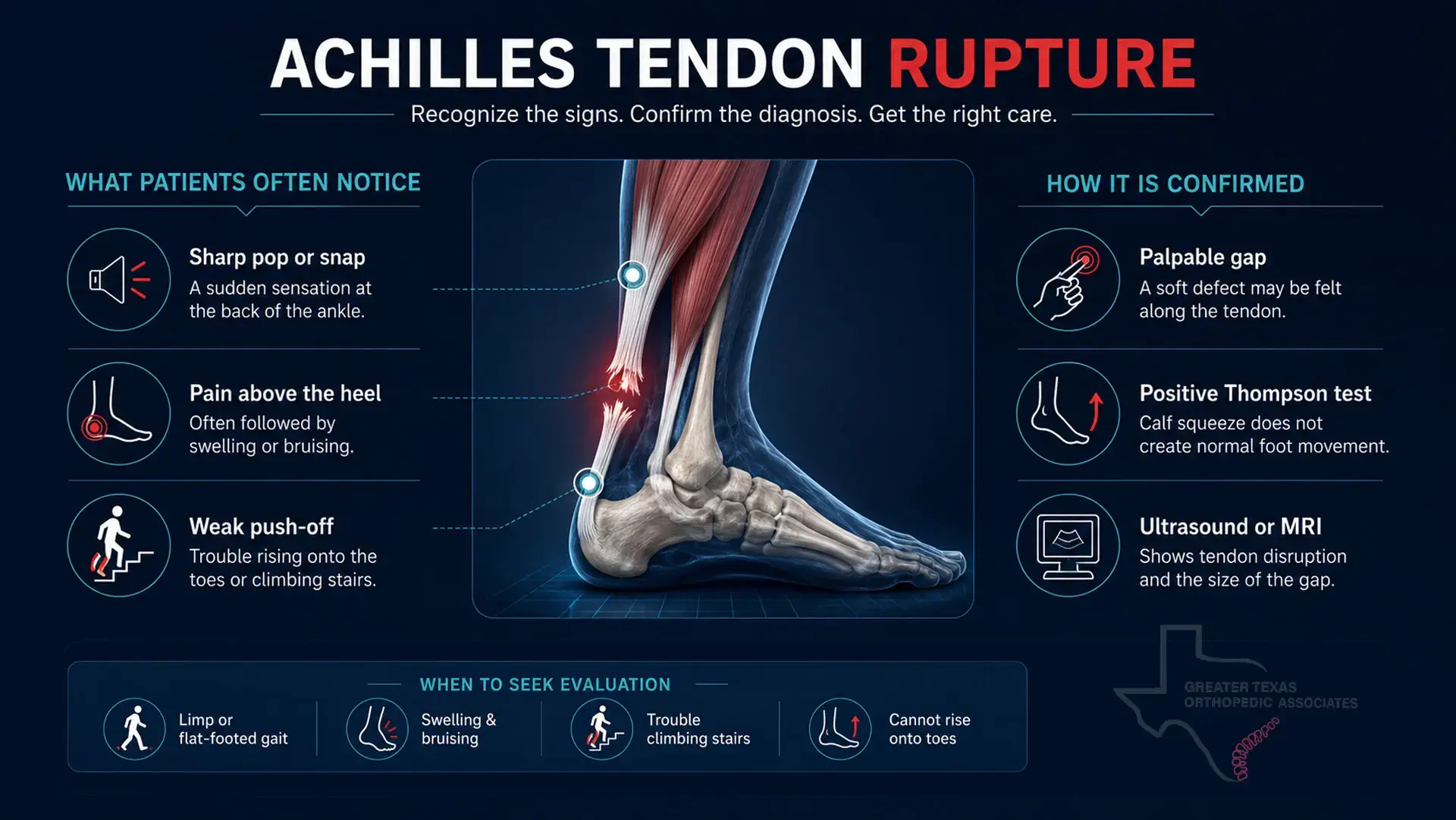
When that cord fails, the calf loses its mechanical link to the foot. Some people describe a sensation of being kicked or struck from behind, then turn to find no one there. Others hear an audible snap. Walking may still be possible in some cases, which is one reason the injury is underestimated at the scene.
A tear can be complete, with the tendon ends separating, or partial, with some fibers intact. The extent and location of the tear are among the factors considered when planning treatment and rehabilitation.
Symptoms usually arrive quickly, though their severity varies more than most patients expect. Swelling, bruising, and a changed walking pattern may develop over the first day even if the initial pain becomes less intense.
A sudden pop behind the ankle, difficulty walking, marked swelling, or inability to push off normally should prompt medical evaluation. Some people can still walk after an Achilles tendon rupture, so the ability to bear weight does not rule out the injury.
Most tears occur during a rapid change in load rather than a direct blow. Common mechanisms include:
Achilles tendon ruptures are especially common in physically active adults and frequently occur during sports involving sudden starts, stops, jumps, or pivots. Falls, missed steps, and other sudden ankle injuries can also cause a rupture.
Diagnosis combines the injury history with a focused physical examination. Imaging may be used when the extent of the tear is unclear or another injury is suspected.
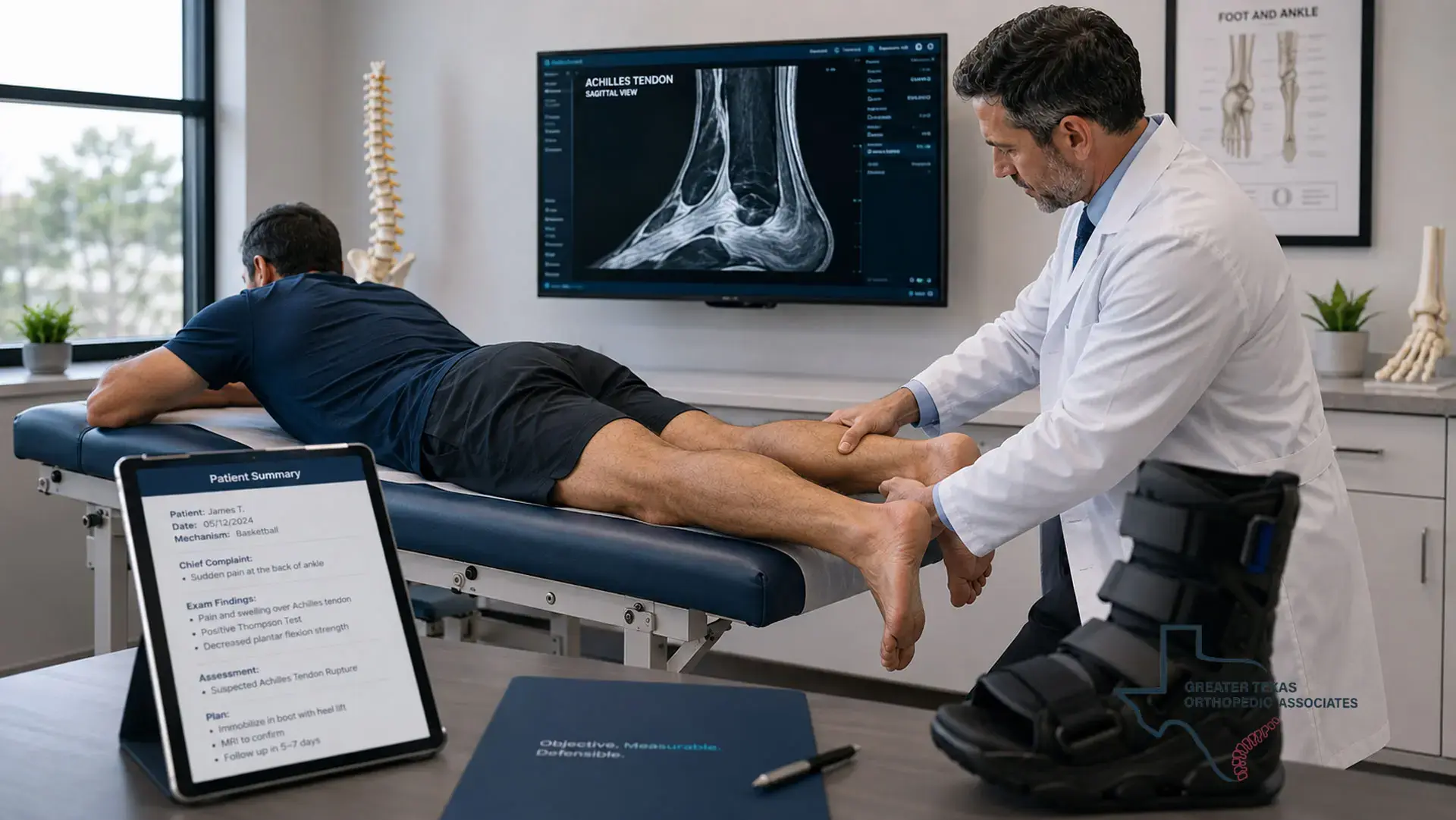
A focused exam typically documents ankle range of motion, calf strength, tenderness along the tendon, and whether a palpable gap is present. The Thompson test, in which squeezing the calf normally produces foot movement, may show reduced or absent movement when the Achilles tendon is ruptured, particularly with a complete tear. Comparing the injured side against the uninjured side gives the record a measurable reference point rather than a subjective description.
Ultrasound can evaluate tendon continuity and the location or extent of a tear. MRI may be used when additional detail is needed or when the diagnosis remains uncertain. X-rays do not show the tendon directly but may help identify associated bone injuries. For legal teams, understanding how imaging evidence is reviewed can help clarify how imaging fits into the broader clinical record.
Both surgical and nonsurgical treatment can be appropriate for an acute Achilles tendon rupture. The choice depends on factors such as the patient’s health, activity goals, injury characteristics, treatment timing, and rehabilitation plan.
Nonsurgical treatment typically uses a boot, brace, or cast that initially holds the ankle in a position that brings the torn tendon ends closer together. The ankle position and weight-bearing status are then progressed according to a structured rehabilitation protocol. This approach avoids surgical wound complications and may be appropriate for selected patients.
Surgical repair reconnects the torn tendon ends and may be performed through open or minimally invasive techniques. Surgery may be considered for healthy, active patients or when individual injury characteristics favor operative repair. The benefits and risks should be weighed against a well-structured nonsurgical rehabilitation program.
Recovery varies by treatment method, rehabilitation protocol, injury severity, and individual health. The early phase usually involves protected positioning of the ankle followed by progressive weight bearing, range-of-motion work, and strengthening.
General milestones may include:
Return-to-work decisions should consider strength, gait, endurance, and job demands rather than a calendar date alone. GTOA’s guidance on return-to-work after orthopedic injury explains these functional considerations in more detail.
Some Achilles ruptures occur in tendons with pre-existing degeneration or other risk factors, while others follow an acute high-load event. Prior tendinopathy, age-related tendon changes, certain antibiotics, and corticosteroid injections around the Achilles tendon may increase vulnerability to rupture.
Delayed evaluation can complicate the clinical timeline because some patients remain able to walk after a rupture or initially mistake the injury for a strain. Records should document the reported mechanism, immediate symptoms, first examination findings, treatment, and subsequent functional limitations.
When a gap in care occurs, the record should document relevant circumstances when known, such as delayed recognition of the injury, access to care, or initial instructions to rest.
Orthopedic evaluation may be appropriate after a sudden pop behind the ankle, marked weakness with push-off, difficulty walking, or persistent swelling and pain above the heel. Prompt assessment can help establish the diagnosis and determine whether surgical or nonsurgical treatment is appropriate. Patients can arrange an orthopedic injury evaluation through Greater Texas Orthopedic Associates.
Final Thoughts
An Achilles tendon rupture can significantly affect walking, work, and physical activity, but both surgical and nonsurgical treatment can lead to good outcomes in appropriately selected patients. Recovery requires structured rehabilitation and gradual restoration of strength and function. Greater Texas Orthopedic Associates can evaluate suspected Achilles injuries and discuss treatment options based on the individual clinical findings.
This article is for educational purposes and is not a substitute for individual medical evaluation.
Often, yes. Other muscles in the lower leg can compensate enough for slow, flat-footed walking, which is why the injury is sometimes dismissed early. Rising onto the toes on the injured side alone is usually far more difficult.
A calf strain typically produces muscle-belly pain higher up, with preserved push-off strength. A tendon tear tends to produce pain closer to the heel, a weak or absent push-off, and sometimes a palpable gap.
Not always. Some partial tears can be treated without surgery, but treatment depends on the extent of the injury, symptoms, activity goals, and response to rehabilitation.
Because it produces measurable functional loss that can be documented. Strength testing, gait observation, imaging, and work restrictions give attorneys and case managers objective material rather than a pain rating alone.
Healing commonly takes several months. Cleveland Clinic notes that most Achilles tendon ruptures heal within about four to six months, although regaining full strength and returning to sports or heavy physical work may take longer.
Every comment is reviewed before publication. Do not include medical details, personal identifiers, or information about an active claim. This form is not monitored for medical questions or emergencies.
Three more from the same thread.
Showing the first 3 of 3 articles
Comments are reviewed before they appear. For appointments, records, or medical questions, use the contact page.
No comments have been published on this article yet.