Loading article
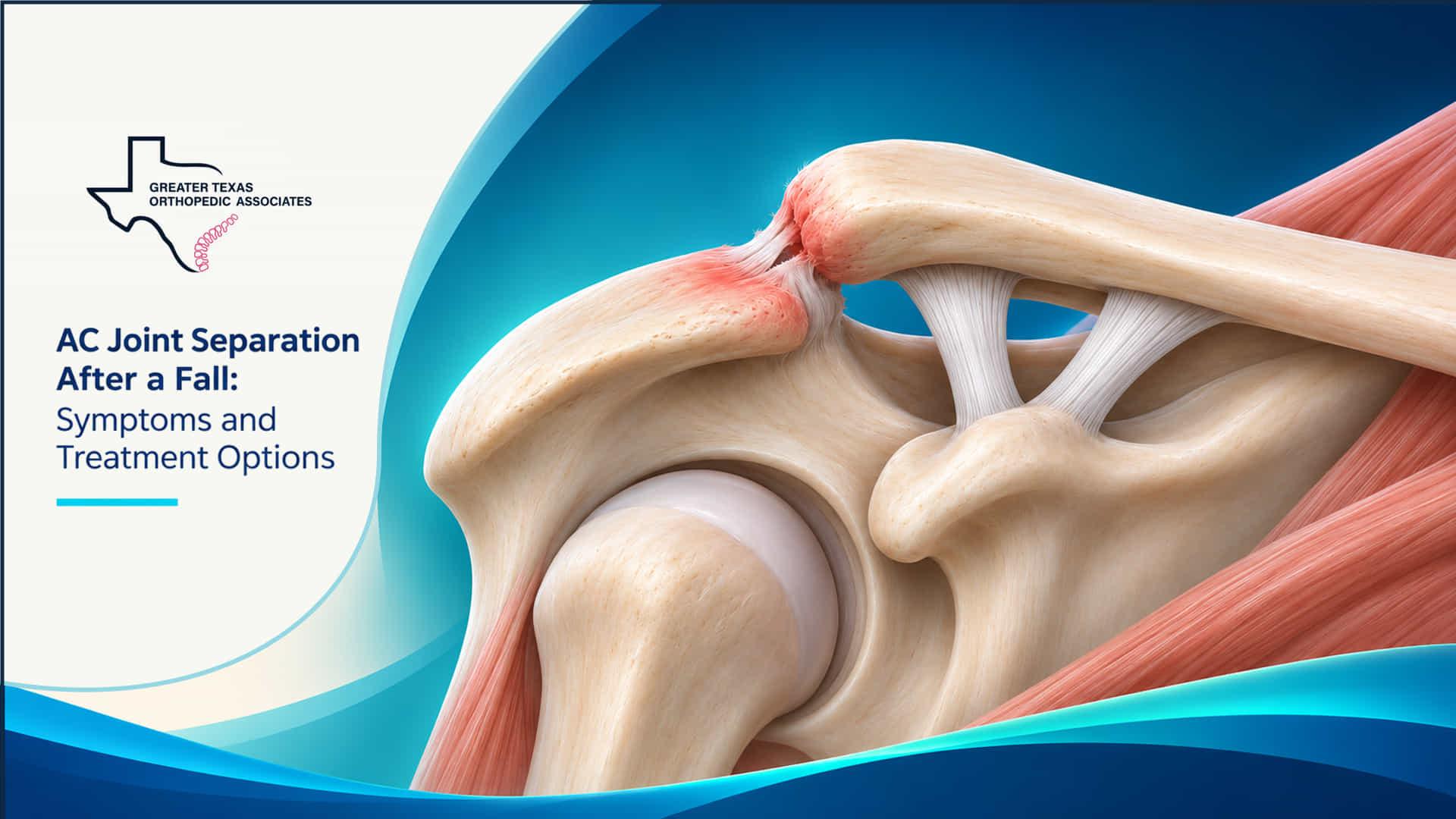
A fall onto the point of your shoulder can make pulling on a shirt painful. Swelling or a new bump at the end of the collarbone may follow. An AC joint separation after a fall injures the ligaments connecting the collarbone and shoulder blade. Many injuries improve without surgery. First, identify the injury, check for a fracture or threatened skin, and protect the shoulder without unnecessary stiffness.
The acromioclavicular, or AC, joint sits where the outer collarbone meets the acromion, the top of the shoulder blade. AC ligaments support this junction; deeper coracoclavicular ligaments connect the collarbone to the shoulder blade. Impact can stretch or tear these supports. The extent and direction of displacement help clinicians classify an acromioclavicular joint injury.
When supporting ligaments tear, the shoulder blade and arm can drop relative to the collarbone, making its end look raised. A bump may remain after pain improves. Appearance alone does not determine whether surgery is appropriate; pain, stability, and arm function also matter.
Typical separated shoulder symptoms include tenderness over the top of the shoulder, bruising, and pain when reaching across the chest. Dressing, lifting the arm, or lying on the injured side may be difficult. A mild sprain can hurt without producing a bump. Fractures and other shoulder injuries can cause similar problems, making examination important.
Seek same-day assessment for a new deformity, severe pain, or substantial difficulty using the arm. After an assessed injury, follow the review plan, but seek earlier reassessment for worsening pain, new weakness, or declining movement.
Every comment is reviewed before publication. Do not include medical details, personal identifiers, or information about an active claim. This form is not monitored for medical questions or emergencies.
Three more from the same thread.
Showing the first 3 of 3 articles
A cold or pale hand, new persistent numbness, pronounced weakness, an open wound, or skin stretched tightly over bone needs immediate emergency evaluation. Chest pain or breathing difficulty also needs emergency care; call emergency services if these occur. Support the arm while getting help. Do not push the collarbone down or attempt to relocate the shoulder.
The clinician asks how you landed, then checks alignment, tenderness, movement, skin, circulation, and nerve function. Mention previous shoulder injuries and head or neck symptoms. Describe activities that became difficult after the fall, such as dressing or fastening a seat belt.
A dislocated shoulder involves the upper arm bone leaving the main ball-and-socket joint. A collarbone fracture is a break in the bone. Both differ from AC ligament damage. Deep catching or instability can suggest additional problems; GTOA’s guide to shoulder labral tears explains another potential source of shoulder symptoms.
X-rays help identify fractures and show the relationship between the collarbone and shoulder blade. Dedicated views or comparison with the opposite side may clarify alignment. A type I sprain can have normal X-rays. Further imaging should answer an unresolved clinical question; CT and MRI after an injury assess different structures and are not automatically required for an AC separation.
The Rockwood system describes six injury types. Type I is an AC ligament sprain with preserved alignment and intact coracoclavicular ligaments. Type II involves torn AC ligaments and sprained or partly injured deeper supports, with some displacement. These low-grade injuries are generally managed without surgery, using protection and progressive rehabilitation.
Type III involves complete tears of both AC and coracoclavicular ligament groups. Types IV through VI have greater or unusual displacement, including backward or downward displacement. These higher-grade patterns require early specialist assessment and often a surgical discussion. Grade informs care alongside skin condition, associated injuries, symptoms, and physical demands.
Type III treatment often starts without surgery. Persistent pain or instability despite rehabilitation calls for a discussion of remaining limitations and treatment goals. Overhead work and competitive sport create specific demands, but a bump or athletic background alone does not establish a need for surgery.
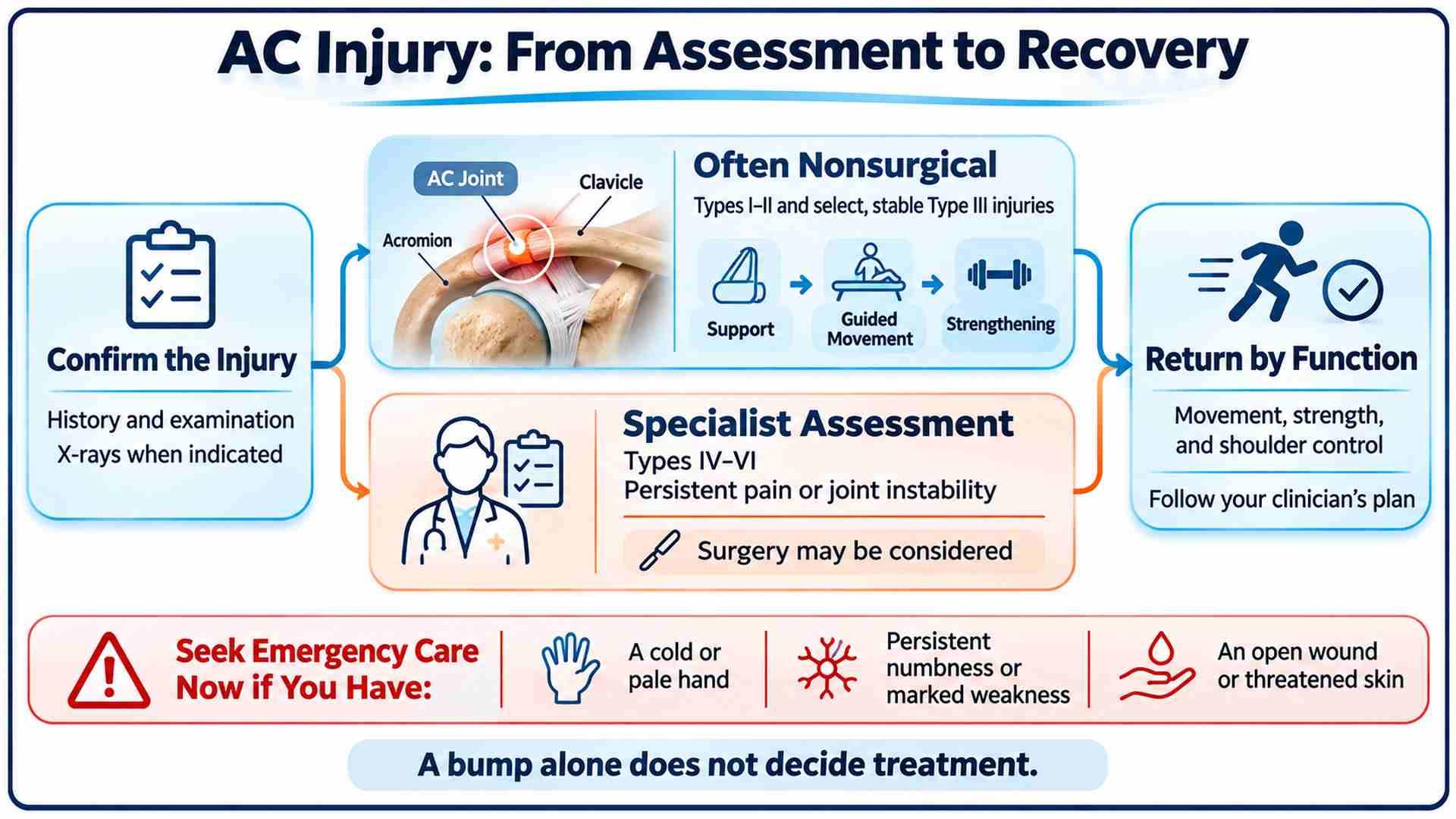
Early shoulder separation treatment options focus on comfort and protection. A sling supports the arm; it does not repair the ligaments or guarantee that a bump disappears. Minor injuries may need support for days to a few weeks. Follow the clinician’s schedule for your injury.
Cold packs wrapped in a cloth can ease pain. Acetaminophen or an anti-inflammatory medicine may be suitable, depending on other medicines and conditions such as kidney or liver disease, ulcers, heart disease, or high blood pressure. Follow label directions and ask a clinician or pharmacist when unsure. Check combination products to avoid taking the same ingredient twice.
Pain relief should support comfortable movement, rather than mask pain during heavy activity. Early on, avoid carrying loads or repeatedly testing painful overhead movements. Practical adjustments include:
When pain permits and the treating clinician approves, rehabilitation progresses from gentle movement toward strength and shoulder blade control. Hand, wrist, and elbow movement can help prevent stiffness while the shoulder is supported. Permitted shoulder movements depend on injury severity; a mild-sprain program should not be copied after reconstruction.
Reaching a shelf, washing your hair, and moving without guarding are practical signs of progress. Rehabilitation can advance toward resistance exercises and work or sport tasks when appropriate. Persistent separated shoulder symptoms or deteriorating movement should prompt reassessment for instability, stiffness, or another injury before increasing exercise intensity.
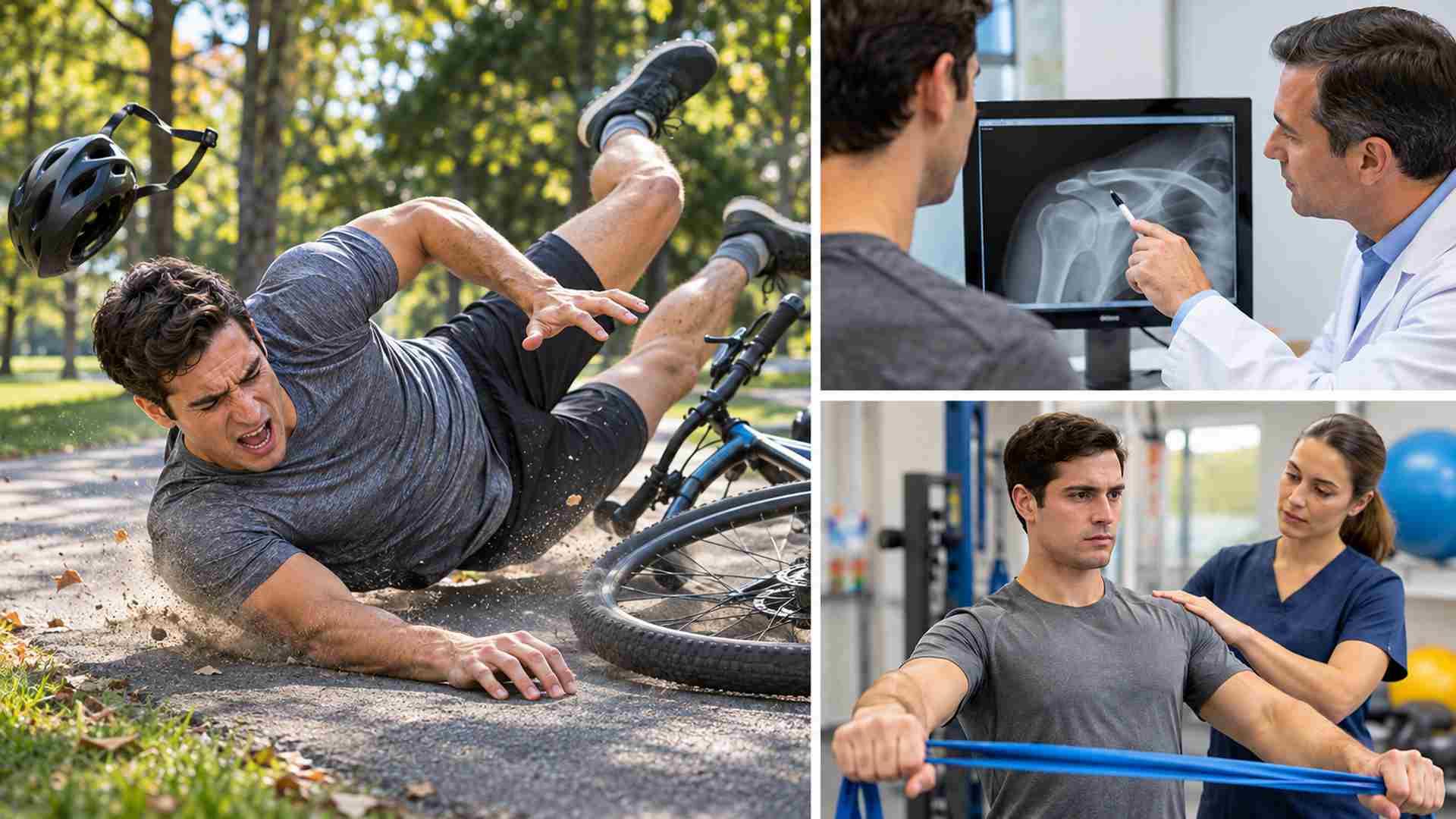
Severe displacement, threatened skin, or continuing disability despite appropriate rehabilitation can prompt surgical assessment. Comparing shoulder separation treatment options means identifying the cause of your limitation. The assessing clinician can explain whether your findings warrant a surgical opinion.
Surgery can stabilize an AC joint separation after a fall in several ways. Fixation holds the bones in position while tissues heal. Repair uses suitable existing ligament tissue; reconstruction replaces deficient support, sometimes with a tendon graft. Methods may be combined according to the injury pattern and timing.
Risks include infection, stiffness, persistent pain, loss of correction, and further procedures. Some implants need later removal. Ask about the protection period, help with daily activities, and rehabilitation requirements before unrestricted use.
Recovery is usually measured in weeks, with longer rehabilitation after severe injuries or surgery. MedlinePlus gives a broad nonsurgical range of two to twelve weeks. Severity and associated damage can extend recovery. That range does not establish clearance for sport or heavy work.
After reconstruction, restoring strength and returning to demanding activity can take months. Follow the surgeon’s instructions rather than a generic schedule. Persistent weakness or difficulty with ordinary tasks warrants review; improvement in resting pain alone does not show readiness for repeated loading.
Driving requires comfortable vehicle control and the ability to respond suddenly. Do not drive in a sling or while taking medication that impairs alertness. Manual work and collision sports need sufficient movement, strength, and control for their specific demands. An acromioclavicular joint injury should be assessed against those tasks before unrestricted return.
For information about the practice, see GTOA Departments. Bring your imaging and previous treatment instructions to your orthopedic evaluation. Explain what has improved and which tasks remain difficult. That history helps the clinician assess recovery and decide whether further investigation or a change in rehabilitation is appropriate.
This article provides general education and does not replace individual medical evaluation or treatment advice.
Confirm the diagnosis before interpreting the shoulder’s appearance. A useful plan identifies the injury grade, movements to protect, and functional goals. If pain or instability limits progress, reassessment should guide the choice between continued rehabilitation and a surgical opinion.
No. Separation injures ligaments at the AC joint. A dislocated shoulder involves the upper arm bone leaving its main socket.
No. Treatment depends on injury grade, stability, symptoms, and activity demands. A bump may persist even when function improves.
Nonsurgical recovery may take two to twelve weeks, depending on the injury. Severe injuries and surgery can require longer rehabilitation; activity clearance is individualized.
Seek immediate care for a cold or pale hand, persistent numbness, marked weakness, an open wound, or threatened skin. Chest pain or breathing difficulty also requires emergency care.
Comments are reviewed before they appear. For appointments, records, or medical questions, use the contact page.
No comments have been published on this article yet.