Loading article


Back pain is astonishingly common; most adults experience it at least once, whether as a brief annoyance or a disabling ache that disrupts daily life. The spine is a tightly coordinated system of muscles, discs, joints, and nerves, and even a small disturbance in any of these structures can trigger significant discomfort. Because these parts work so closely together, pinpointing the exact source of pain isn’t always straightforward. Understanding how this system functions and why it fails is the foundation for effectively managing and relieving back pain.
This article explores the fundamental question: what causes back pain?. We will examine the categories of causes, detail the diverse back pain symptoms, and outline the different ways healthcare providers classify varieties of back pain to determine the most effective treatment pathways.
Back pain is often classified in two key ways: by duration and by location.
The length of time pain persists helps specialists determine the urgency and nature of the underlying issue. The common types of back pain based on duration include:
Back pain can occur anywhere from the base of the neck to the top of the buttocks. Healthcare providers often classify pain by the spinal region affected:
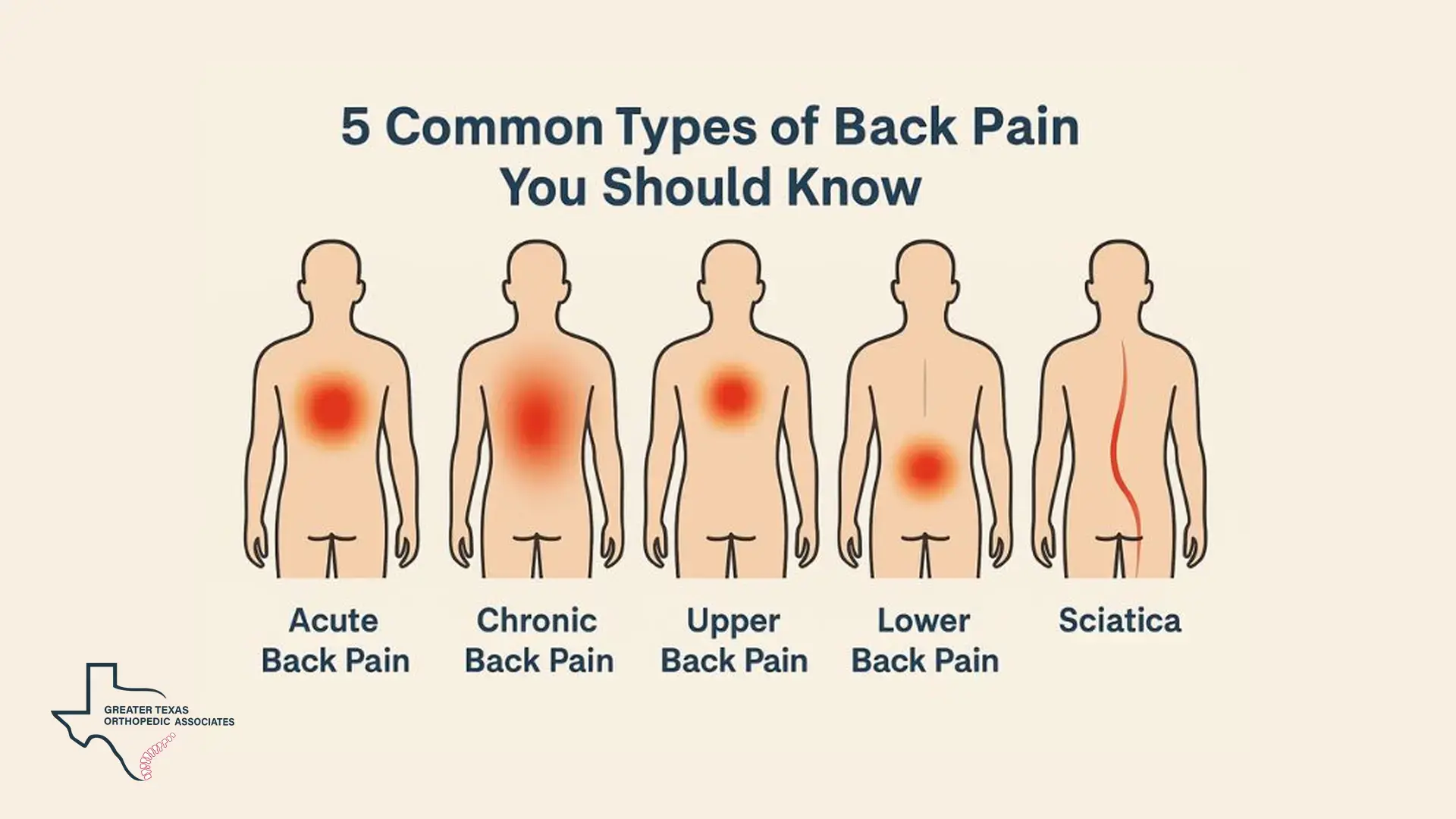
The way a patient describes their discomfort, the location of the pain, and any associated sensations are critical clues used for an accurate diagnosis. Common symptoms vary significantly depending on the underlying structure involved.
If you experience back pain symptoms accompanied by severe pain, muscle spasms, loss of bowel or bladder control, or sudden numbness/weakness in your limbs, you should seek immediate care. These are potential signs of serious issues, such as Cauda Equina Syndrome (paralysis of lower spine nerves) or a fracture.
Back pain arises from a broad array of conditions across all age groups, though most cases in adults are mechanical in nature or have a nonspecific origin.
The causes of back pain often stem from direct injury, wear-and-tear, or abnormalities in the spine’s structures:
Injuries to muscles, tendons, or ligaments from sudden events like lifting, falls, or twisting, or from repetitive stress, often lead to painful spasms.
These mechanical and structural issues are among the most common factors contributing to back pain, highlighting the complexity of the spine and why accurate diagnosis is crucial.
Back pain can sometimes be a referred symptom, where the source lies elsewhere in the body.
Understanding what causes back pain in these cases is crucial, as they may indicate serious underlying health issues.
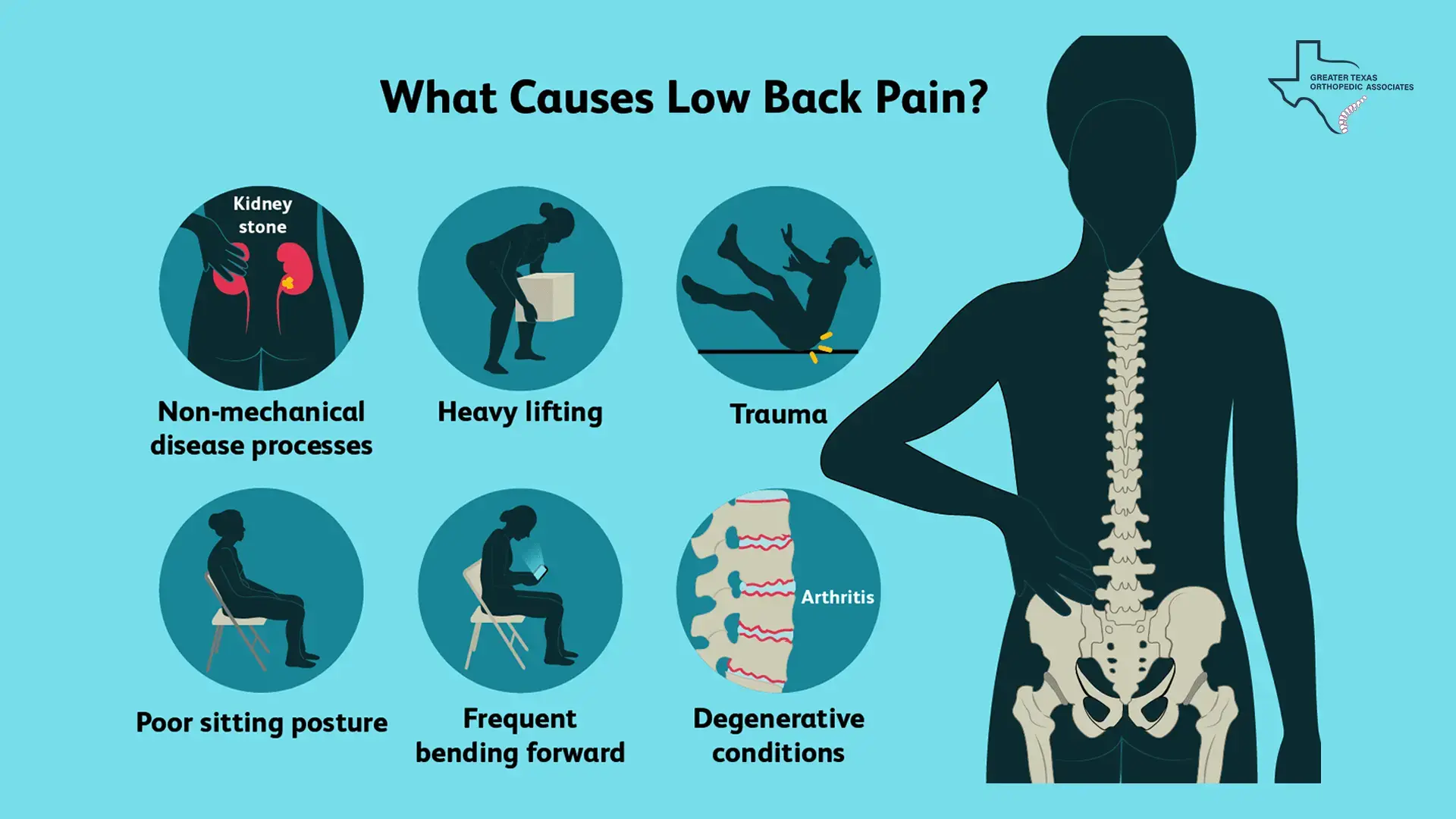
Several factors increase an individual’s risk of developing back pain:
Preventing recurrence involves patient education and consistent effort. It is important to maintain a healthy weight, avoid smoking, and practice proper body mechanics when lifting. When lifting heavy objects, the legs, not the back, should do the work, keeping the back straight and bending only at the knees.
Determining the precise diagnosis for back pain begins with a thorough history and physical examination. The onset, quality, and aggravating/alleviating factors of the pain are carefully considered.
Our specialists at GTOA use a thorough diagnostic approach to identify the true source of back pain. Our team provides advanced orthopedic care and pain management, ensuring that patients receive an accurate diagnosis and effective treatment. Evaluation typically includes a detailed assessment of the musculoskeletal and neurological systems, checking range of motion, strength, reflexes, and sensation. When needed, further testing is performed:
Imaging: X-rays for bone issues; MRI for soft tissue and nerve evaluation; CT scans for detailed anatomical imaging.
Specialized Tests: EMG and nerve conduction studies assess nerve function, and image-guided injections such as Medial Branch Blocks help confirm specific pain generators.
While most back pain is not life-threatening, certain symptoms warrant immediate medical evaluation or a trip to the emergency room:
If you notice your pain is worse at night or does not improve with rest, this could signal a systemic problem like an infection or tumor, requiring prompt evaluation.
Treatment for back pain depends heavily on the root causes of back pain and the severity of the symptoms. Many cases have an unidentifiable cause (nonspecific pain).
For acute, nonspecific back pain without red flags, the first-line treatments are nonpharmacological:
Activity and Rest: Early return to normal routines is recommended, avoiding only heavy labor and activities that precipitate pain. Avoiding long periods of bed rest is crucial. Gentle movement and exercise, such as walking, swimming, or specific stretching/strengthening exercises, can help ease pain.
Temperature Therapy: Superficial application of heat can relieve stiffness or muscle spasms, while ice packs can reduce pain and swelling.
Medication: Nonsteroidal anti-inflammatory drugs (NSAIDs) like ibuprofen are often advised. Muscle relaxants may be used. For chronic low-back pain, exercise therapy and cognitive behavioral therapy (CBT) are considered first-line treatments.
When conservative measures fall short, minimally invasive procedures help target specific generators of back pain.
Deliver corticosteroid medication into the epidural space to reduce nerve inflammation. Commonly used for sciatica, spinal stenosis, and herniated discs, providing temporary but effective relief.
Used when pain originates from the facet joints.
Medial Branch Blocks (MBB) : Inject anesthetic near the medial branch nerves to confirm facet joint pain.
Facet Joint Injections (FJI) : Deliver anti-inflammatory medication directly into the facet joint for therapeutic relief.
Radiofrequency Ablation (RFA) : Performed after successful diagnostic blocks to disrupt pain-signaling nerves and provide long-lasting relief.
📌 For readers who want a deeper breakdown of how MBBs and FJIs compare in treating different kinds of back pain, our article “Medial Branch Blocks vs. Facet Joint Injections: What’s the Difference?” offers a clear, detailed comparison.
Surgery is generally considered a last resort after conservative and interventional approaches have been exhausted. It is reserved for severe symptoms, failure of non-surgical treatment, or when red flag symptoms (like progressive motor loss or Cauda Equina Syndrome) warrant immediate intervention.
Common Procedures: Surgical techniques include microdiscectomy (for a herniated disc), spinal fusion (joining vertebrae to stabilize the spine), and laminectomy (to treat spinal stenosis).
Minimally Invasive Spine Surgery (MISS): Techniques utilizing smaller incisions and specialized instruments aim to reduce recovery time and muscle damage.
Conclusion: Finding Relief
Back pain is a highly complex and pervasive symptom that necessitates a comprehensive and individualized approach to diagnosis and treatment. Whether the pain is acute (less than six weeks) or chronic (over 12 weeks), identifying the precise causes of back pain is essential for determining the most effective path to recovery.
The vast majority of back pain cases, particularly those caused by muscle strain or sprain, are self-limited and improve with conservative measures such as remaining active and applying heat or ice. However, for those suffering from chronic discomfort, understanding what causes back pain. often involves investigating structural issues like herniated discs, spinal stenosis, or facet joint arthritis.
Specialized types of back pain, such as radicular pain (sciatica) involving nerve compression, require targeted interventions like Epidural Steroid Injections or Radiofrequency Ablation to manage inflammation and interrupt pain signals. Continuous monitoring, adherence to rehabilitation programs (like physical therapy focused on core strengthening), and lifestyle modifications are crucial for both preventing recurrence and ensuring long-term functional recovery.
Ultimately, the key to effectively managing back pain lies in understanding the underlying mechanisms and taking an active role in your care. By focusing on accurate assessment and informed decision-making, patients can address the root causes, improve their function, and achieve long-term relief from the conditions that cause back pain.
Every comment is reviewed before publication. Do not include medical details, personal identifiers, or information about an active claim. This form is not monitored for medical questions or emergencies.
Three more from the same thread.
Showing the first 3 of 3 articles
Comments are reviewed before they appear. For appointments, records, or medical questions, use the contact page.
No comments have been published on this article yet.